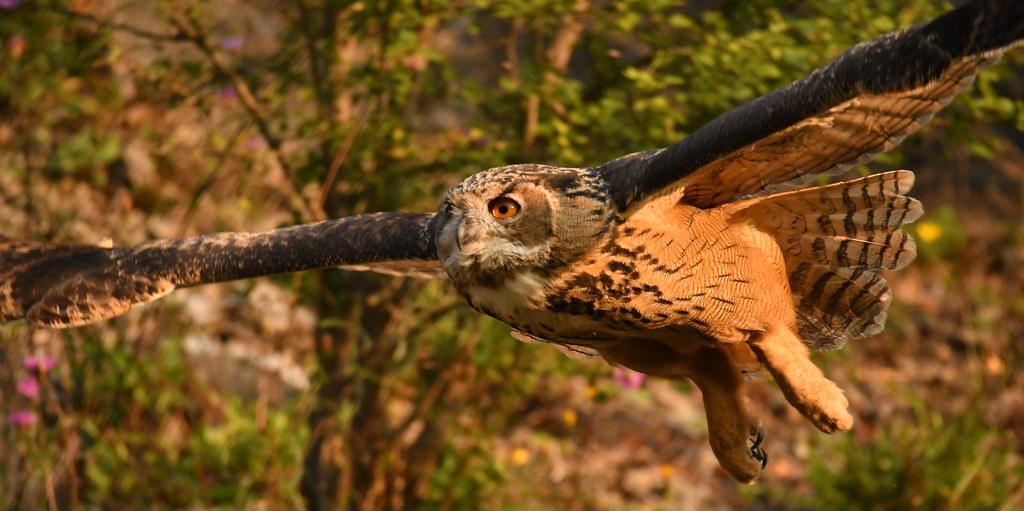
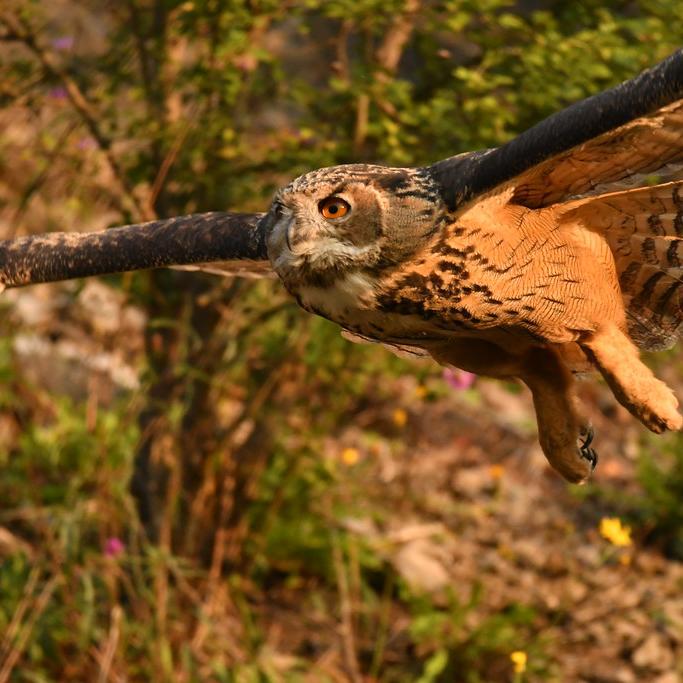
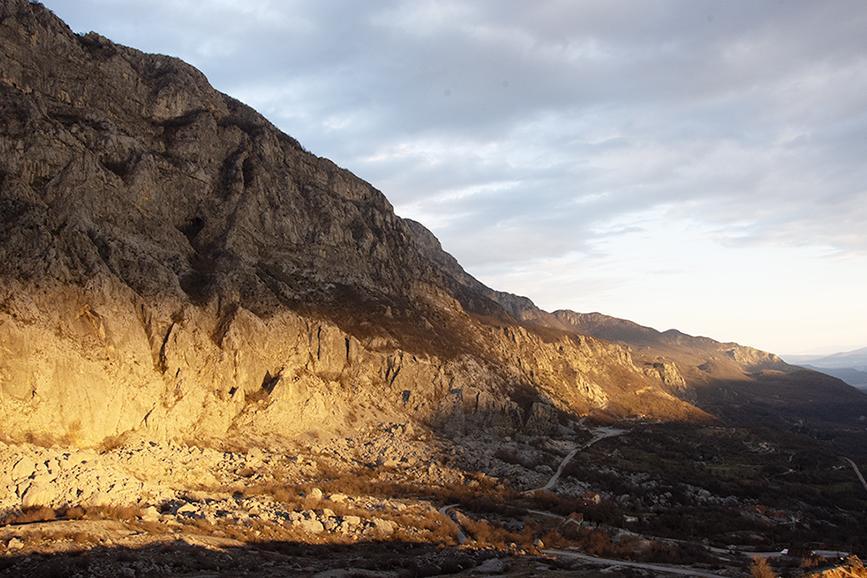
It is dusk, and the last rays of light disappear behind the mountain ridges. A low, powerful call echoes from the rocks – that of the Eurasian eagle-owl, the largest owl species in Europe. Recognisable by its ear tufts and its piercing gaze, it lords over the night of Montenegro’s rugged mountain landscape. Despite its considerable size, it is nearly invisible, making its presence known only by its call. The last few freezing nights of the year herald the most important part of its life cycle: breeding season. This is where our story begins.
In February of each year, a wonderful event awaits us employees of CZIP: “Bubo night”, the night of the Eurasian eagle-owl. This event signals the beginning of spring in our books. As nature slowly transforms and winter gives way to warmer temperatures, the eagle-owls begin their territorial calls, and we prepare for this exciting highlight.
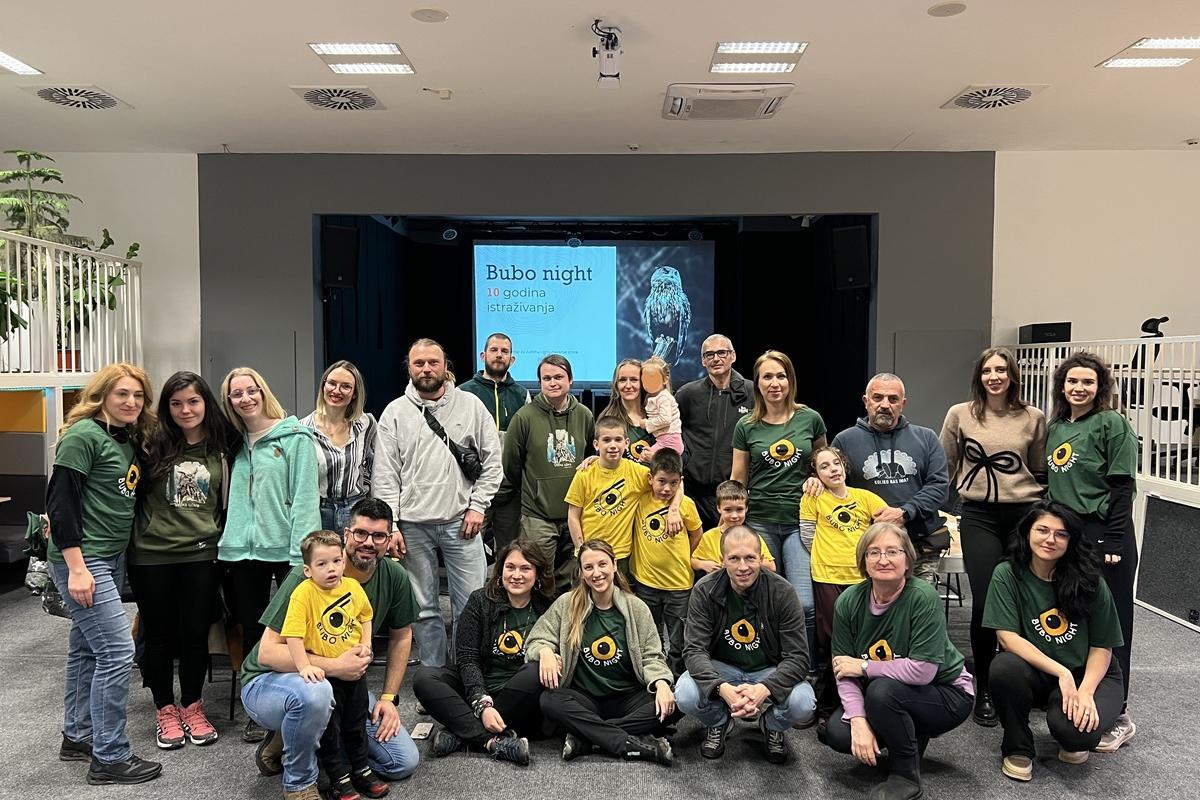
This year was extra special: “Bubo night” had its ten-year anniversary. Ever since 2017, the Center for the Protection and Research of Birds (CZIP) has been studying eagle-owls at several locations all over Montenegro. It was our Slovenian colleague Tomaž Mihelič who came up with “Bubo night”. Almost 30 years ago, he began involving volunteers in researching eagle-owls. Normally, a single ornithologist would have to cover 20 locations on his own, taking up 20 nights, but Tomaž had a simple, but brilliant idea: with the help of volunteers, the same could be achieved within a single night. It even helps prevent counting the same owl twice. Nowadays, the idea is well established all across the Balkans and is also used in Slovenia, Croatia, North Macedonia, Serbia, Albania and Montenegro – and in Germany, too.
Listening for eagle-owls on starry nights
This year’s counting took place in three regions of Montenegro: along the coast, along the slopes of the mountain Rumija and on the Bjelopavlići plain. The counting can only happen on clear and windless nights. The teams usually set out before sunset, since the male owls sometimes begin their calls earlier. The participants are split into groups according to the instructions of the owl experts, then they move on to the potential locations of nesting sites and wait in silence for the characteristic call of the Eurasian eagle-owl. With a bit of luck, they might even hear the female’s calls, which is slightly higher and shorter. The listening and counting often continues until late at night. Eventually, the volunteers – tired, but happy – return to the meeting place and excitedly discuss their experiences.
What the participants think I
I enjoy ‘Bubo night’ because I love being in nature. I like that we spend a good while by ourselves without many people around us. I am happy when I hear an owl but it’s no problem when there aren’t any owl calls. Getting together after is very fun.
Ljubica Sekulić, primary school pupil
The social aspect of “Bubo nights” is very important. The volunteers who want to protect owls learn more about the Eurasian eagle-owl’s biology, life and threats. In recent years, we at CZIP have also organised pop quizzes with small prizes for those who demonstrate their knowledge. Moments like these give people an understanding of nature and strengthen their sense of community.
Happy faces after a long night: “Team Coast” looks back with satisfaction.
I didn’t hear the eagle-owl this time, which made me a little sad, but everything else was perfect. I had a spot with a fantastic view while listening, and the whole event was very calming, almost meditative. My highlight was getting together afterward and the quiz. Thank you to the CZIP team – I can’t wait until the next ‘Bubo night’.
Ivan Bakić, member of CZIP
The many ways of protecting eagle-owls in Montenegro
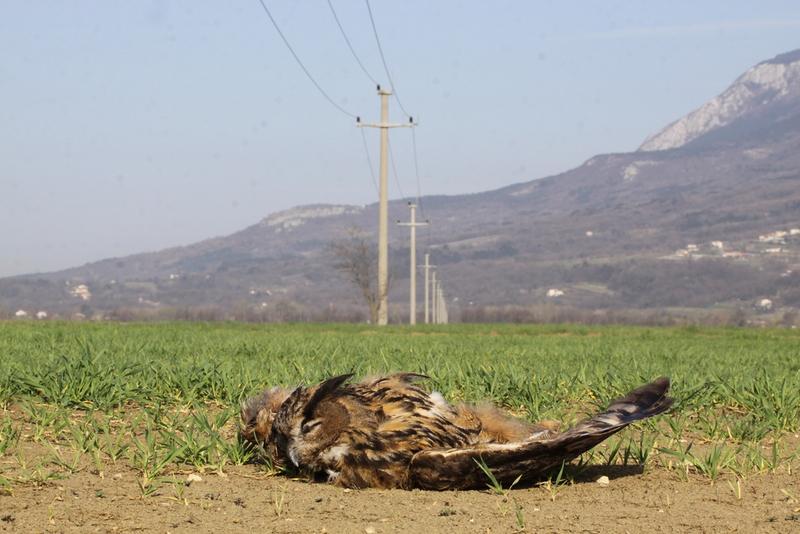
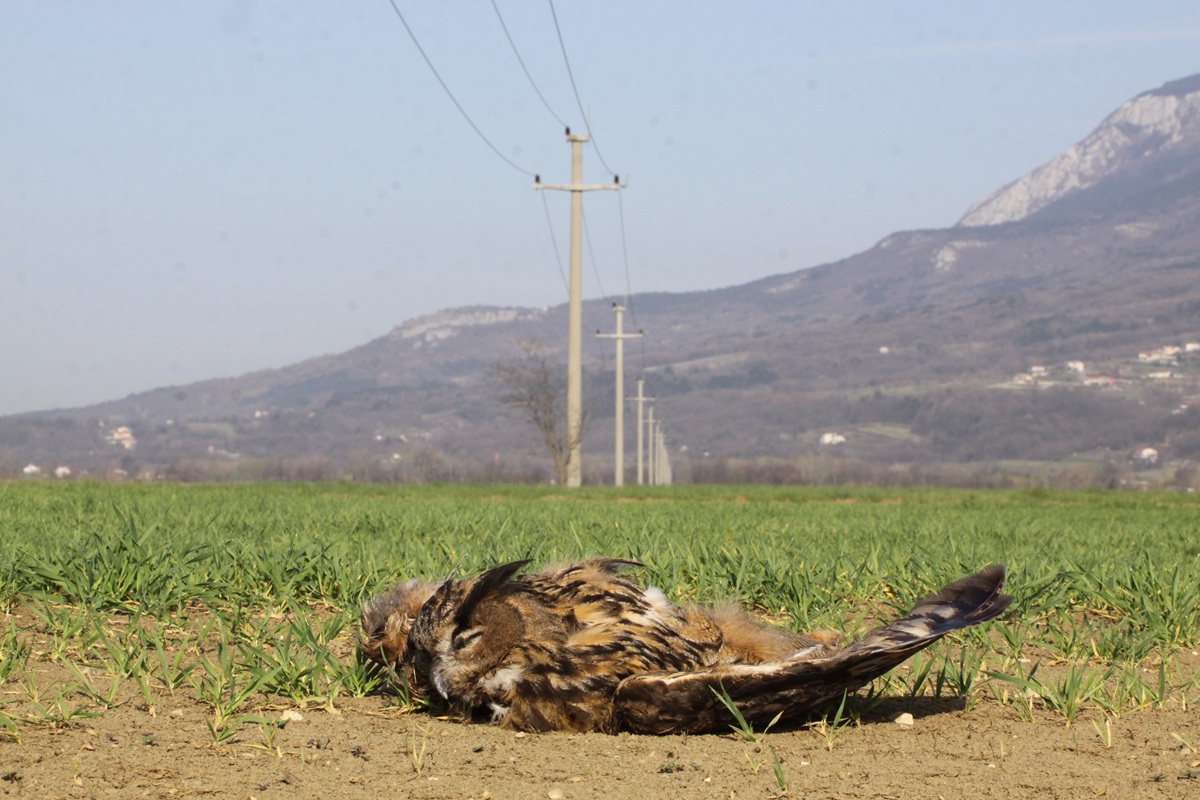
Dead eagle owl found under an unsecured power line
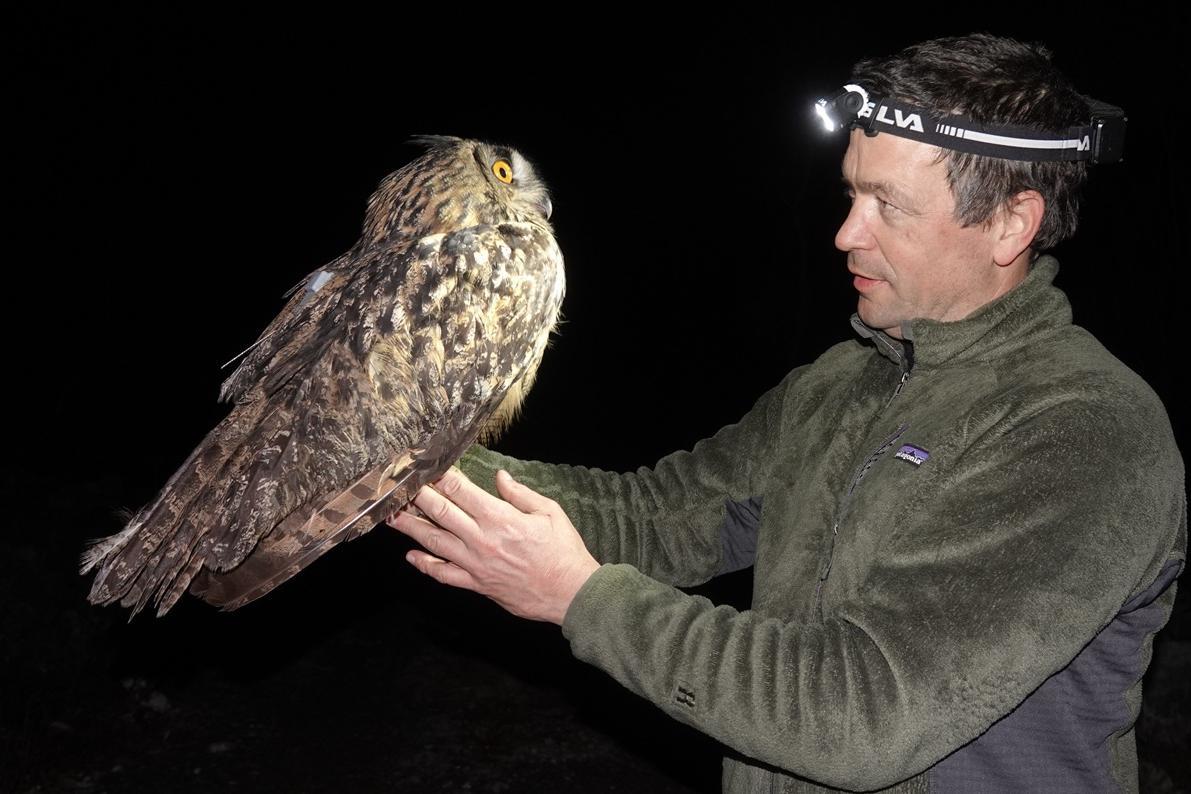
Outside of “Bubo night”, other volunteer initiatives and educational events about the environment, our Montenegrin partners at CZIP are involved in various activities for the protection of Eurasian eagle-owls in their country. For instance, they put GPS trackers on individual birds and use the data to learn more about eagle-owls’ behaviours, allowing them to adapt their protective measures accordingly. The most common cause of death for the large owls is arguably electrocution, especially from unsecured power lines. Soon, the first safety measures will be installed together with the electricity supplier, with more to follow.
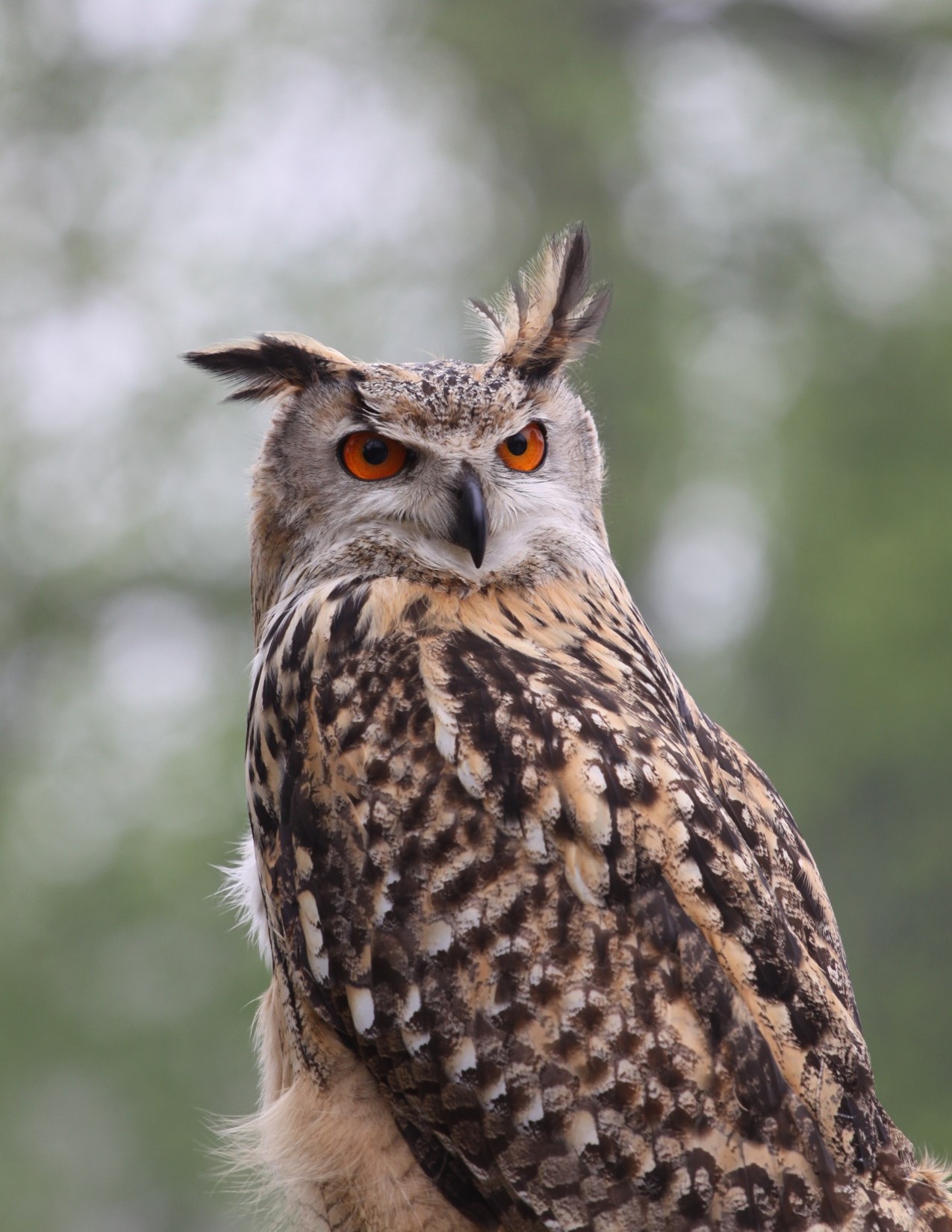
Ear tufts
Other than size, the Eurasian eagle-owl’s most striking characteristic is the ear tufts, which can be up to eight centimetres long. They don’t help with hearing, but they represent the mood of the birds. While they are usually flattened against the head or positioned in a flat V, they perk up when the owl is excited.
Eyes
Eurasian eagle-owls have expressive orange eyes and a piercing stare. They are perfectly adapted to hunting at night, as even a few streaks of light are enough for them to find their prey. Their outstanding hearing plays an important part in hunting as well.
Size
With a size of 60 to 73 centimetres, the Eurasian eagle-owl is the world’s largest owl species. The females are considerably larger than the males (sexual dimorphism). Eurasian eagle-owls are widespread from the Atlantic to the Pacific. Their Southern relative, the Pharaoh eagle-owl in Northern Africa, is much smaller and by now considered its own species.
In the last decade, “Bubo night” had 567 volunteer participants overall, many of them joining year after year. The data collected during this event play a crucial part in the protection of Eurasian eagle-owls. Together, we have recorded data from 494 locations and confirmed 238 eagle-owl territories. A survey of this scale would be impossible without the great contributions of the volunteers.
By observing eagle-owl territories over the years, we can track changes to the population size and distribution. This data helps us identify important habitats and threats, such as the increased urbanisation, disturbances at nesting sites, electric shocks from medium-voltage powerlines and poaching. Using this information, us CZIP employees actively work towards raising public awareness, collaborating with institutions and suggesting protective measures to preserve a stable population of Eurasian eagle-owls in Montenegro.
What the participants think III
When you listen for the eagle-owl’s call at sunset, you experience your environment in all its acoustic details: the murmuring stream, the whisper of wind in the leaves, birds in the bushes and trees, the snapping of branches … the more you try to focus on a single noise, the more you notice all the others, until you eventually hear the eagle-owl. These one or two hours in nature allow you to take in everything that happens around you.
Anastasija Ukšanović, biology student
“Bubo night” is more than scientific research: it means encountering nature. It offers an opportunity to pause and listen to the world around us. More and more people join our network of nature protection in Montenegro because of this event.
In the upcoming years, we at CZIP will keep an eye on the population of Eurasian eagle-owls and continue to promote the protection of Europe’s largest owl species. “Bubo night” will continue to play an important role in this, and we hope that this popular event will keep growing and inspiring new generations of nature lovers.
The “Grand-Duke” of birds: how the Eurasian eagle-owl got its many names
Do you know what it means when something is onomatopoetic? Here’s a hint: It contains the word “poetic”, so it must have something to do with language. Indeed, when a word is onomatopoetic, it imitates non-linguistic sounds, including animal noises. This brings us back to the eagle-owl: If you have ever heard its call – which used to be considered spooky or even horrible – you know why it is called “Uhu” (pronounced “oo-hoo”) in German, or “Puhu” (“poo-hoo”) in Turkish. The Eurasian eagle-owl’s Latin name (Bubo bubo) is onomatopoetic as well.
Other languages are more descriptive: English emphasizes the eagle-owls size by associating it with eagles, Danish references its ear-tufts (“stor hornugle”, large horned owl) and Swedish its habitat (“berguv”, mountain owl), for example. The French language associates it with nobility, calling it the “grand-duc” – the Grand Duke. It is unclear whether this name developed because of its dignified appearance, its preference for castle ruins or because it is accompanied (or rather, attacked) by an entourage of songbirds if they notice it during the day.
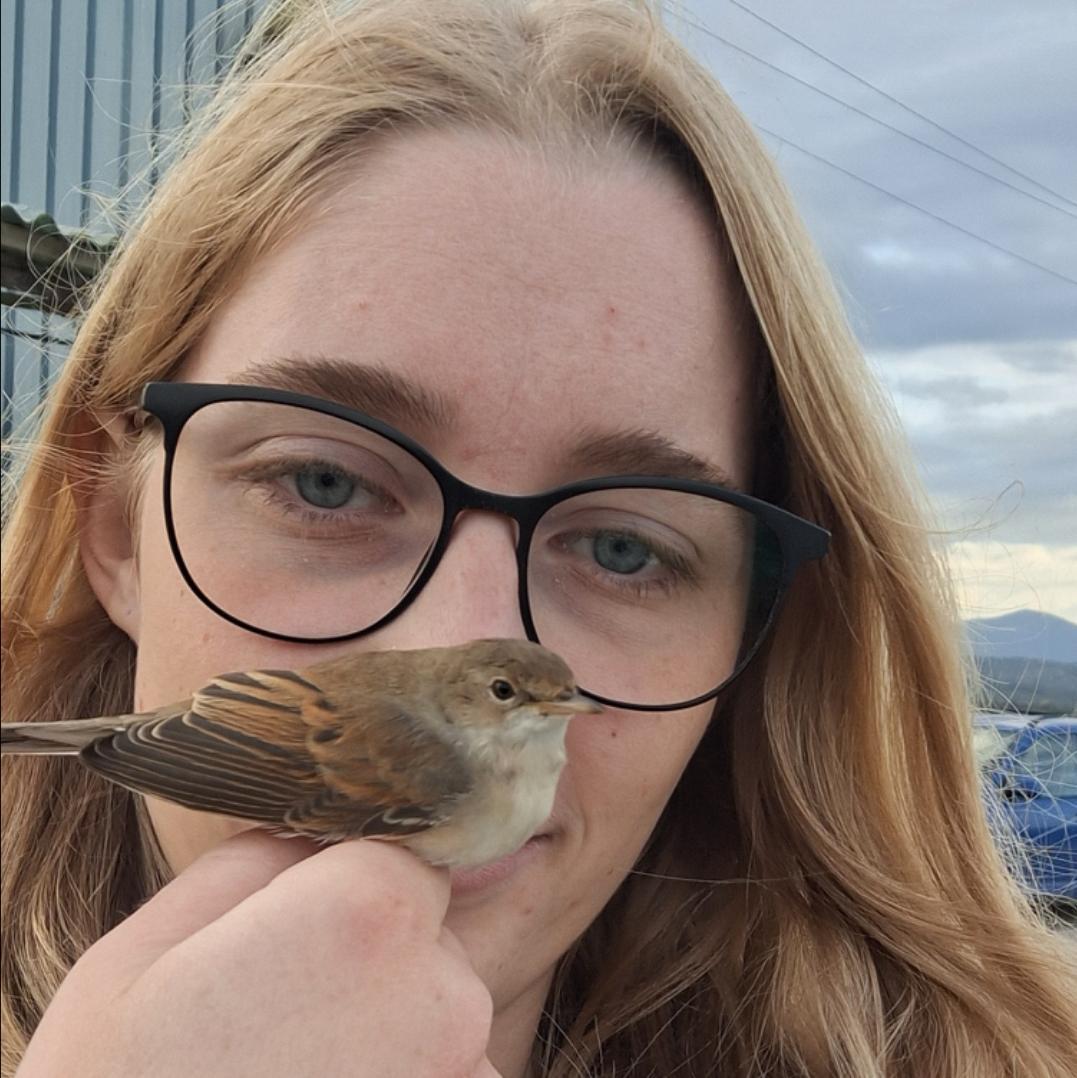
Author: For the past eight years, Marija Šoškić Popović, 38, has been working for our Montenegrin partner organisation CZIP as an ornithologist responsible for bird monitoring and the ringing of birds. The data she collects makes an important contribution to preventing the destruction of important bird habitats in Montenegro. Marija has loved birds since her childhood and her other passion is wildlife photography.