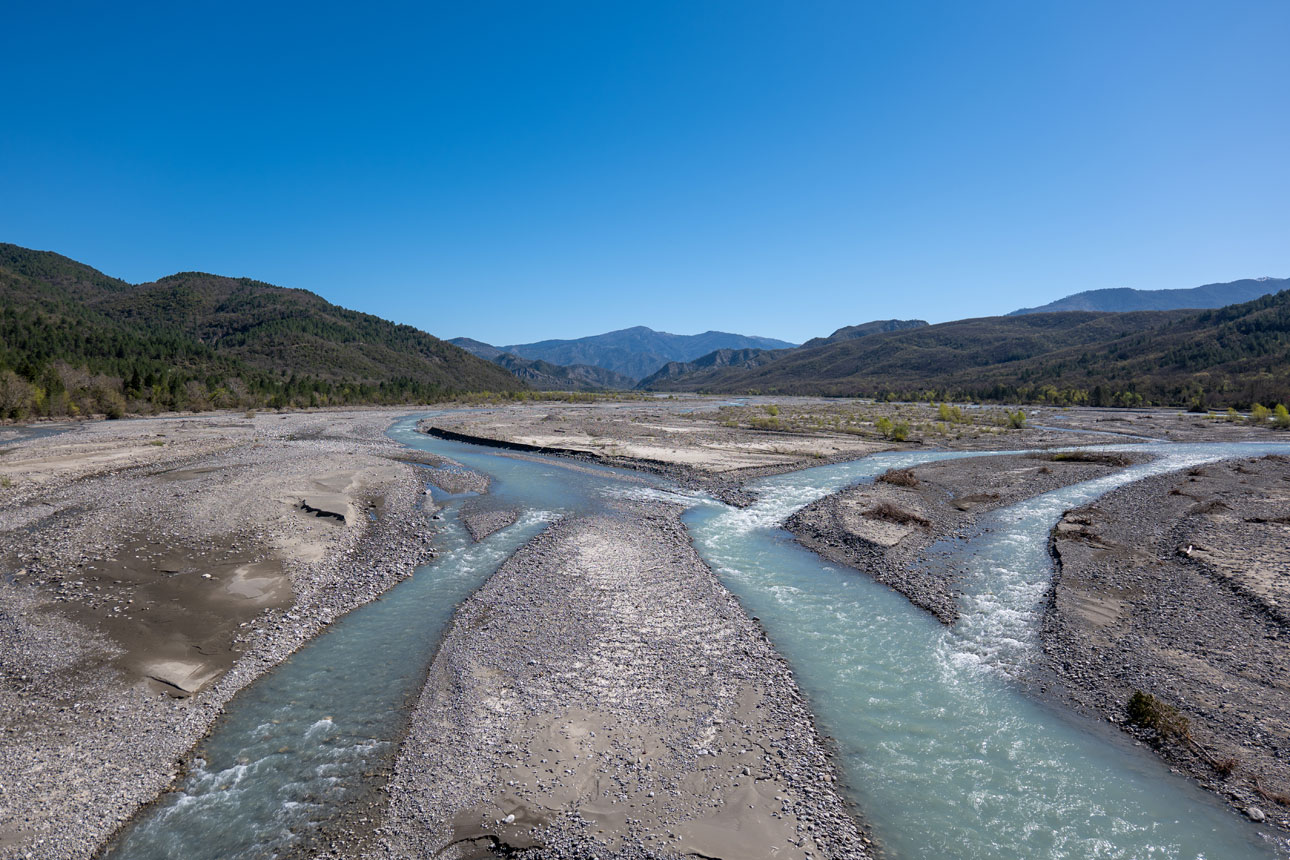
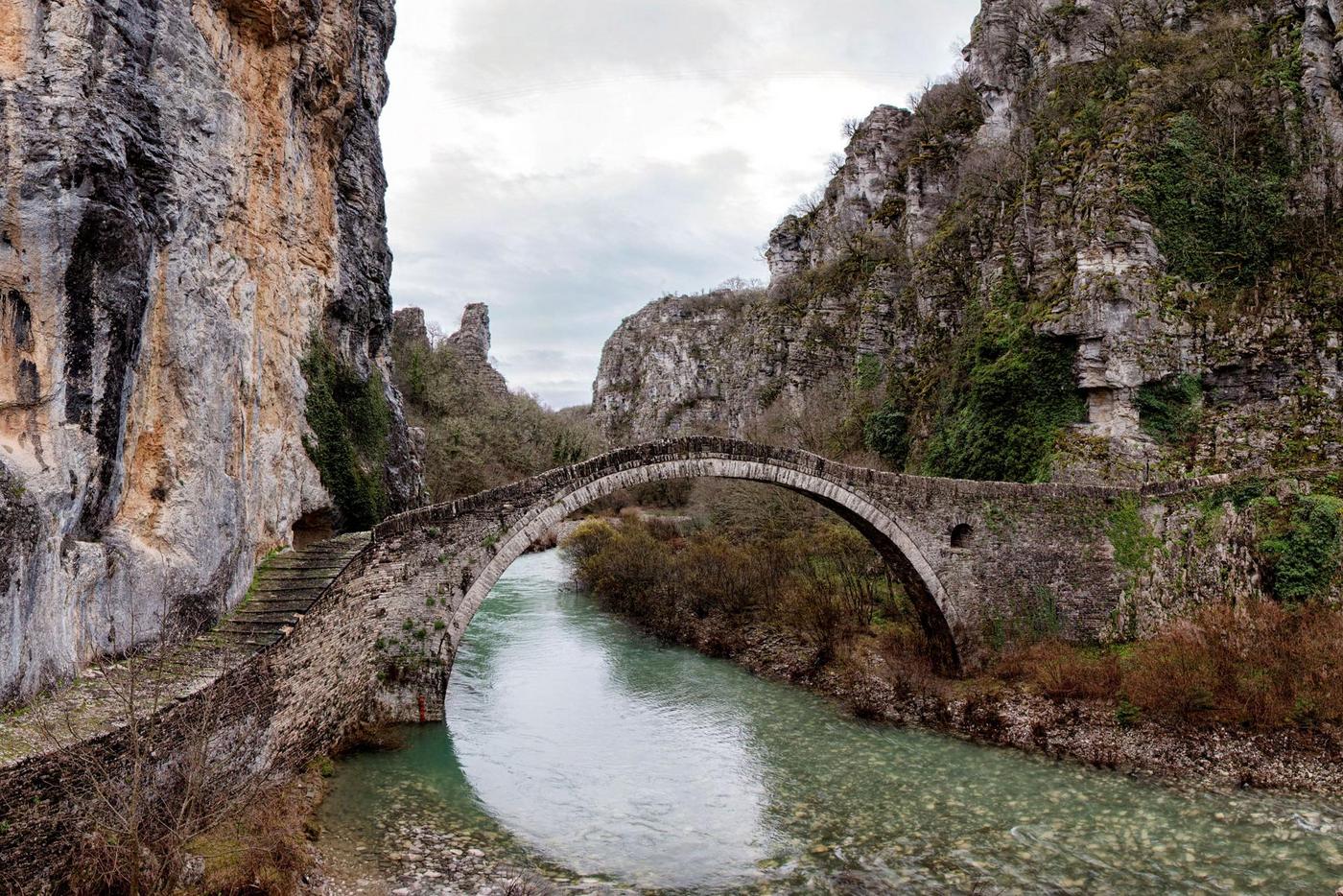
Smaller organizations, such as those involved in nature conservation, are at a disadvantage compared to larger ones – but often do work that is just as valuable. The EU-funded BESTbelt project gives us the opportunity to support local actors in the European Green Belt. The Let it flow project was carried out by MedINA in collaboration with the Environmental Education Centre of the northwestern Greek municipality of Konitsa. It aimed to encourage schoolchildren from the Aoos river basin to get involved in protecting their rivers and to help preserve and treasure this ecologically valuable cross-border river system as a resource for community development. In an innovative role-playing game, students put themselves into the shoes of local stakeholders and dealt with real challenges such as water use, energy production, tourism, and nature conservation. Aoos (on the Greek side) and Vjosa (on the Albanian side) are part of the Green Belt between Greece and Albania. Find out more about the European Green Belt, BESTbelt, and Let it flow online at europeangreenbelt.org.
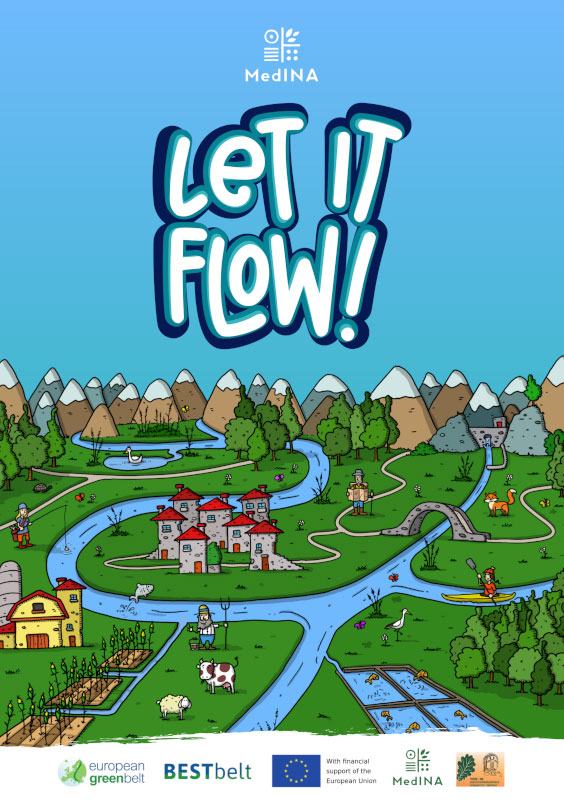
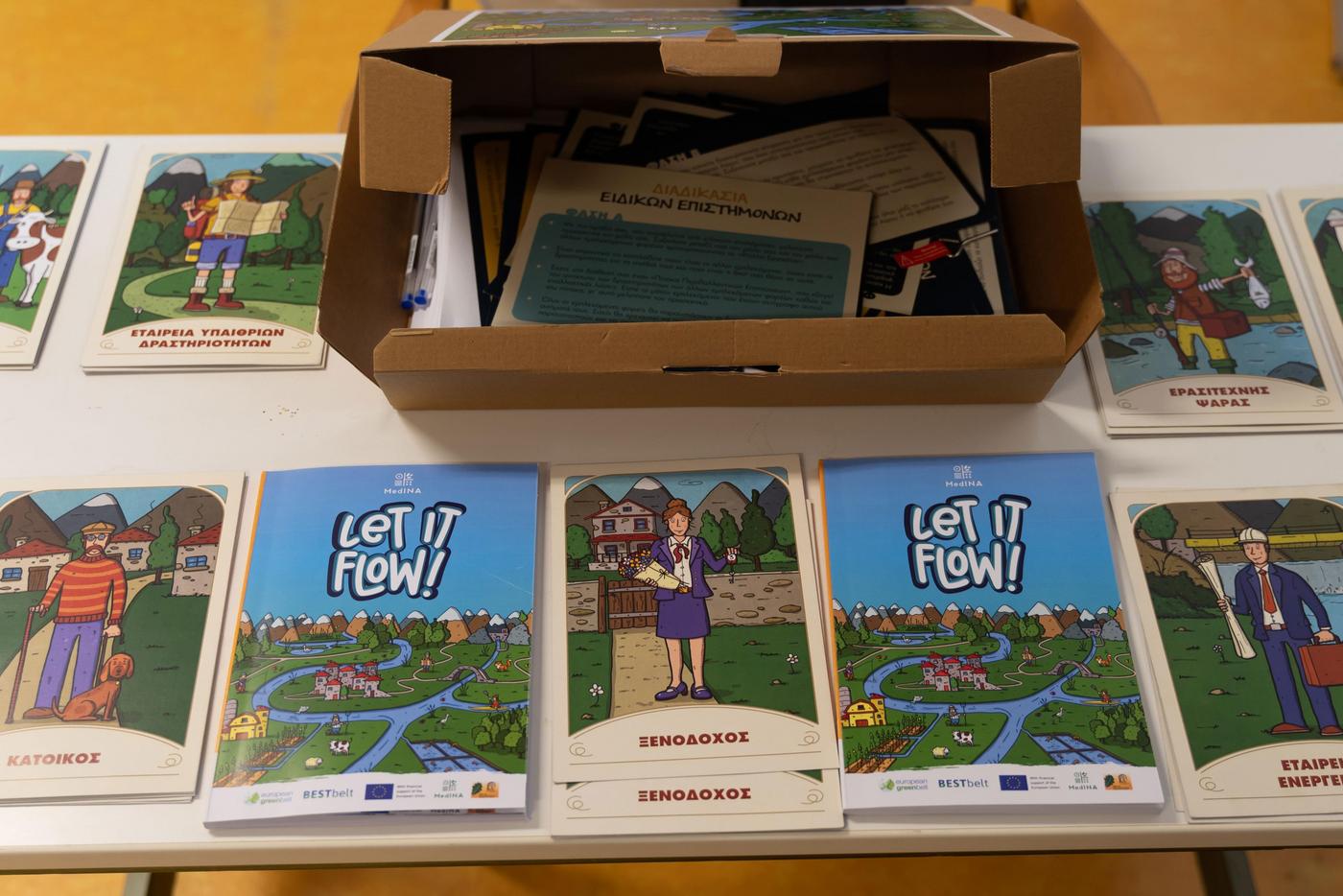
Illustration on the cover of the role-playing game ‘Let it flow’
Strict entry controls, people locked up, many for years, neon lights, musty corridors, and above it all a haze of aggression, resignation, and frustration. It's not exactly a feel-good atmosphere. The men's prison on the island of Corfu is considered a particularly harsh place. Georgia Kanellopoulou hesitated for a while before accepting the position as an environmental education lecturer at the Second Chance School there. But in the end, her inner calling outweighed her doubts. “I wanted to remind the people in prison of the beauty of nature that exists outside the prison walls. That's important for the soul,” she says. Georgia has not regretted her decision to this day – on the contrary: “It was a valuable and unique experience. So much good has come of it that I couldn't have planned beforehand.”
For a year, the environmental engineer was spending seven hours a week in prison—the only woman in a group of a dozen men, some of who had committed serious crimes. Georgia still does not know what those crimes were, partly for data protection reasons. Nor does it matter to her. In her lessons, the participants were able to free themselves from their roles as criminals. Men from a wide variety of countries, who were enemies in everyday prison life, sat together at a table with Georgia and jointly developed a vision for the future of how humans and nature could live in harmony in the Aoos River basin. Among other things, the Albanian prisoner became a farmer, the Russian an energy producer, the Indian a tourism manager, and the Pakistani a fisherman. And then it was time to “let it flow.”
“We laughed a lot together.”
The role-playing game developed, tested, and continuously refined by the NGO MedINA as part of the BESTbelt project, entitled Let it flow (see info bubble), opened doors to a new kind of dialogue for the men in the Corfu prison. They learned to see things from other perspectives, let others finish speaking, listen, and work together to find solutions that were fair to everyone involved—all with a sense of playful ease and joy. “We laughed a lot together,” Georgia recalls. The transformation was clearly noticeable throughout the lessons. To get the conversation going, Georgia had initially chosen a controversial topic: climate change is causing drinking water shortages on Corfu, a development that is also affecting prison inmates. The participants came from a wide variety of countries, including Albania, Russia, Georgia, Ukraine, India, and Pakistan, and were between 20 and 60 years old. It was by no means easy to find a topic that would appeal to all of them equally. "A discussion about drinking water was a good choice because it connects people on a human level. At first, the atmosphere was tense. The men described the problem from different perspectives and did not see that they had common ground because they were not listening to each other. It became clear to me that it is not enough to deal with the issue of water scarcity in terms of content, but that it is also necessary to consider how a fruitful exchange can work, how conflicts can be resolved, and how different opinions can be brought together," Georgia reports. Let it flow was the perfect tool for this, because the role-play addresses all these aspects.
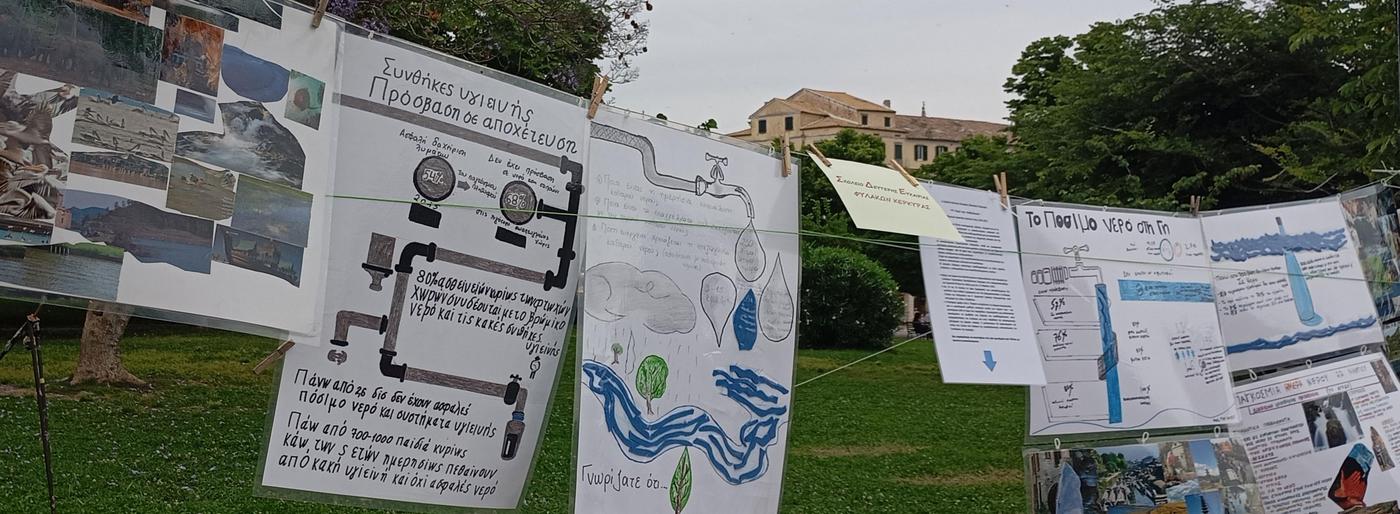
A bridge to the outside world: Georgia Kanellopoulou presented the thoughts of the prisoners on the theme of water shortages at a festival of culture.
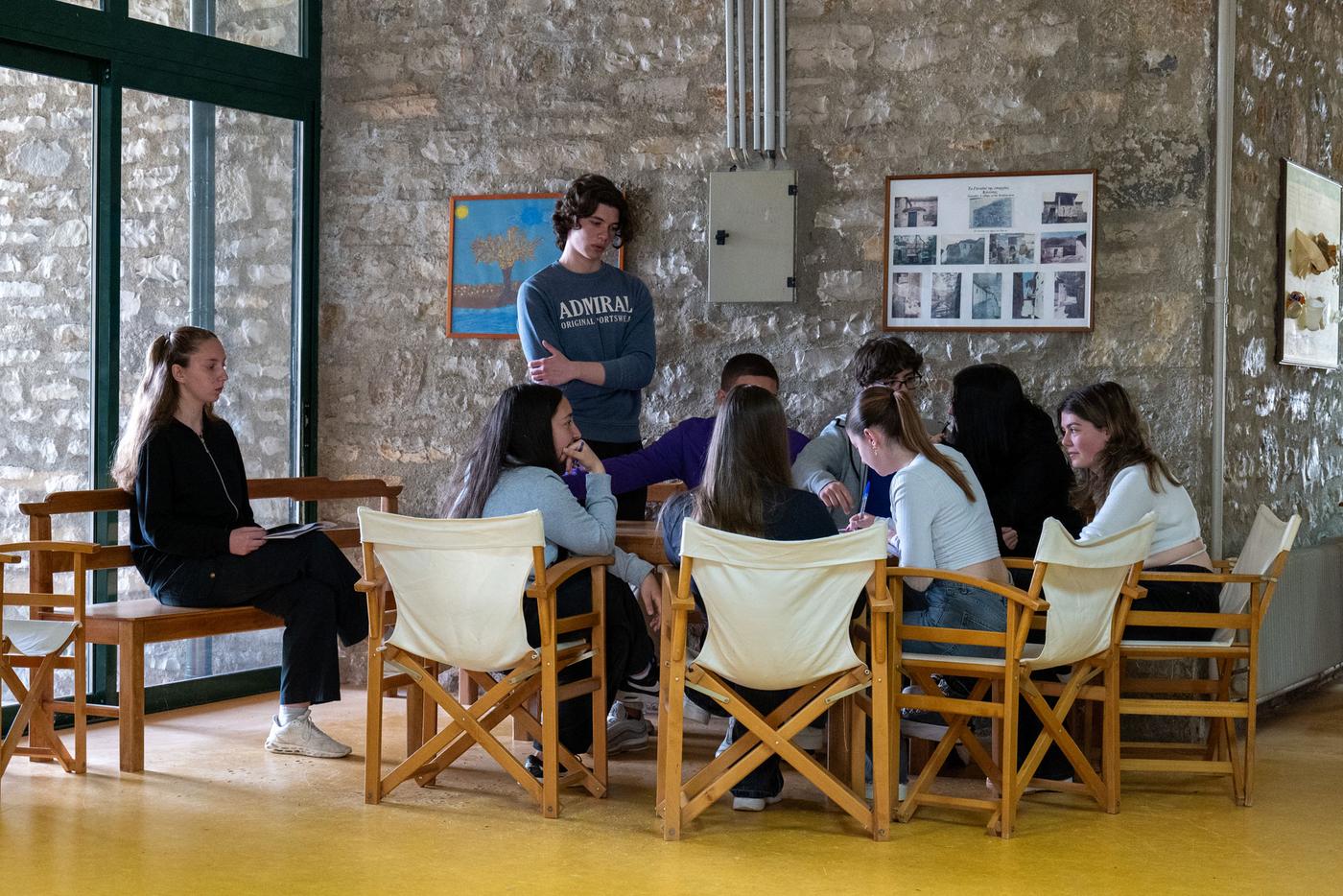
When Miranda Vatikioti, project manager of Let it flow, heard about Georgia's initiative, it gave her goose bumps: “It wasn't planned that Let it flow would find its way into a men's prison, but it beautifully reflects how our role-play travels and can be transferred to other contexts.” Let it flow clearly serves a great need of our time: in keeping with the motto of the Green Belt of Europe, it focuses on what connects us rather than what divides us. Georgia has adapted it for her purposes to the adult world, while Miranda, who began her academic career in theatre, designed the environmental education programme for teenagers. The focus is on empowering students and their teachers to understand the importance of the Aoos river system and the threats it faces, and to come up with solutions for how people there can live happily in harmony with nature. “It works really well,” says Miranda Vatikioti: "Children and young people have a strong imagination and quickly grasped the essence of the matter: by protecting the river, we also protect the people who live along it, and this can only be achieved by working together. This is precisely the power of experiential education through theatre. You give participants a direct experience that goes far beyond mere information, allowing them to slip into other roles and change their perspective. Children and young people learn naturally through play. When you meet them there, they start asking you questions and want to know more and more."
The power of experiential education through theatre goes far beyond the mere transfer of information. Slipping into other roles means truly changing your perspective.
Miranda Vatikioti, MedINA
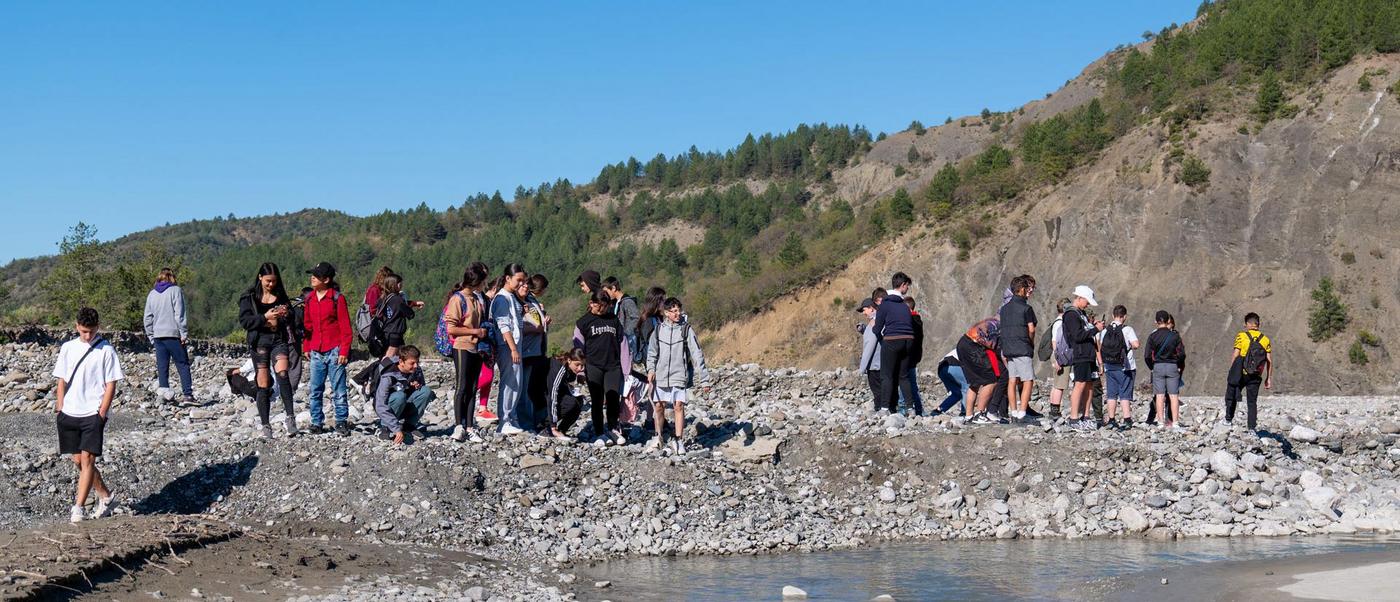
Before the role-playing game began, the teenagers explored one of the most important tributaries of the Aoos, the Sarantaporos, on a field trip.
Hydropower and tourism projects in particular are putting enormous pressure on the region. There were some heated discussions among the students because the teenagers really got into their roles as scientists, farmers, fishermen, energy producers, hoteliers, and tourism managers. On this basis, they succeeded in the role-play, for example, in bringing about a change in the hotel construction plans or in getting the energy company to back down on some points. Miranda was delighted with feedback such as: “It was very interesting because we had to take a stand on public issues that we would probably never have had an opinion on otherwise; we put ourselves in the shoes of local authorities and companies and represented our own interests; we had the opportunity to get more in touch with nature; wow, I learned so much about the place where I was born and live!”
Amazement at City Hall
From fishermen and building contractors to nature tourists, the lovingly designed cards contain tips on how to bring each role to life.
In the end, the students selected the management plans they had developed for the Aoos River system, which they considered to be particularly strong. A delegation of teenagers from Konitsa's secondary schools then presented these plans in person to the council of the municipality located on the Aoos. And the council actually listened. The president of the municipal council, Vassilios Spanos, was visibly impressed and encouraged the students to continue to participate as active citizens in the decision-making processes on issues of sustainable development in their community. “The young people's management plans are starting points for serious discussion,” emphasizes Miranda Vatikioti. “I think that the young people who took part in this program will surprise many people in the future with their knowledge and topics of conversation. They have changed the way they speak and can now express themselves on challenging topics. As well as the pride in their achievements they have become aware for the first time that they live on the European Green Belt and are thus part of an international initiative involving many researchers and organizations. They had not known that before.”
A new culture of dialogue in prison
Georgia Kannellopoulou observed something similar in the men's prison: “The role-play completely changed the atmosphere of the discussion,” she reports. “In the end, we talked about the issue of water scarcity again, but in a much calmer manner. Suddenly, it was possible to write the problems down on the board one by one so that they could be communicated to the prison management later.” Georgia was particularly pleased that she managed to break down barriers between the prisoners and bring them closer to nature again, even without being able to offer them a real field trip to the river. “The pictures and videos of the Aoos touched the prisoners emotionally and calmed them down. It allowed them to travel beyond the prison walls for a while and experience nature.” When she asked the Albanian participants to report on the Albanian part of the Aoos, the Vjosa, using the “Aoos Ecomuseum Guide” developed by MedINA, the men really blossomed and the cross-border connection came into play.
The men succeeded in acknowledging each other’s views and overcoming the roles prison has imposed on them by finding a gentle and constructive way of interacting with one other.
Georgia Kanellopoulou
"Let it flow" goes on tour
Detailed instructions for Let it flow were distributed to all schools in the Epirus region and submitted to the Ministry of Education for inclusion in regional and national curricula. Well over a hundred teenagers have already used the role-play, and more than 60 educators have been trained to implement Let it flow. Miranda and her colleagues have continuously developed Let it flow in a ping-pong process with students and teachers. The role-playing game has also been translated into Albanian and handed over to EuroNatur's Albanian partner organization EcoAlbania to promote its implementation in schools in the Vjosa river basin. “Without the financial support of BESTbelt, none of this would have been possible. It makes me happy to talk about Let it flow because I have so many fond memories associated with it,“ says Miranda Vatikioti. ”Many children and young people are now prepared to find ways to preserve their nature and culture. Let it flow will continue to travel and can be applied to a wide variety of issues. Perhaps the future looks much brighter than science predicts today.”