


The Regional Strategy to protect the Balkan lynx has been officially endorsed at the CMS COP15 in Brazil. Effective measures to protect the subspecies will focus on developing national action plans, connecting habitats, and increasing genetic diversity. Relevant authorities and lynx experts together with key actors will implement the new strategy in the coming years.
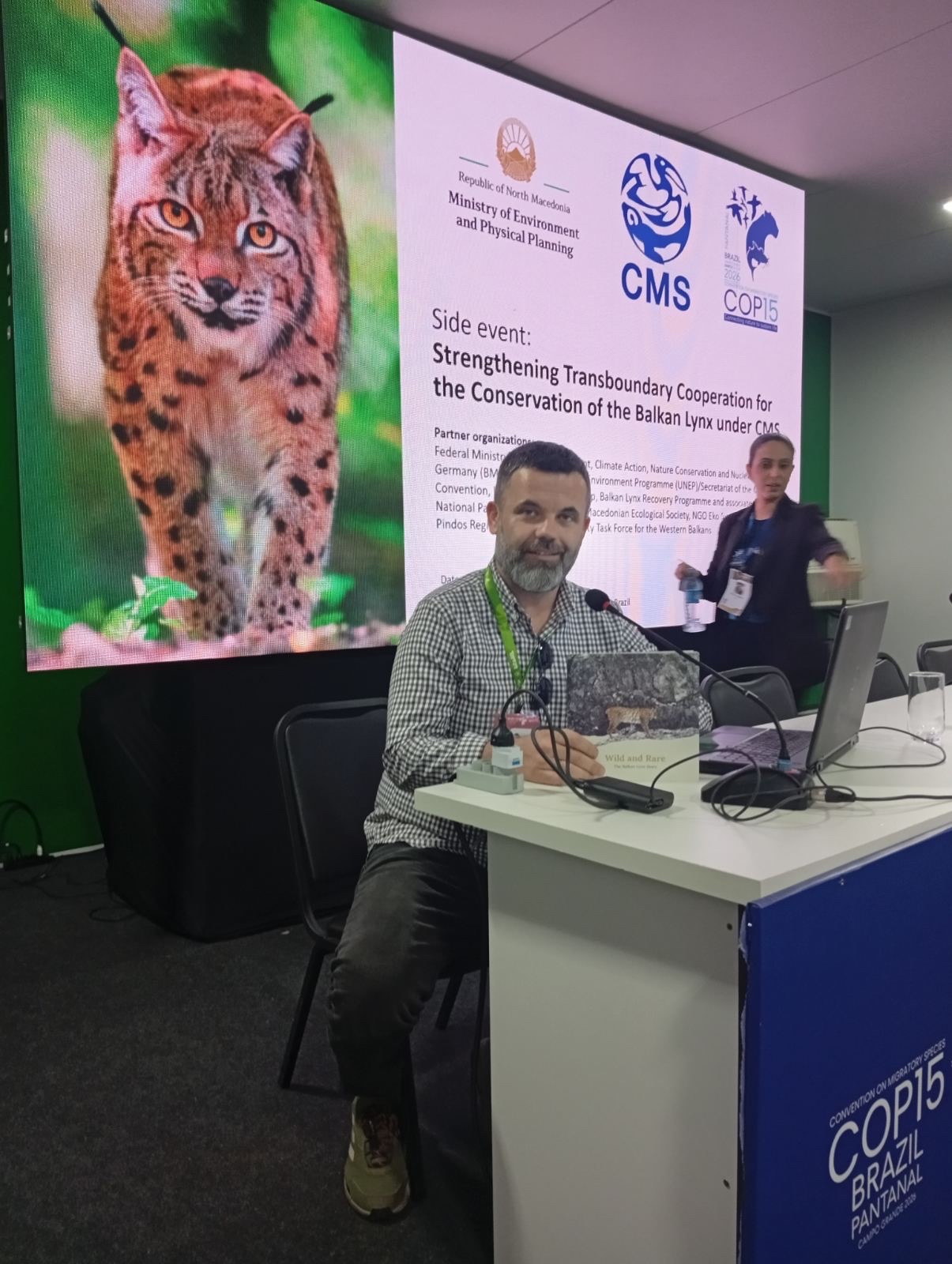
Lynx experts such as Aleksandar Perović from Montenegro came together at the CMS COP15 to present and welcome the Regional Strategy to save the Balkan lynx.
© Iskra Stojanova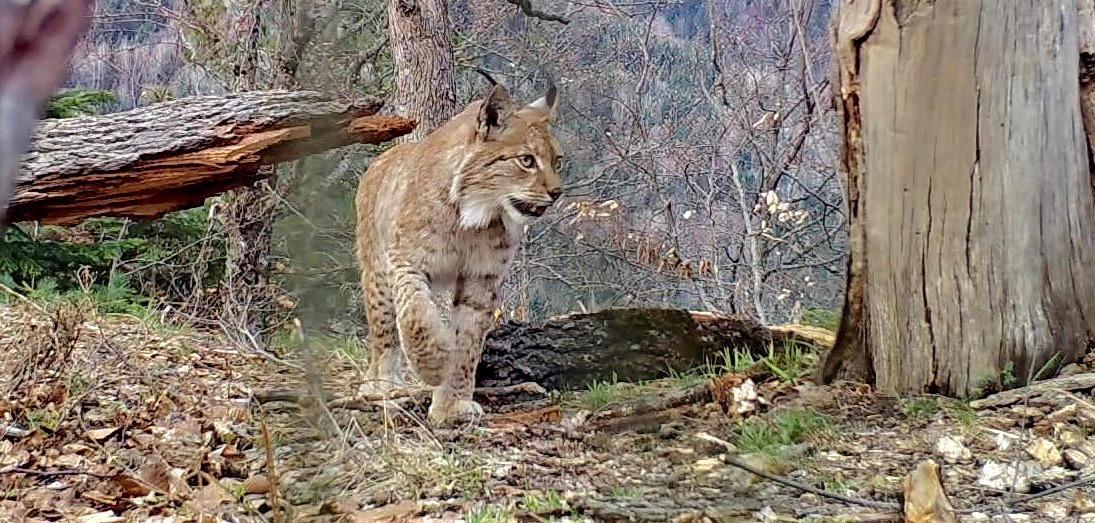
Measures such as monitoring the Balkan lynx population with camera traps, like in this picture, are crucial to better understanding movement patterns, prey availability, and survival rates of the species in its distribution range.
© ERA/BLRPThe joint efforts to strengthen conservation measures for the Balkan lynx are bearing fruit. At the 15th meeting of the Conference of the Parties to the Convention on the Conservation of Migratory Species of Wild Animals (CMS COP15), a new strategy for the conservation of the Balkan lynx has been presented and officially endorsed: the Range-wide Strategy for the Rescue and Conservation of the Balkan Lynx Lynx lynx balcanicus 2026−2035.
With only under 50 individuals left in the wild, this rare subspecies of the Eurasian lynx is critically endangered and only found in the Southwestern Balkans. A big step towards its protection and the recovery of its small population was already taken in 2024, when the Balkan lynx was added to Appendix I of the Convention on Migratory Species (CMS). This list includes migratory species that are threatened with extinction, and countries where these species occur are obliged to protect them, prohibit their taking, and restore their habitats.
Now, at a CMS COP15 side event organized by the Ministry of Environment and Physical Planning of the Republic of North Macedonia on the 24th of March, lynx experts and key partners came together to discuss effective measures to preserve the Balkan lynx, focusing on transboundary cooperation and presenting the Regional Strategy for its conservation. The comprehensive strategy, which was later officially endorsed by the CMS on the 27th of March, outlines a coordinated, long-term approach to reversing the subspecies’ decline. It emphasizes the importance of protecting suitable forest habitats for the Balkan lynx and reconnecting these habitats to allow movement and successful reproduction. It also highlights the urgency to increase genetic diversity, as the population already shows high levels of inbreeding, to reduce the risk of extinction. A key component of the plan is its regional scope, recognizing that the range of this emblematic animal spans multiple countries and requires joint action beyond national borders. In this framework and following the proposed strategy, each country in the current Balkan lynx range will develop a national action plan with suitable measures and activities to ensure the successful protection of the lynx.
“This a very important milestone for the conservation of one of Europe’s most endangered carnivores with a regional approach on the front line”, said Iskra Stojanova at the CMS COP15, representing UNEP/Secretariat of the Carpathian Convention as partner organization in this initiative to save the Balkan lynx. “It is a result of the hard work of several partners from different institutions and countries, proving that transnational collaboration and synchronized plans can have great impact and contribute to creating better conditions for the Balkan lynx. We look forward to joining forces to ensure efficient implementation of the range-wide Regional Strategy and even more international and inter-institutional cooperation in the future”.
Lisa Leschinski, project manager at EuroNatur, shares the enthusiasm. “In the framework of the Balkan Lynx Recovery Programme we have been closely monitoring the lynx for the past 20 years and are optimistic that the envisioned actions will have a positive influence on the population. As a top predator, the presence of the lynx in the Balkan forests is key to maintaining a healthy ecosystem”.
Conservationists from different parts of the world welcomed the Regional Strategy, noting that the real challenge now lies in its implementation. Ensuring that the plan translates into concrete activities on the ground will demand sustained effort, resources, and cooperation across the region. With the endorsement of this document, there is renewed hope that the Balkan lynx can prosper with the collaboration of authorities, researchers, and local communities. The coming years will be critical in determining whether this iconic predator can once again thrive in the forests of the Balkans.