


In mid-May, a 57-year-old man was arrested in Serbia. He is alleged to be responsible for the deliberate killing of a rare Cinerous Vulture. The police investigation and the arrest in this case send an important signal: that some authorities in the country are taking the issue of wildlife crime seriously.
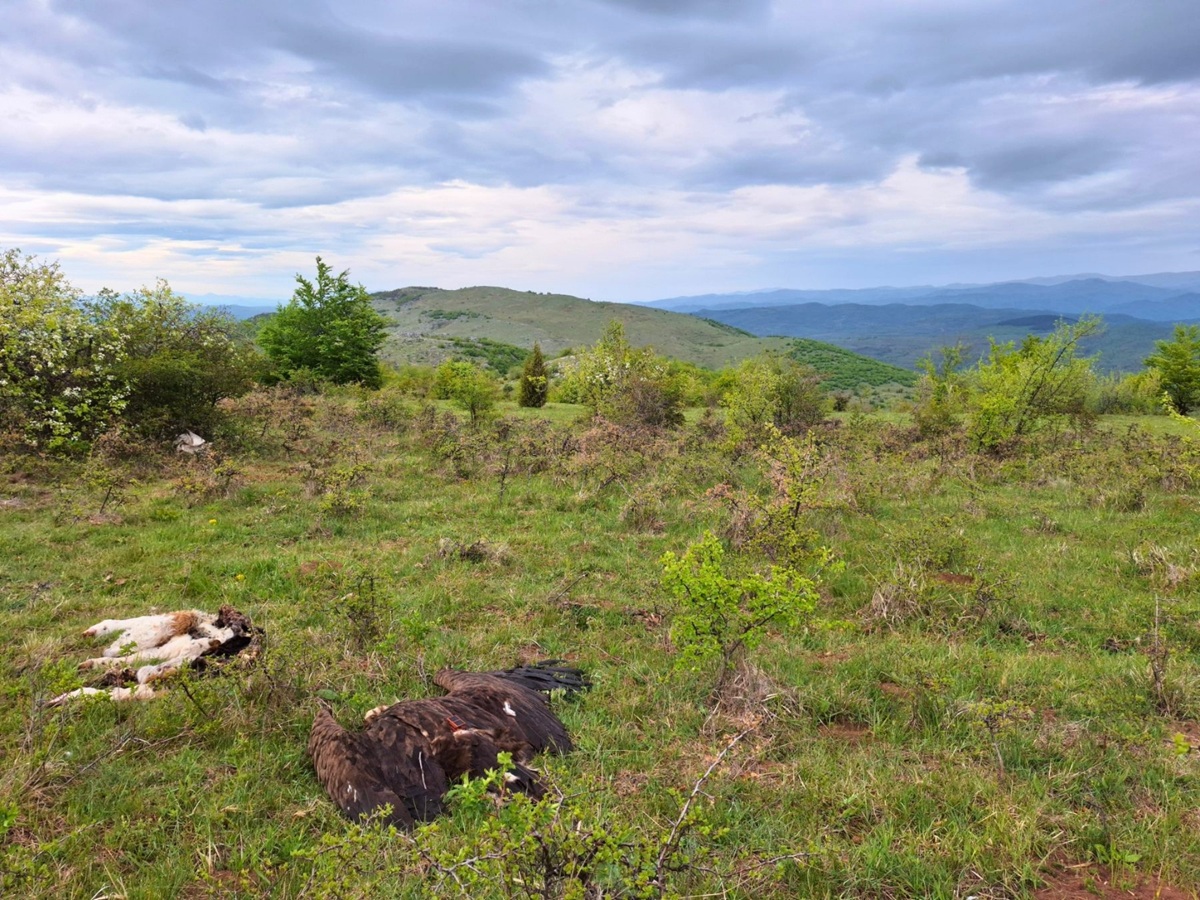
The highly toxic poison must have taken effect quickly. The Cinerous Vulture was found dead right next to the poisoned bait.
© Slobodan Marković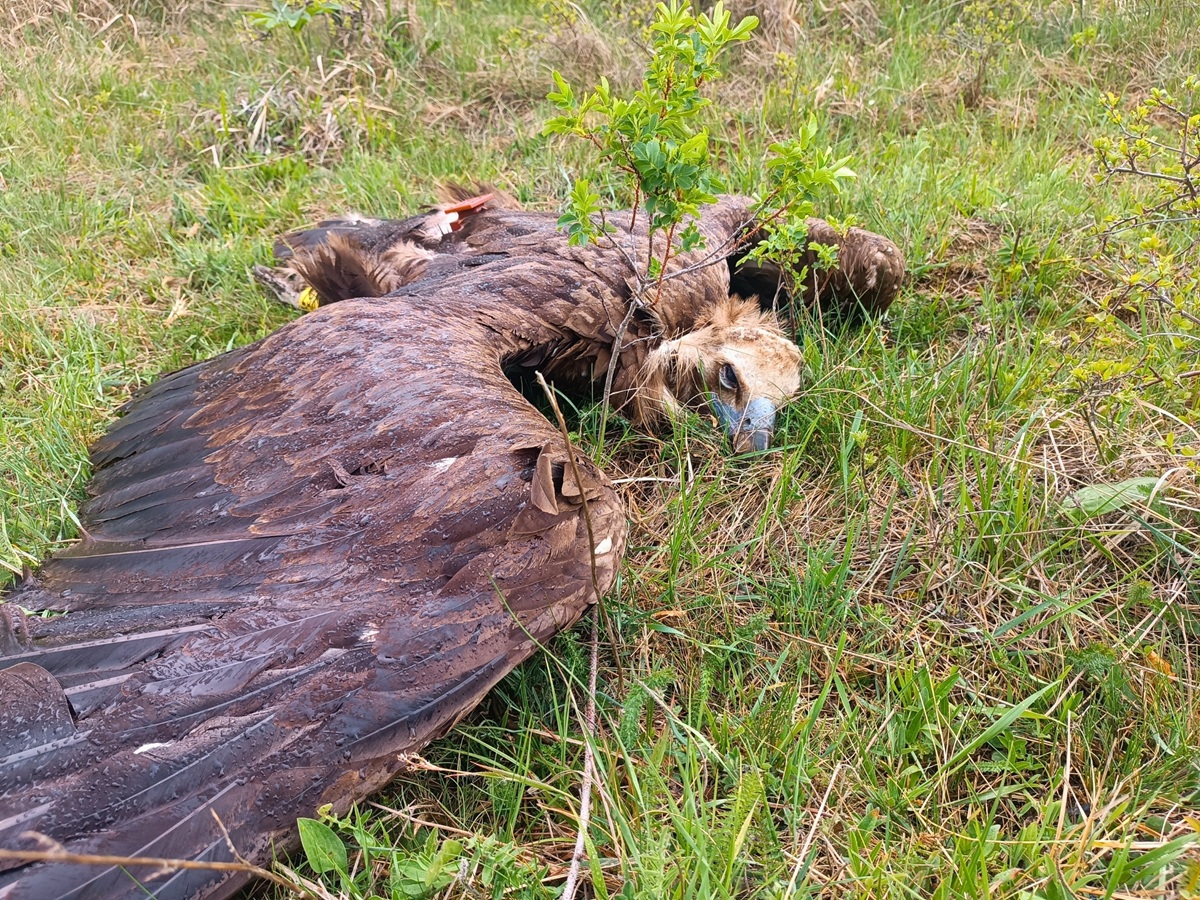
Time and again, Cinerous Vultures and other vulture species fall victim to poisoned bait. This undermines conservation efforts.
© Slobodan MarkovićClose to Svrljig in eastern Serbia, a strictly protected Cinerous Vulture (Aegypius monachus) was deliberately poisoned. The bird was part of an international reintroduction programme for the species, which had long been extinct in the region. Ornithologists from our Serbian partner organisation BPSSS found the dead vulture next to a prepared carcass that had apparently been treated with a highly toxic insecticide.
The bird conservationists immediately alerted the authorities. Shortly afterwards, a suspect attempted to destroy evidence by removing the carcasses. However, the police were able to secure them and arrested a 57-year-old man. He is accused of, among other things, environmental crimes and obstruction of justice.
The case once again highlights the scale of illegal poisoning in Serbia: “Since 2000, more than 3,000 wild animals have been affected by poisoning. Such incidents pose a massive threat to the painstaking efforts to reintroduce endangered species,” says Dr Justine Vansynghel, Bird Conservation Project Manager at EuroNatur. “The criminal penalty will likely amount to a fine or a suspended prison sentence. The authorities have reacted swiftly and decisively in this case; our partners at BPSSS have been working towards this for years,” says Vansynghel.