


++ Many dangers lurk along the White Stork’s migration route ++ 9 May is World Migratory Bird Day ++ The 23rd meeting of the European Stork Villages is taking place in Belozem, Bulgaria ++
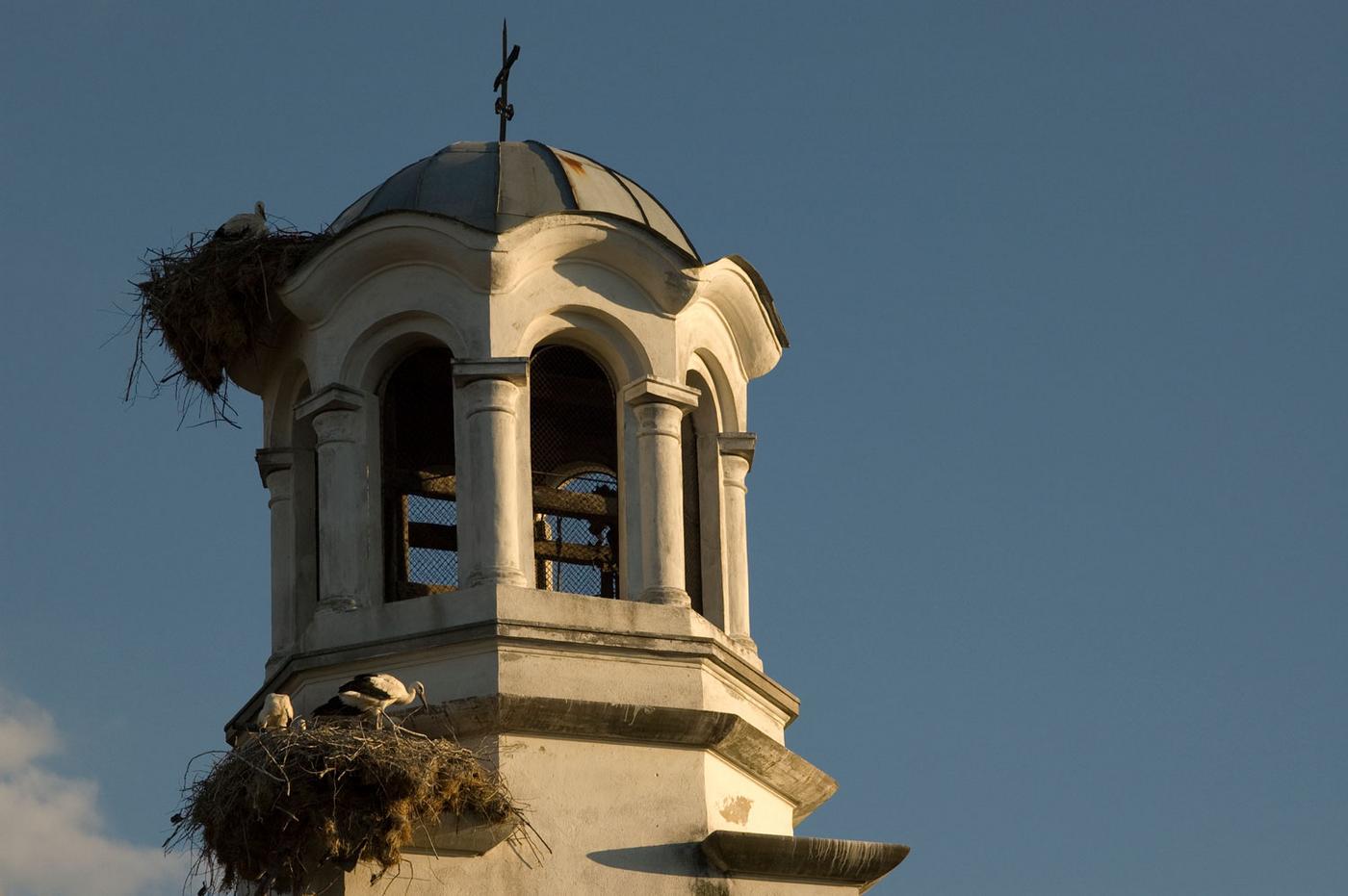
This year’s Stork Village Meeting is taking place in Belozem, Bulgaria. The village was designated a European Stork Village in 2005.
© Gunter Willinger
Where the children of Belozem go to school, the White Storks are never far away. Several pairs of storks are raising their young on the roof of the school building.
© Green Balkans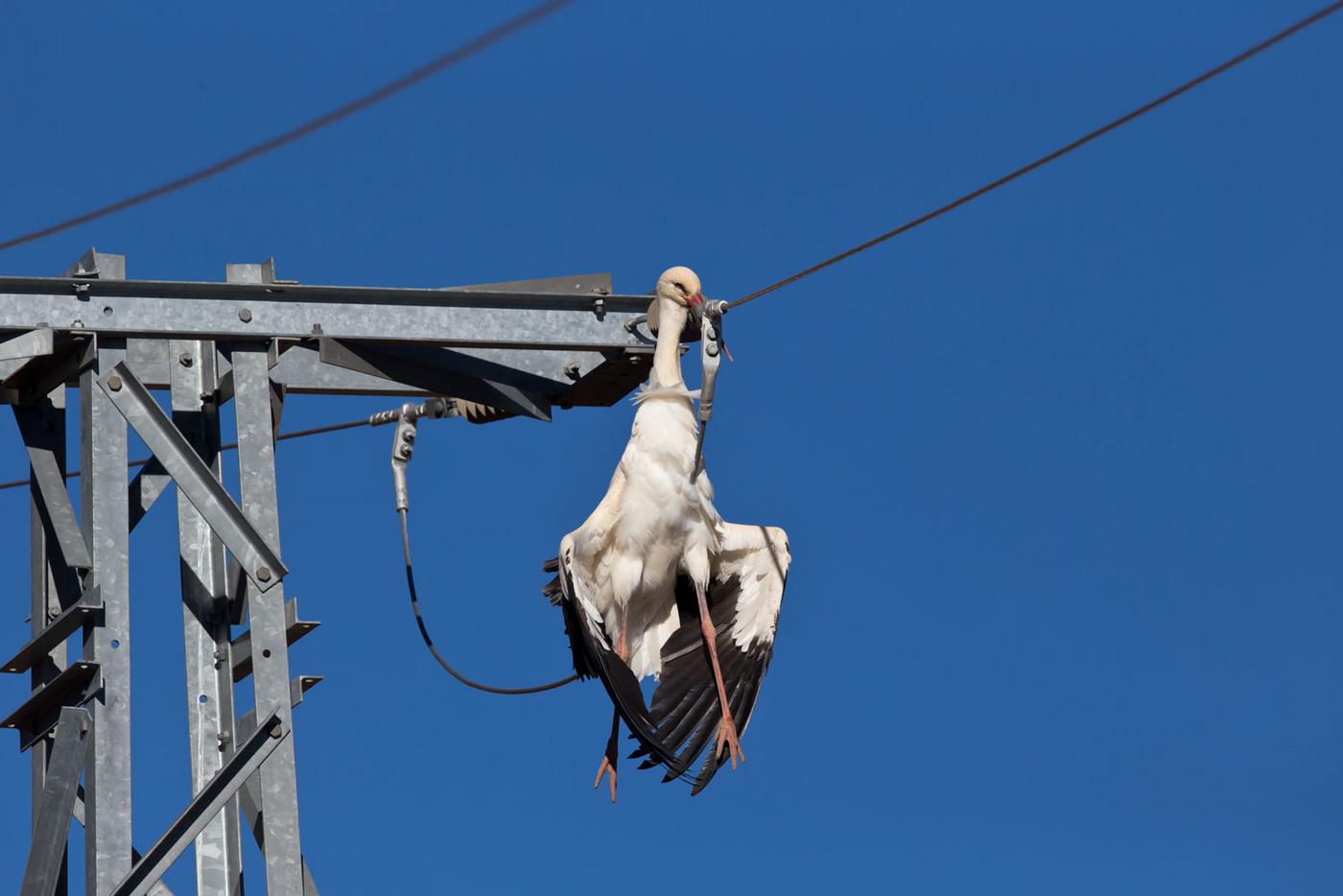
A dead White Stork on a power line: Unsecured power lines pose a deadly danger to storks, whether through fatal electrocution or strangulation.
© Matthias PutzeRadolfzell, Belozem. To mark World Migratory Bird Day on 9 May, the internationally active nature conservation foundation EuroNatur is turning its attention to one of Europe’s best-known migratory birds: the White Stork. Whilst the species is currently recovering in Western Europe, populations in the east of the continent are stagnating. This is partly due to the dangers faced by the storks that take the longer eastern migration route. For instance, many white storks are illegally shot along the migration route over the Middle East.
To coincide with World Migratory Bird Day, the annual meeting of the European Stork Villages Network (ESVN) will take place from 7 to 9 May 2026 in the Bulgarian stork village of Belozem. With around 40 breeding pairs, Belozem is considered one of the villages with the highest stork populations in South-Eastern Europe. At this year’s ESVN meeting, representatives from stork villages across numerous countries will come together to exchange experiences in stork conservation, present new environmental education projects and develop joint strategies for the protection of the white stork along its migration routes.
“Migratory birds such as the White Stork connect habitats, countries and cultures. Their protection can only succeed through joint efforts – and that is precisely what the European Stork Villages Network stands for,” says Dr Justine Vansynghel, project manager at EuroNatur. “The meetings of the Stork Villages demonstrate how important networking and the exchange of ideas are for successful local nature conservation – but they do not replace the responsibility of politicians to implement measures to protect migratory birds.”
A particular highlight of this meeting is the participation of international guests in the 20th anniversary of the White Stork Festival in Belozem – a public celebration featuring guided stork tours, a cultural programme and insights into local nature conservation projects. Also planned is the release of a tagged White Stork, whose migration route can later be scientifically tracked using the GPS transmitter. The data obtained in this way provides valuable insights into migration routes, resting places and threats, such as electrocution or illegal killing, faced by the species on its journey to and from its wintering grounds.
With the meeting in Belozem, the European Network of Stork Villages emphasises that local commitment and international cooperation are inextricably linked – very much in the spirit of World Migratory Bird Day.
Background information:
• The ‘European Stork Villages’ initiative: Since 1994, EuroNatur has been designating villages and communities as ‘European Stork Villages’ where large numbers of storks live and where there is a significant commitment to stork conservation. In so doing, EuroNatur is creating a growing alliance for the protection of these long-legged birds and countering the increasing loss of habitat for this species in Europe. Belozem, situated in central southern Bulgaria, was awarded the title in 2005.
• World Migratory Bird Day is celebrated every year on two Saturdays in May and October to highlight the need for international cooperation on the protection of migratory birds. Events include bird festivals, educational programmes, film screenings and excursions. This year’s theme is ‘Every bird counts – your observations matter!’, highlighting the importance of citizen science.
Contact:
Christian Stielow, | christian.stielow(at)euronatur.org |+49 7732 – 927215