


++ EU Parliament event provides a dialogue platform on Montenegro’s Chapter 27 benchmarks ++Speakers highlight the need to go past “paper parks”++
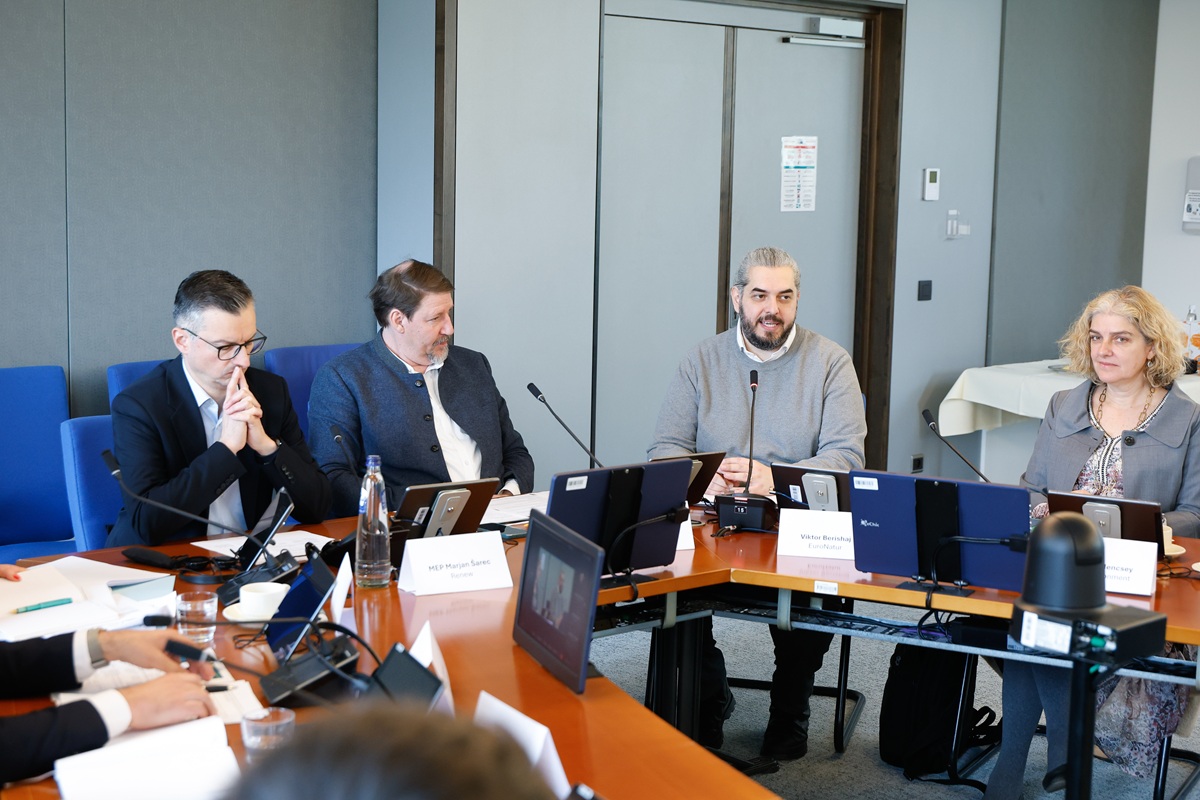
Environmentalists and EU politicians gathered in Brussels at the invitation of EuroNatur to discuss Montenegro’s progress on environmental policy in the context of its planned accession to the EU.
© EP
Ulcinj Salina is one of the most ecologically valuable wetlands on the eastern Adriatic. It serves many bird species for breeding, resting and wintering.
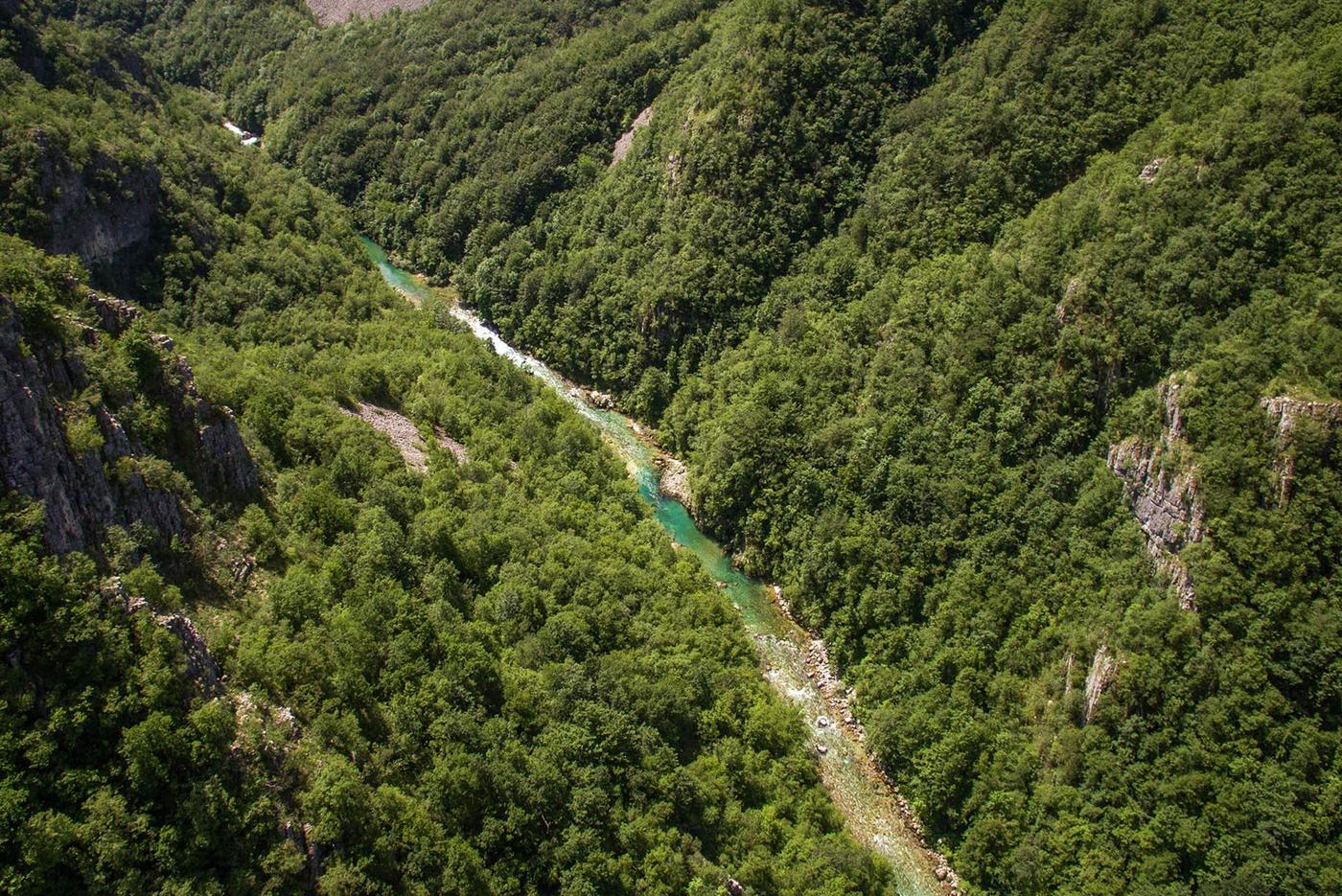
Komarnica Canyon. Every bend in this river and every shadow in this canyon holds species that science is only just beginning to understand.
© Riders.meBrussels, Radolfzell. Montenegro is on its way to becoming the next member of the European Union, but the benchmarks set for protecting the country’s rich nature and biodiversity are not easy to meet. As the Western Balkans Accession frontrunner, the country faces increasing pressure to demonstrate not only progress on paper but also the capacity to effectively safeguard its protected areas while preparing their transition towards the European Union’s Natura 2000 network.
But ambitions are high: the Montenegrin government is aiming to close environmental Chapter 27 of the EU accession protocol this year – with the help and under the watchful eye of nature conservation organisations, civil society and the EU Commission. This was highlighted at a recent event in the European Parliament (“Beyond Box-Ticking: Natura 2000 and Protected Areas as the Real Test of Montenegro’s Chapter 27 Readiness”), organised by EuroNatur Foundation and hosted by MEPs Thomas Waitz (The Greens/EFA) and Marjan Šarec (Renew Europe). The event brought together three distinct perspectives: the European perspective (EU Parliament and Commission), the Montenegrin government, and civil society and environmental experts.
“Nature protection and designation is one of the stepping stones of Montenegro’s accession to the EU. But this is far beyond a mere box-ticking exercise. The actual granting of protection status and its effective implementation are key for closing Chapter 27”, stressed MEP Thomas Waitz ahead of the discussion.
“Montenegro’s constitutional designation as an ecological state is a commitment. There is a danger right now of rushing reforms leading, for example, to so-called ‘paper parks’”, said MEP Marjan Šarec.
Recent cases in Montenegro, including the bird hotspot Ulcinj Salina and pressures on river ecosystems like the Komarnica, illustrate that the challenge for the country is not only planning but also ensuring protection in practice. Important areas in Montenegro remain insufficiently protected ahead of accession. A fact that causes concern at the Secretariat of the Bern Convention, the most important European nature conservation agreement. Its Secretary, Grazia-Alessandra Siino, emphasised the importance of the country continuing to work on the designation of candidate Emerald sites and effective protection of existing ones, which should ensure the successful transition to Natura 2000, once it becomes an EU member.
At the same time, the Secretariat stressed that the Emerald Network remains a binding obligation for Montenegro under the Bern Convention. Ensuring continuity of protection for Emerald sites during the transition towards Natura 2000 is essential to avoid gaps in conservation.
While both representatives from Montenegro, Zoran Dabetić, Secretary of State from the Ministry of Ecology and Predrag Zenović, Chief Negotiator for Montenegro, assured that Montenegro is on a good path towards meeting its benchmarks with a transparent approach, they also highlighted that there are apparent capacity and management challenges, for which they seek cooperation with all stakeholders.
The Commission underlined that Enlargement continues to be assessed on a merit basis, with a strong focus on substance rather than formal compliance.
“We do know Chapter 27 is one of the most complex chapters,” said Monika Hencsey, Director for Green Diplomacy and Multilateralism at DG Environment. The EU Commission, while acknowledging the progress made so far, reiterated the expectation for Montenegro to meet its benchmarks, among others, to submit a scientifically robust Natura 2000 proposal soon, supported by an effective legal and institutional framework.
Barbara Jesus-Gimeno, Head of Unit for Montenegro and Bosnia and Herzegovina at DG Enlargement and Eastern Neighbourhood, added, “The goodwill of the ministry and civil society is evident, but EU support must translate into concrete results. The resources provided need to be effectively used to ensure both preparation and implementation.”
Montenegro is already struggling to manage existing protected areas, and many potential sites are under increasing pressure coming from various infrastructure projects. “It is a paradox: We are spending resources and time identifying the most valuable areas in the country, while at the same time having to fight to protect them from ongoing pressures”, said Andrijana Micanović, Montenegrin Ecologists Society.
For Ksenija Medenica, Center for Protection and Research of birds of Montenegro, the current situation is not a challenge for the environment, but above all for the institutions, which must ensure that environmental protection is prioritised over short-term political and economic interests.
“For Montenegro, the accession process is an opportunity to demonstrate leadership, not only in progressing through, but in setting a credible standard for nature protection. And for the European Union, it is equally important. Because the assessment of Chapter 27 must be based on substance, on real protection capacity, not only on formal completion of requirements”, stressed Viktor Berishaj, Senior Policy Officer at EuroNatur.
As the most advanced candidate country, Montenegro’s approach will set an important precedent for other Western Balkan countries progressing through the accession process. How environmental standards are applied in this case will shape expectations and credibility for the region as a whole.
Background information:
- EU accession: Montenegro opened Chapter 27, Environment and Climate Change (one of the most complex chapters in the EU accession) in 2018. Closing this chapter requires meeting strict intermediate and closing benchmarks, including establishing a management body for Salina Ulcinj, effective implementation of horizontal legislation, and submitting credible sites for proposed Natura 2000 (see more: https://www.eu.me/en/poglavlje-27-zivotna-sredina-i-klimatske-promjene/).
- Natura 2000 is the EU’s network of protected areas established under the Birds and Habitats Directives and forms the backbone of European biodiversity policy. At the same time, Montenegro and other Western Balkan countries are bound by the Bern Convention and the Emerald Network, which require the identification and protection of areas of special conservation interest. Ensuring continuity between Emerald and Natura 2000 is essential for credible alignment with EU environmental standards.
Enquiries: Christian Stielow, Mail: christian.stielow(at)euronatur.org, Tel.: +49 (0)7732 – 92 72 15