Serbia is considered one of the hotspots for bird poisoning in Europe. Time and again, corvids and birds of prey fall victim to poisoned bait and so-called kamikaze pigeons. Our Serbian partners at BPSSS are fighting against this form of bird killing – with the help of the justice system and through educational work.
A shocking sight in the fields of Nakovo. But this is only a fraction of the dead corvids that fell victim to the mass die-off in northeastern Serbia.
An unnerving hush has fallen over the fields surrounding the village of Nakovo in northeastern Serbia. The silence of the grave is only broken by the sound of rooks and jackdaws dropping down dead from the trees and bushes. These birds once lived in the fields around Nakovo, searching for insects, mice and corn. On this spring day, what they mostly found were lethal seeds. Without knowing it, these crows and jackdaws were consuming their last supper.
Not just an isolated case
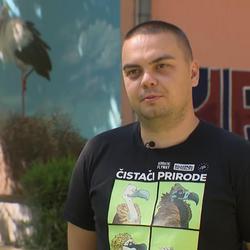
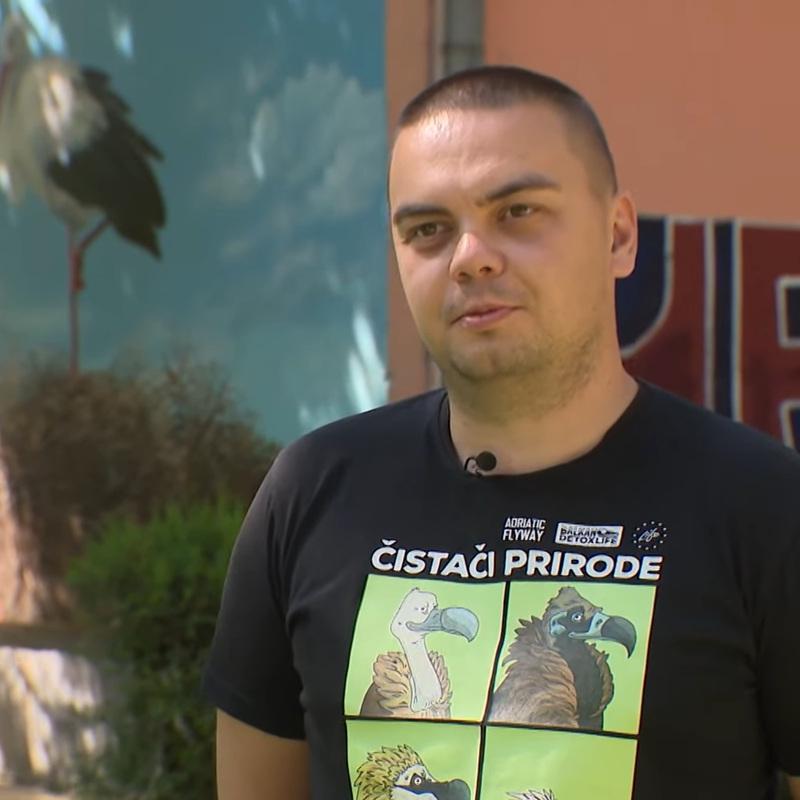
Slobodan Marković from our Serbian partner organization BPSSS is an enthusiastic ornithologist. Seeing poisoned birds breaks his heart.
In March 2024, around a thousand birds fell victim to a mass bird death in northeastern Serbia. It is one of the most dramatic cases of bird poisonings in Europe – and yet, unfortunately, it is not exceptional. In early 2025, the Balkan state was hit by another wave of poisonings. This time, not only corvids but many birds of prey too fell victim to the poison; in January and February 2025 alone, 19 rare and heavily protected birds of prey died in Serbia.
“This alarming trend threatens not only our endangered species but also the sensitive balance of the ecosystems they inhabit,” says Slobodan Marković from our Serbian partner organisation BPSSS (BirdLife Serbia). Serbian bird conservationists have been campaigning against the poisoning of wildlife in their country for many years. For a long time, it seemed like tilting at windmills, but recently they have been able to make some progress at an institutional level.
Birds are mostly the accidental victims
Serbia is considered one of Europe’s main centres of bird poisonings. A map of where birds have been found dead clearly shows where most of the poisonings occur: in the north of the country. The province of Vojvodina is characterised by intensive farming. In the Pannonian Basin, fields of sunflowers and tobacco are found side by side with numerous fields of vegetables and cereals. These conditions have now resulted in a marked increase in the number of mice. It is highly probably that poisoned seeds intended to kill rodents were the cause of the mass die-off.
In addition to this, the region is an important habitat for the golden jackal. The majority of poisonings are intended for this member of the canine family. Livestock farmers fear that this large relative of the fox will kill lambs and chickens. So they put down illegal poisoned bait, laced, for instance, with the highly effective neurotoxin carbofuran. Having consumed the bait, the golden jackals will die an agonising death; at the same time there is a complete disregard for the fact that other carrion eaters such as ravens and birds of prey will also meet a cruel end. Because their senses are so sharp, vultures and eagles will often find the bait even before the jackals do and so they are in even greater danger from the poison.
Poisoning: a problem across Europe
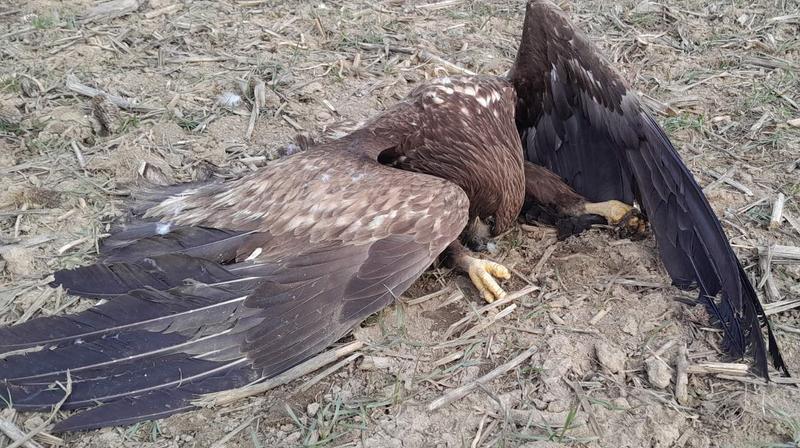
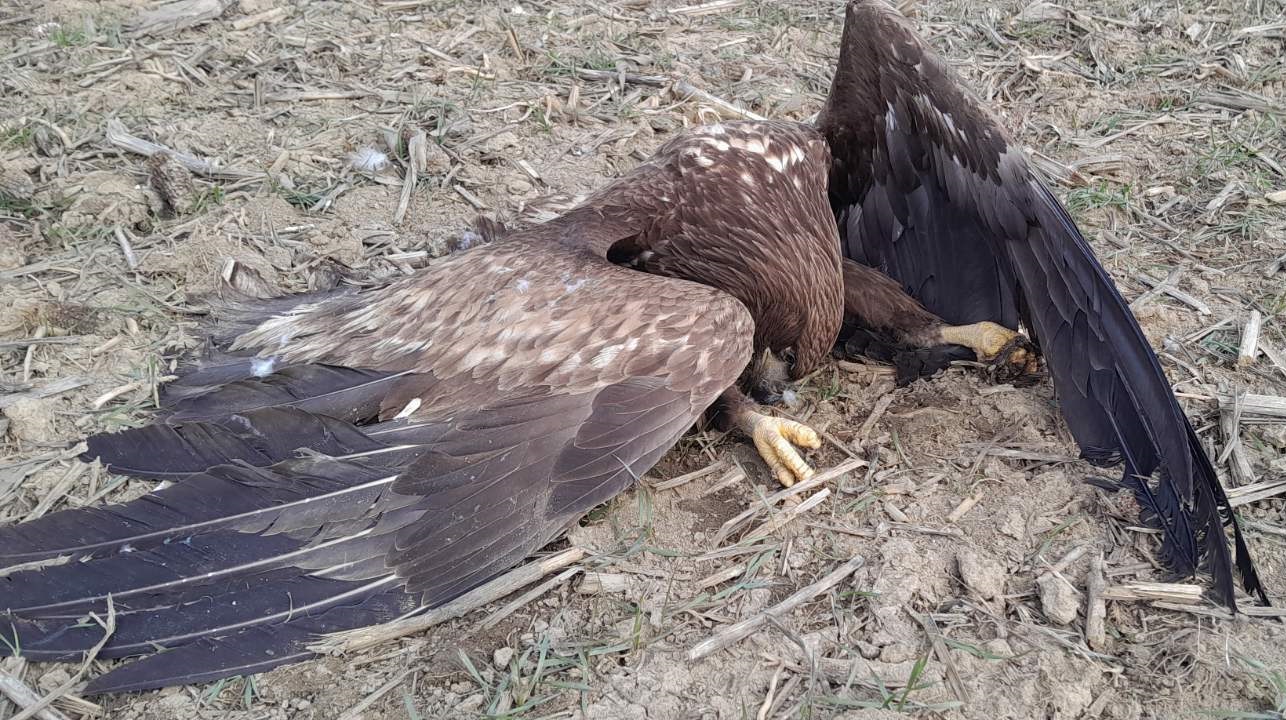
A dead white-tailed eagle on a field in Serbia. As designated scavengers, these birds are particularly susceptible to poisoning.
Serbia isn’t the only country in Europe where birds are poisoned in large numbers – sometimes accidentally, sometimes deliberately. The study The Killing 3.0: Progress in the Battle against the Illegal Killing of Birds in the Mediterranean Region and Europe led jointly by EuroNatur and BirdLife and published in May paints a gloomy picture of bird killings across large parts of Europe, the Middle East and North Africa. Alongside shootings and bird-catching nets, poisoning represents a frequent cause of death, particularly for birds of prey and corvids.
Even the devious kamikaze method of killing isn’t only common in Serbia. In Germany too there are frequent reports of pigeon fanciers using poisoned pigeons as bait to hunt hawks and falcons. And here too, prosecutions for bird poisoning are rarely met with success.
Further information about the extent of poisoning cases in Europe can be found at: stopwildlifepoisoning.eu Here you can sign a petition supported by EuroNatur on the subject.
Lethal live bait for birds of prey
The farmers who put down poison or cadavers treated with it are clearly acting irresponsibly but most are not aiming to kill birds. But there is another group who are, breaking the law and deliberately targeting birds of prey: the black sheep amongst Serbia‘s pigeon fanciers are killing hawks and falcons, which they see as a threat to their free-flying pigeons. They shoot at birds of prey with rifles or fit little metal hooks to the wings of their pigeons. If the pigeons are attacked by a hawk, for example, the heavy weight causes both hunter and prey to drop rapidly to the ground, where they are killed by the pigeon fanciers lying in wait.
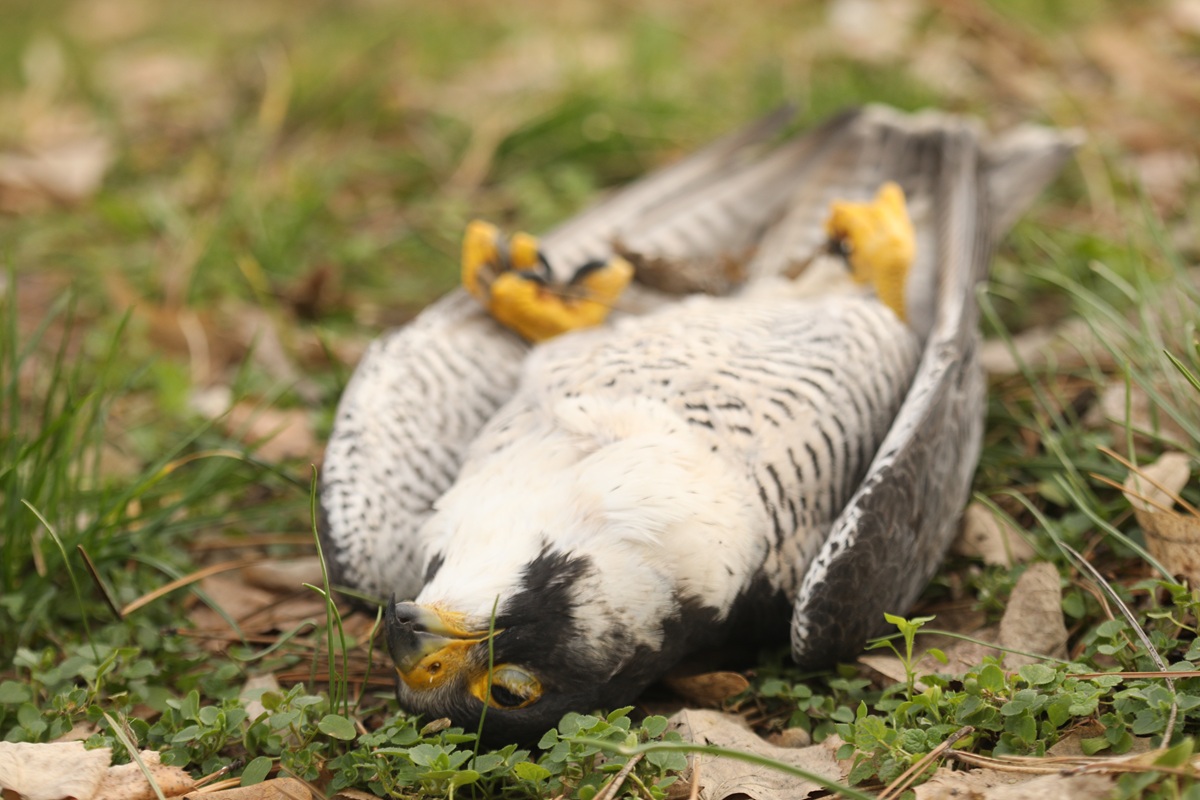
A sad discovery: a poisoned peregrine falcon in the Serbian city of Kragujevac. Peregrine falcons are excellent hunters: with top speeds of more than 320 kilometers per hour when hunting, they are considered the fastest known animal in the world.
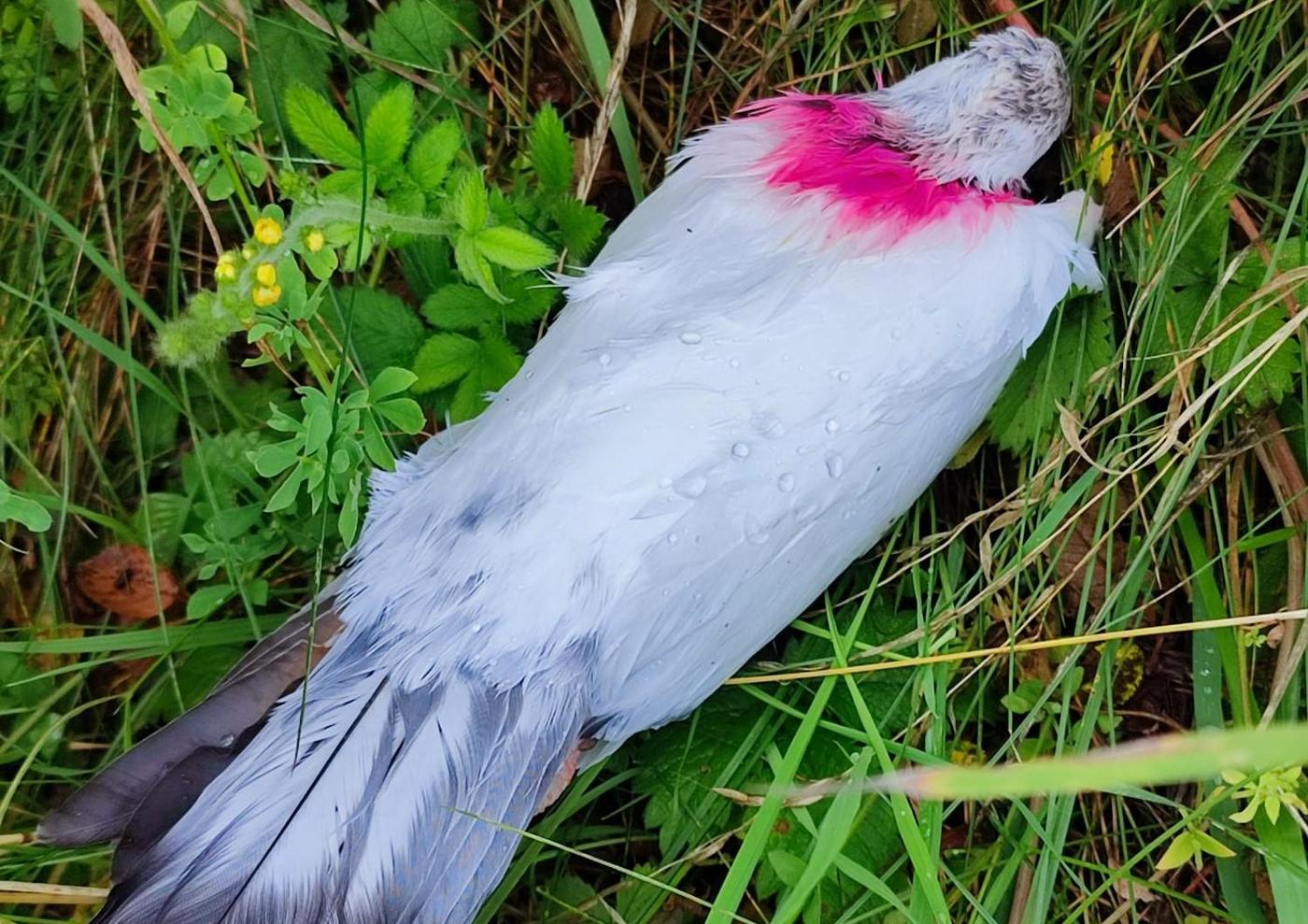
The spot where the poison was applied is clearly visible on the pigeon's neck. Here is a dead breeding pigeon in Regensburg. “Kamikaze pigeons” are also used in Germany.
And there are still more devious methods: some pigeon owners paint poison onto the nape of pigeons’ necks that they are not interested in breeding, sometimes even trimming their feathers to make them easy prey. The pigeons treated in this way will not come into contact with the poison themselves when they clean their feathers, but the falcons are very likely to. They frequently strike their prey with a bite aimed at the nape of the neck, exactly where the poison has been applied. The use of so-called kamikaze pigeons is systematic in Serbia. “We have about 50 000 pigeon fanciers in the country,” says Slobodan Marković. “We estimate ten percent hunt for birds of prey. That doesn’t just pose a threat to populations of falcons and hawks, it also threatens the ecosystems in which these birds play an important role.”
To try to put a stop to this illegal activity, our Serbian partners are taking lessons from their Bulgarian colleagues. In Bulgaria there has already been collaboration between bird conservationists and pigeon fanciers, and methods have been developed to reduce the number of pigeons becoming victims of birds of prey. One approach, for example, is to paint the pigeon’s wings with bright colours, something that clearly unsettles the falcons and hawks. This method saw the number of attacks by birds of prey fall by 40 to 50 percent, which has, as a consequence, improved acceptance of them by the pigeon fanciers.
Challenging enforcement
Poisoning wildlife is a crime that can be punished with high fines in Serbia too. However, the culprits are hardly ever brought to justice, partly because providing evidence is difficult. Poisoned birds do not necessarily die where they consumed the poison. And the illegal substances can quickly be disposed of by the culprits.
However, our Serbian partners go out into the field for every case of poisoning reported by their volunteer helpers and write a full report which they then pass to the police. “In Serbia more than 3 000 birds have died as a result of poisoning over the past twenty years, and these are just the cases that have been found. The underlying number is clearly higher,” says Slobodan Marković. And yet not a single culprit has been arrested and punished. This shows poisoning is a common practice and yet the responsible authorities are failing to bring cases to court,” complains Marković.
Our dogged pursuit of the authorities is beginning to show results. Meanwhile many police in Serbia are taking the issue of wildlife crime seriously and are following up cases.
Slobodan Marković, BPSSS
Our partners at BPSSS are urging the authorities to fulfil their duties and enforce the law. The latest developments give hope. At the beginning of the year the Serbian authorities carried out operations targeting the illegal trade in pesticides. There were several arrests and thousands of packs of dangerous chemicals such as carbofuran were confiscated. Without the black market where the chemicals are traded, the poisonings in Serbia would not be so extensive. In this respect, controlling it is an important step forward.
What is special about the latest operations carried out by the Serbian prosecution authorities is their range and the coordination. The authorities weren’t just reacting to individual incidents but worked over a long period to destroy larger networks involved in the illegal trade of pesticides. “These punitive measures taken by the authorities were very good, but there is still plenty to do,” says Slobodan Marković. “We urgently need a plan of action against the illegal persecution of birds, including action against poisonings. Procedures and responsibilities need to be clearly defined,” says the bird conservationist. Cases regularly peter out without the culprits being held to account.
Not just a danger to animals
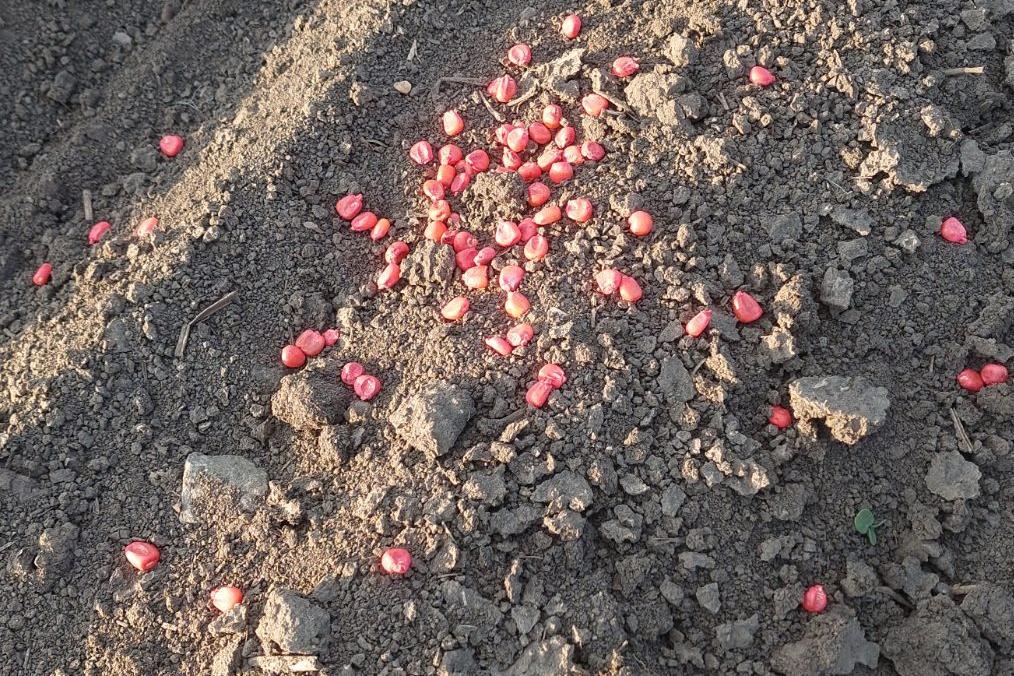
Corn seeds treated with carbofuran. Consumption of these seeds kills mainly rodents and corvids. However, it also contaminates the soil and can enter the drinking water.
Contact with poisons can even present major dangers to the health of humans. Nausea, dizziness and breathlessness are frequent side effects when people come into contact with these chemicals – in extreme cases, it can even lead to death. Furthermore, the poisons contaminate the soil and water resources, leading to long-term pollution, which endangers agriculture and the safety of drinking water.
Often the culprits don’t even understand the far-reaching dangers. This is why our partners at BPSSS are working to educate people. They are raising the awareness of local populations to the issue and making it clear: poisoning animals is not a misdemeanour! It doesn’t just pose a threat to rare species; it threatens the whole environment – including the people who live there.
Author: Christian Stielow has written frequently about cases of poisoning in Southeast Europe. The extent of the problem in Nakovo and the perfidious methods used by some pigeon breeders shocked him while researching this article.