


An Aquatic Warbler has been spotted in the Hortobágy region for the first time in 14 years. This extremely rare bird species is extinct as a breeding bird in Hungary, but an international species conservation project, in which EuroNatur is also involved, aims to ensure the return of this endangered bird.
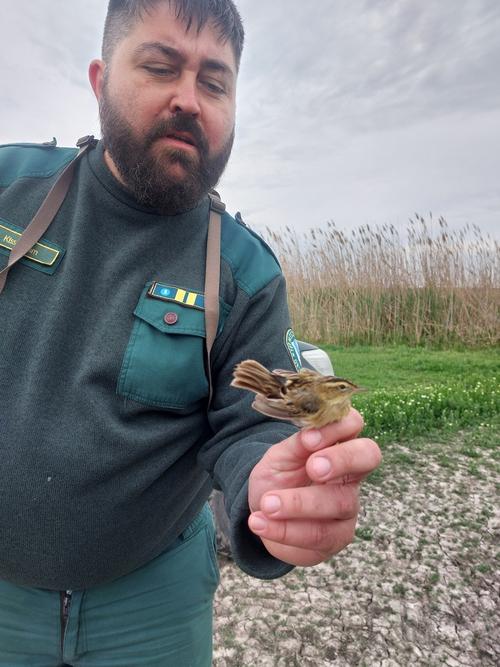
Small bird, big emotions: the Hungarian bird ringers were delighted with their discovery.
© Tamas Zalai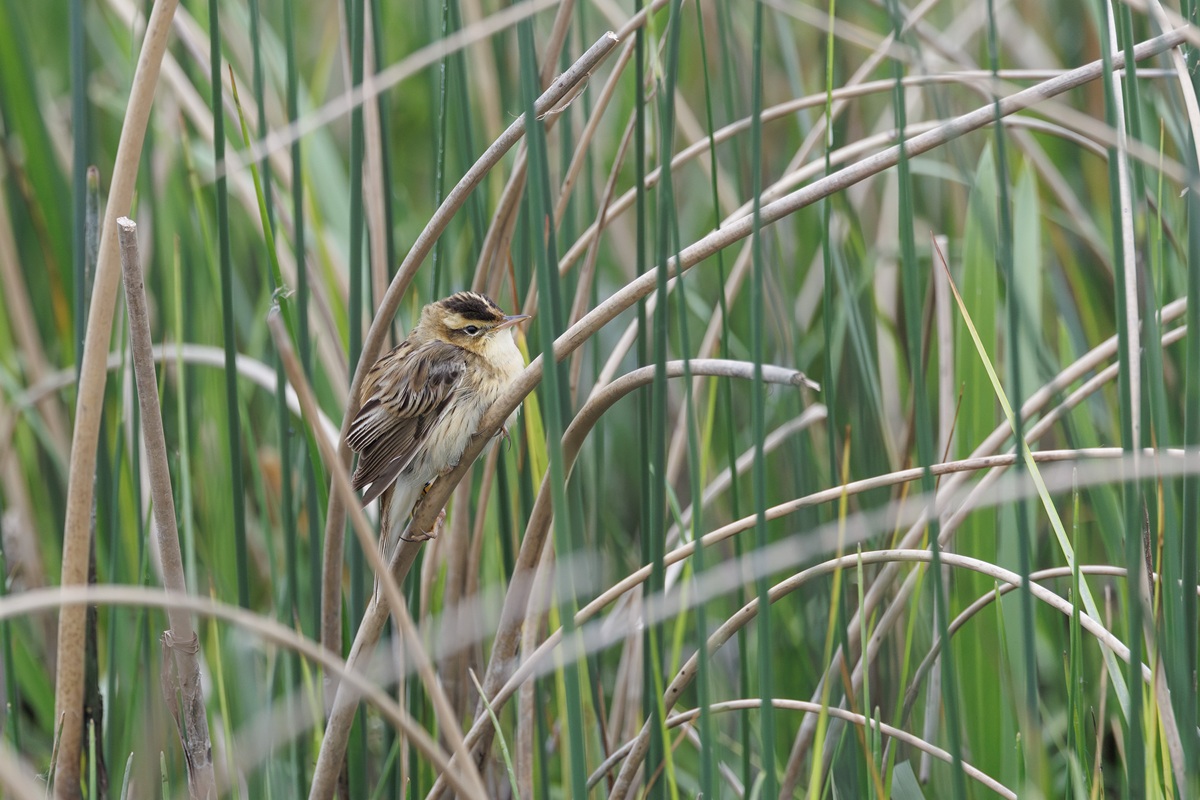
The Aquatic Warbler after its release: the bird coped well with its brief stay in the mist net and subsequent identification and measurement.
© Daniel BallaNear the small village of Nagyiván, bird ringers from our Hungarian partner organisation, the Hortobágy Environmental Association, were quite astonished to find an Aquatic Warbler in a mist net on the morning of 19 April. This extremely rare species was removed from Hungary’s breeding bird atlas back in 2011, and since then there has been only one other sighting, namely in 2020. The last confirmed breeding of Aquatic Warblers in Hungary also took place near Nagyiván, in the marshland of Kunkápolnás, also the location of the current record.
The discovery offers hope for the future. The international species conservation project LIFE4AquaticWarbler, funded by the EU, has been running since October 2024. The aim of the project, in which EuroNatur is also involved, is to stabilise the remaining populations of the Aquatic Warbler in Poland, Lithuania and Ukraine, and to re-establish the extinct populations in Hungary and Germany.
As part of the programme, the reintroduction of young birds into the project area near Nagyiván is planned for 2030. Until then, measures to improve or restore the habitat across several hundred hectares will be carried out, including near-natural grazing and mowing to keep the areas open. The first 223 hectares were successfully mowed last year.
The individual bird was ringed in Spain during its migration from Africa to its breeding grounds in Eastern Europe. It could be a harbinger, indicating that the measures taken in Hungary to improve the habitat are already having an effect.