“For me, the national park is like someone I love”
EuroNatur Award for Albanian conservationist
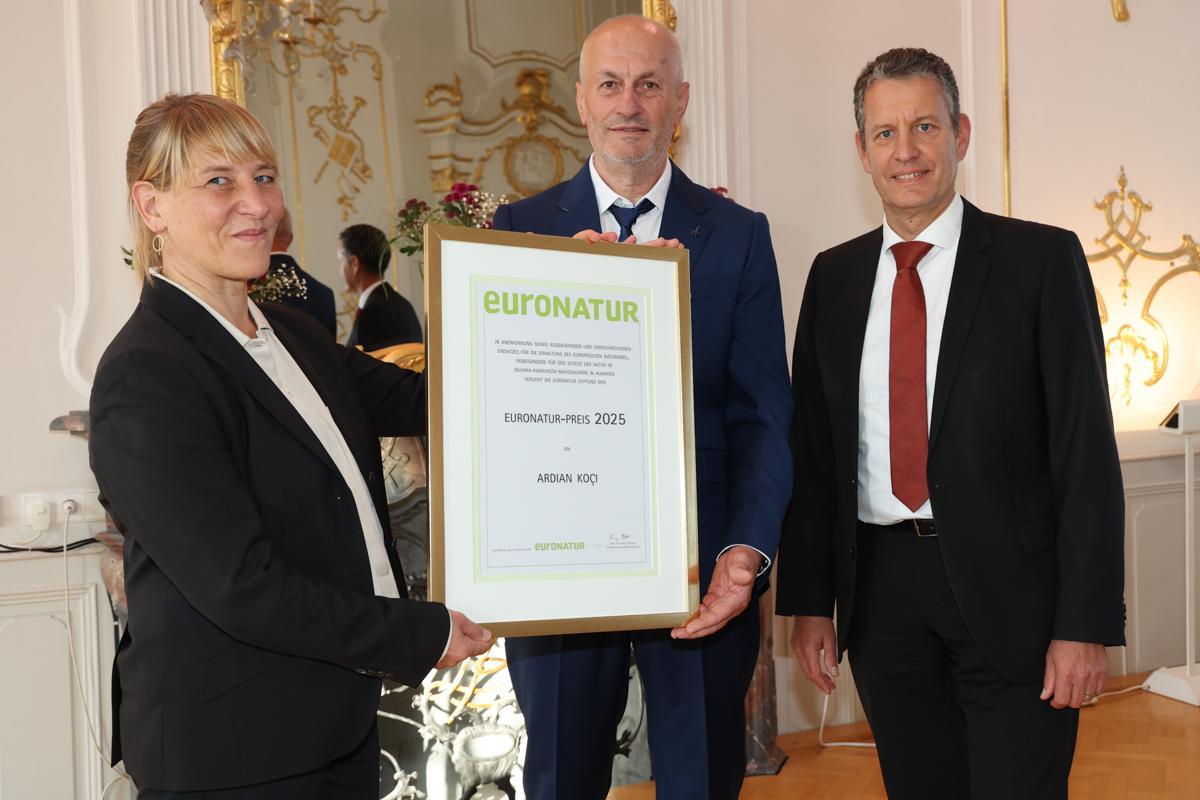
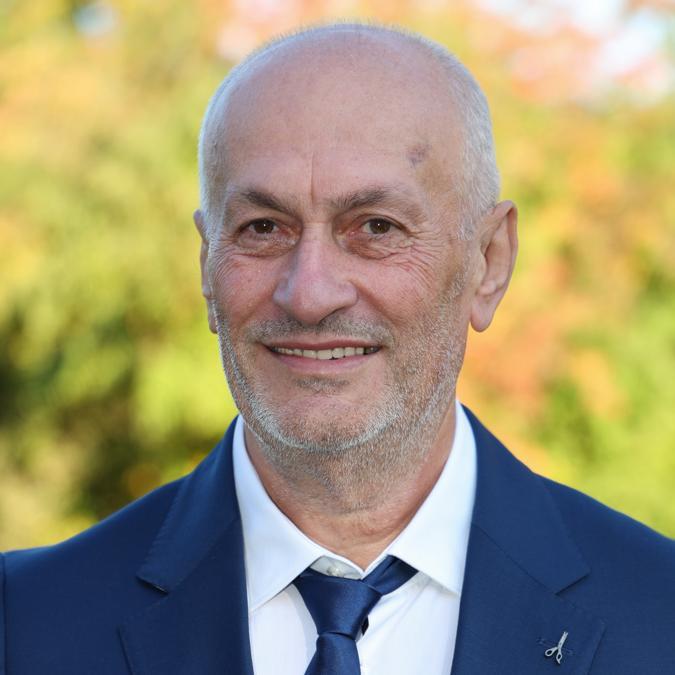
The EuroNatur Award gave Ardian Koçi new courage (pictured from left to right: EuroNatur Vice-President Anna-Katharina Wöbse, Ardian Koçi, EuroNatur Managing Director Gabriel Schwaderer).
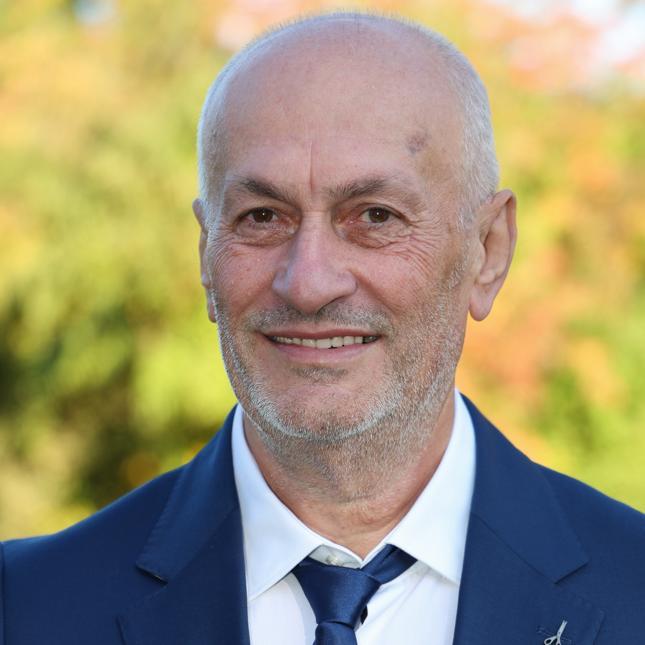
The Albanian conservationist Ardian Koçi received the EuroNatur Award on 16 October 2025 on the Isle of Mainau in Lake Constance. We chose him as this year’s recipient because of his extraordinary personal commitment to the protection of Divjakë-Karavasta National Park. Ardian Koçi neither caved in to political manipulation nor to pressure and put up with professional and private disadvantages for the sake of his integrity. Today he says with conviction: “I would do it again!” In this interview, our awardee talks about his deep bond to the nature in Divjakë-Karavasta National Park and provides insights into what it means to be a national park director in a land like Albania.
About Divjakë-Karavasta National Park
Divjakë-Karavasta National Park is considered one of the most species-rich of Albania’s protected areas. Amongst others, it is home to the country’s only colony of Dalmatian pelicans. That the park is as yet brimming with so much life is largely due to one man: Ardian Koçi. Originally a veterinary surgeon, he answered a call of the Albanian government in 2013 to become director of Divjakë-Karavasta National Park, giving up his well-paid job in Italy to do so. During his time as national park director, he turned the area into one of the country’s flagship nature reserves. With backbone and courage, he stood up against destructive investment plans and was finally forced to resign. Today, Ardian Koçi lives in Germany. Watch a video with impressions of the awardee and award ceremony online.
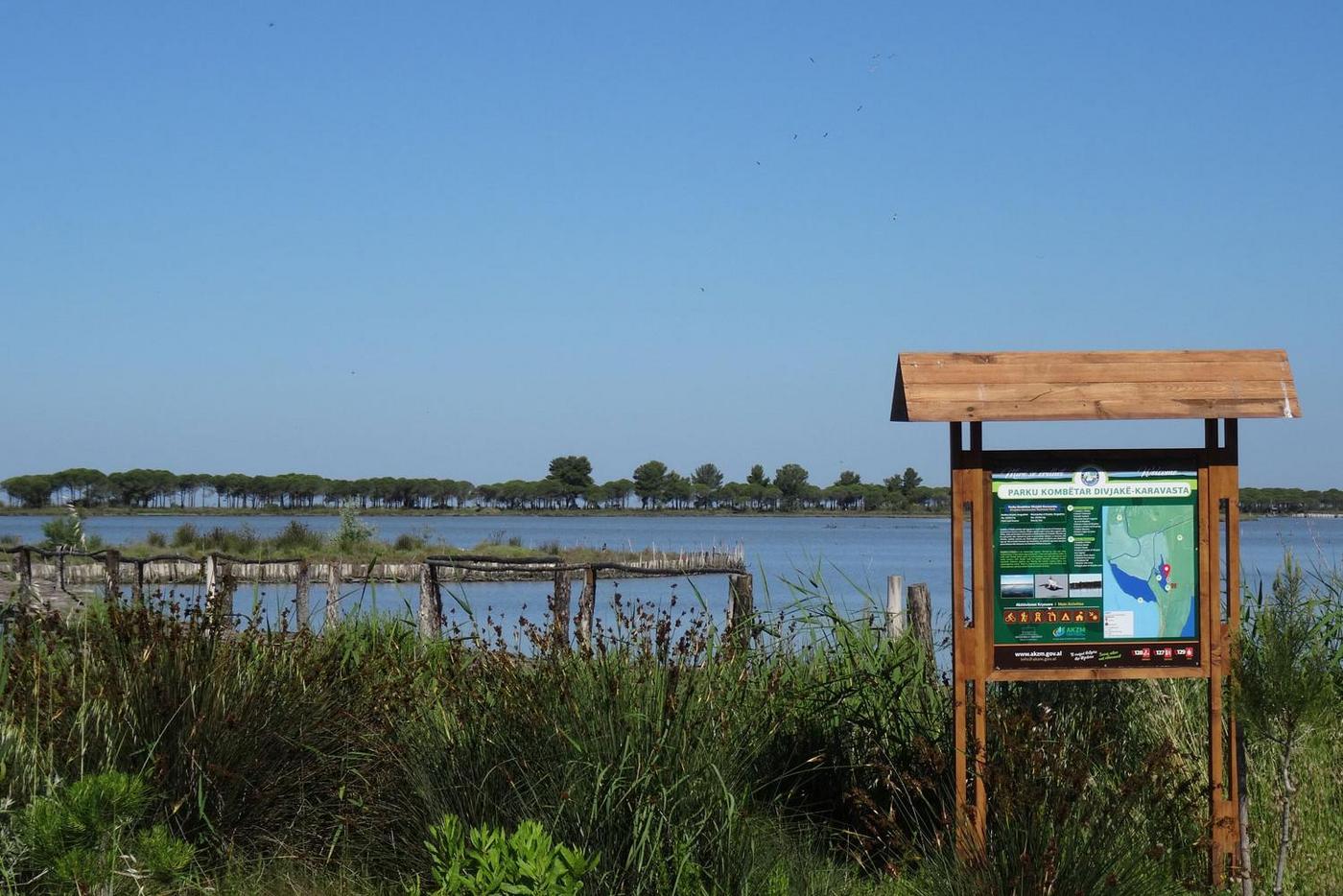
This is a protected area! Information board for visitors to Divjakë-Karavasta National Park.
With the EuroNatur Award, we honour your exceptional commitment to Divjakë-Karavasta National Park. What does the park mean to you personally?
To me, the park is like someone I love very much, almost a family member. I actually thought I would spend the rest of my life there. Our shared history already began in my childhood. My mother worked there and I was out and about in the woods all day. In all the years I lived and worked in Italy, I constantly yearned for the park. When I was offered the job of national park director, I hesitated, however, because I knew how much political pressure is put on this position. Only when I was given the assurance that I could work there unhindered, I accepted. At that time, the situation in Divjakë-Karavasta National Park was paradoxical. It was a pure paper park, and things were happening there which shouldn’t in protected areas.
For example?
The park was a hotspot for bird poaching and a well-known destination for hunting tourists. Groups of hunters came from abroad, especially from Italy. One year before I became park director, Italian TV even advertised hunting trips to Divjakë-Karavasta National Park. Illegal logging was also a big problem. When I took up the position, I wanted to find out how the park was managed at the time. The answer of my predecessor shocked me: “You can earn good money in this position. You will have a fine life.” I discovered that poaching, especially of birds, was taking place in the park, and that the former park director had tolerated and made money from it. Hearing this made me even more determined to take on the position, because I wanted to protect nature inside the park.
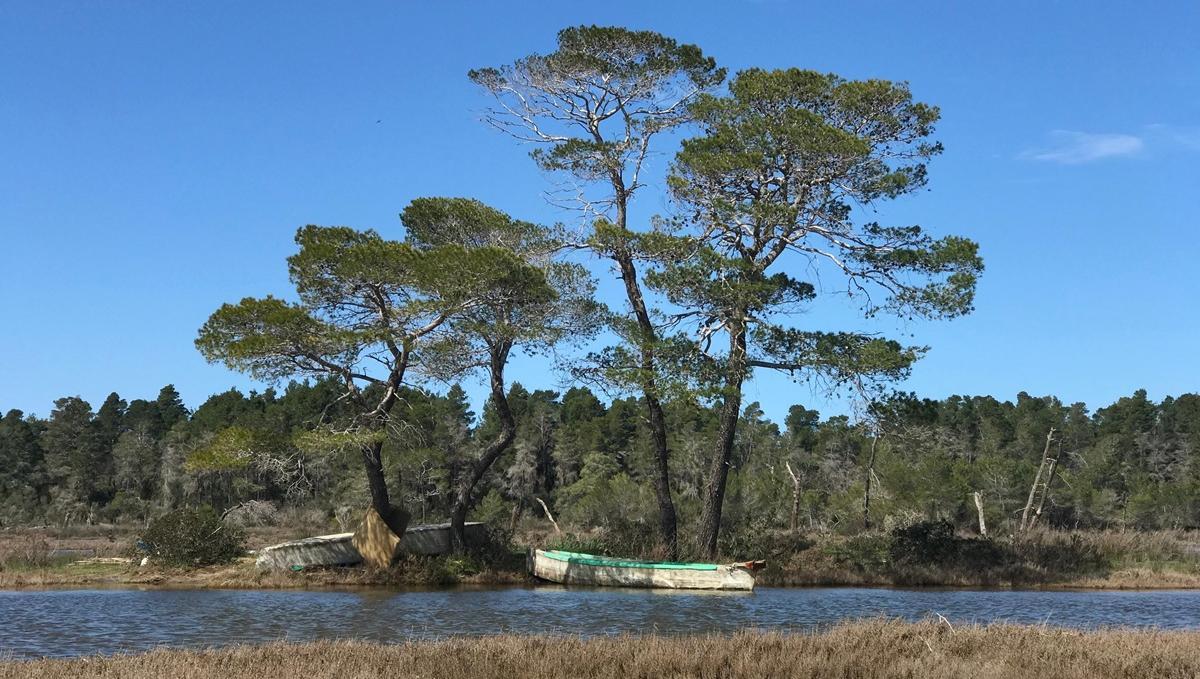
The Divjakë-Karavasta National Park is famous for its unique pine forests, particularly black pine (Pinus nigra) and Aleppo pine (Pinus halepensis).
You have successfully transformed the paper park into a true national park. How did you manage that?
First, I reorganised and motivated the park staff. I had to dismiss some who had acted to the detriment of the park. It was important to me to employ local people and those who truly love nature. In the end, this even included three hunters. They became my most committed hands against poaching in Karavasta Lagoon. Also, I founded a group of junior rangers. We deliberately integrated children from hunting families into this group – hunting has a long tradition in this region – to encourage a change of mind in the families. We involved the children in monitoring as well as in looking after tourists in the hope of their becoming park rangers themselves one day. When I began as park director in 2013, there was a management plan in the making which was approved in December 2015 and provided a good basis for all following activities. We fixed the problems of poaching and illegal logging. It was a long process, but we achieved a lot.
I have never seen conservation as a state duty, but always also as a moral responsibility towards nature.
Ardian Koçi
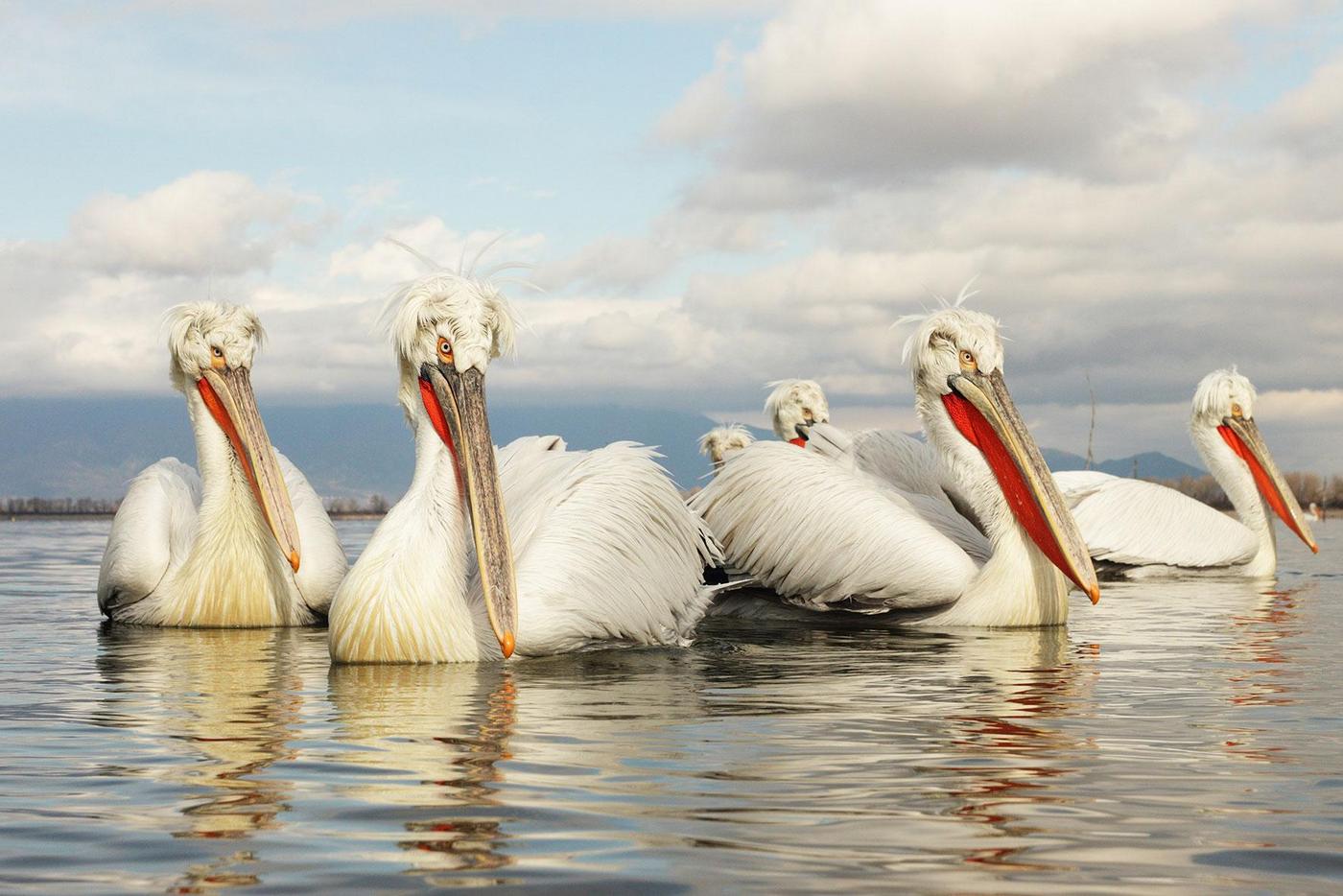
A real eye-catcher: the Dalmatian Pelican has become the symbol of Divjaka-Karavasta National Park.
A highlight of the park is its colony of Dalmatian pelicans. How has the colony developed and how did that happen?
It has grown considerably. I remember my first monitoring in 2013. There were about 28 pairs. In my last years of service, the number had risen to 85 pairs. First, we had to make sure that the animals were left in peace: no hunting, no shots scaring them. Another source of disturbance were fishermen approaching the bird’s island, so we surrounded it with signal buoys and information signs. At high tide, the island including the pelicans’ nests was flooded and the embryos inside the eggs died. That is why before each breeding season, in November and December, we piled up reed on the island to protect the nests. The pelicans could then safely breed in January.
When bird flu broke out in 2022, we were greatly concerned. To interrupt the virus chain, we searched the colony for dead pelicans twice a day by drone and immediately removed all carcasses. We were successful. All in all, only three of our pelicans died of bird flu, on Lake Prespa in Greece it was thousands.
The pelican colony is a magnet for visitors. Did nature tourists come alongside the pelicans?
Divjakë-Karavasta is famous for its Dalmatian pelicans and the pelican is the park’s symbol, but we opened up many more options for nature lovers. This included creating hiking trails and building a visitor centre. Our media campaign for the park was effective. In the first two years, the number of nature tourists increased enormously: pre-2013, the figures were roughly 230,000 per year, later, more than half a million. The number of international visitors rose, too, from about 2,000 to more than 100,000 annually. That also had its downsides, though: the hunger of those wanting to make money from nature grew.
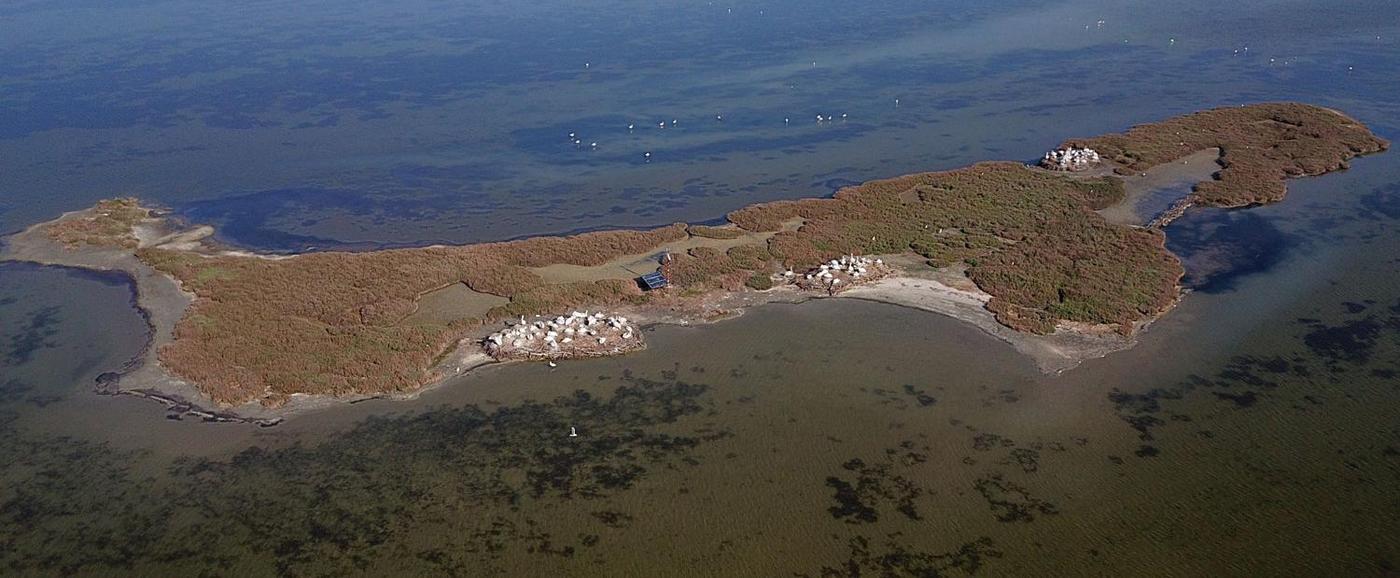
The Karavasta Lagoon is one of the largest coastal lagoons on the entire Adriatic coast. A particular highlight is Pelican Island. Tourism projects are threatening this natural paradise on the Albanian coast.
That’s a good cue. Not everyone appreciated your consistent commitment to the national park. How did this affect you?
Amongst other things, there were intense conflicts with Divjakë municipality, which owns 90 percent of the national park territory. I was regarded as an obstacle to the development of the region. They wanted to rubber-stamp tourism and infrastructure projects without the approval of the regional conservation authority and without environmental impact assessments. The local authorities accused me of bad management. They simply tried to catch me out on something chargeable. Later there were plans for a huge tourism project in the core zone of the national park.
The tourism project of the construction company Mabetex was gigantic: a complex with a capacity of about 18,000 beds to be built on national park beaches. What did your resistance look like?
It was an awful project and I felt powerless – the government supported and promoted it. This is why I called on numerous NGOs and many more people to oppose it. EuroNatur was part of that campaign back then. Moreover, I contacted every single ambassador who had visited Divjakë-Karavasta National Park in the past, including those from Japan, Brazil, Sweden and Austria. In a joint letter, they called on the Albanian prime minister to stop the project. The Japanese government had supported the development of the national park management plan and the Japanese minister of the environment visited the park and expressed his concern about the Pacolli project. [Editor’s note: the entrepreneur Behgjet Pacolli is the owner of Mabetex, a construction company registered in Lugano, Switzerland.] He called on the Albanian authorities to withdraw from it, else the Japanese government would in turn end its support. I appeared frequently in the media and the planned tourism resort was a number one issue. That’s when the legal representative of Pacolli phoned me up and told me: “We have thought of you. You can become manager in our tourism resort.” He was a schoolmate of mine. My answer was clear: “Your project has no place in this park.” Pacolli did not give up and repeatedly downsized the layout of the gigantic construction project, but it was and remained awful. The new proposals were forwarded directly from the ministry to the park administration. My answer was always the same: “We are in favour of projects for the economic development of the park, provided that they comply with the law, respect nature and take place exclusively within the park’s recreation zone.”
I was more afraid to lose my passion for the job than then job itself.
Ardian Koçi
Your efforts were successful!
Yes, but the project is not off the table, the threat continues. Against the backdrop of the amended Albanian law on protected areas, pressure is very high and there are new tourism projects in the pipeline. [Editor’s note: far-reaching changes to the Albanian law on protected areas were passed in 2024. According to these changes, tourism projects may be built even in national park core zones.]
Is one of the consequences of your Mabetex project resistance that you are no longer national park director? Is that the price you have had to pay for your incorruptibility?
I think so, but I do not regret a single decision. I would do everything in exactly the same way again, even though it was hard!
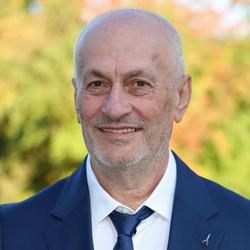
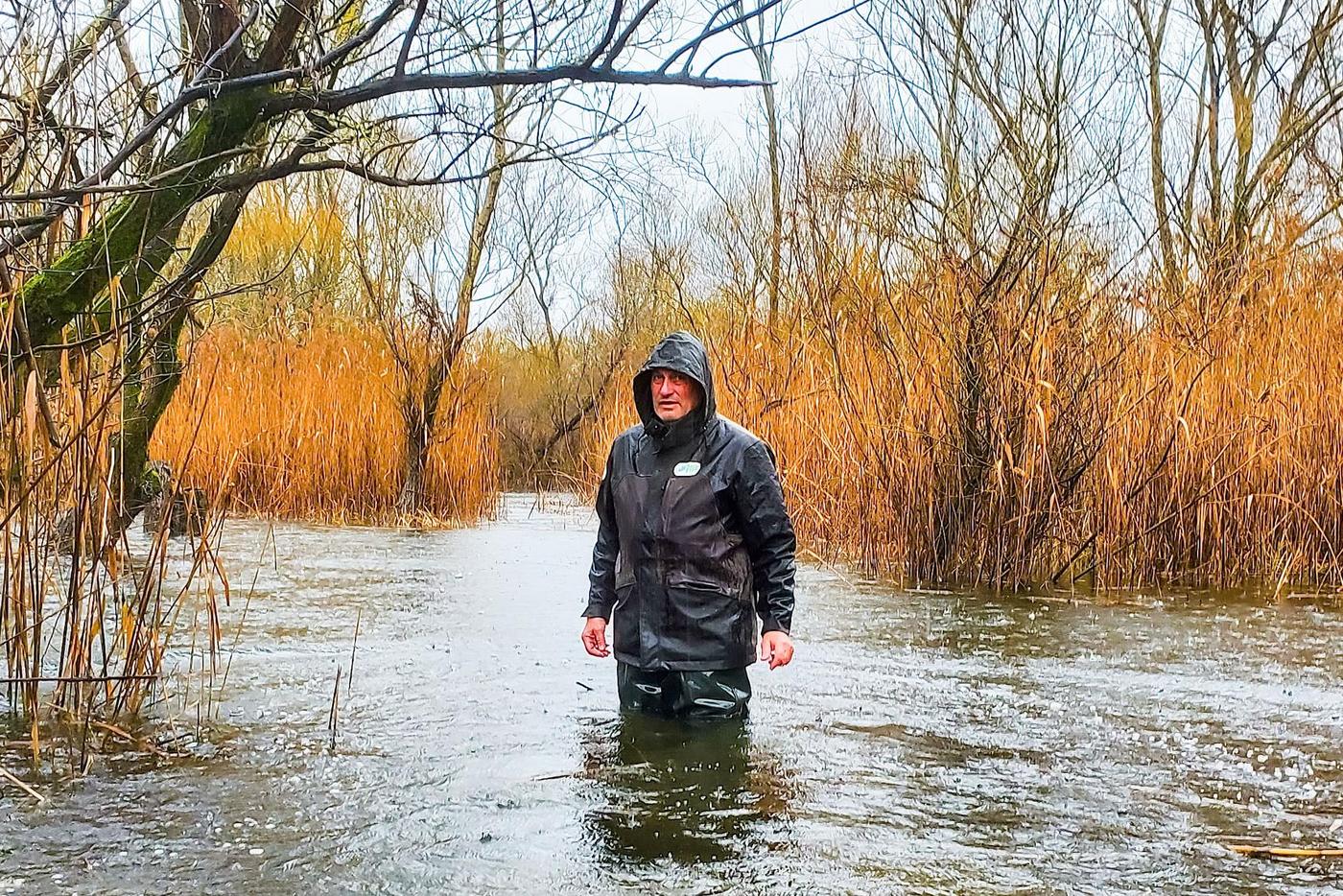
Ardian Koçi knows every corner of the national park like the back of his hand.
How did your resignation and ultimately your leaving the country come about?
To resign from my position as national park director was one of the most painful decisions of all. But I had no other choice. They cut me off from all resources so that I could no longer do my job. The vehicles were no longer repaired and new employees from Tirana were hired over my head, who received their wages but didn’t show up for work. When it became clear to me that I couldn’t possibly fulfil my duties as park director in this way, I decided to leave. Before I resigned, however, I had already been dismissed once. I had given an interview to the broadcaster “Voice of America” for which I had not asked permission from the ministry. It was my duty as national park director to bring the park to the attention of the public, and the interview was about the results of the winter waterfowl count: nothing compromising. There was a media campaign against my dismissal, which was subsequently withdrawn. But then they withheld, as I said, all resources and I could not work any longer. Apart from that, I would no longer be able to continue my work today in alignment with my values. My job was to ensure compliance with the law. Albania’s new law of protected areas does not aim at protecting nature, on the contrary. It goes completely against my convictions.
What does receiving the EuroNatur Award mean to you?
When I left the national park, I felt powerless. Now is the moment when I am living for the future again. Yes, I am ready for anything. The award touches me deeply. It is not mine alone but belongs to all those who work and fight for the protection of nature. I am convinced that I did the right thing. And if I had to do it again, I would do it in exactly the same way a hundred times over. I will defend nature to the end.