A 3,300-kilometre walk across the Balkans: in the summer of 2024, Petar Vanev from the Bulgarian nature conservation organisation BBF undertook a gruelling hike, following the route of the former Iron Curtain. Along the way, Petar traversed breathtaking landscapes and experienced thrilling moments – all in the spirit of reconciliation along the Balkan Green Belt.
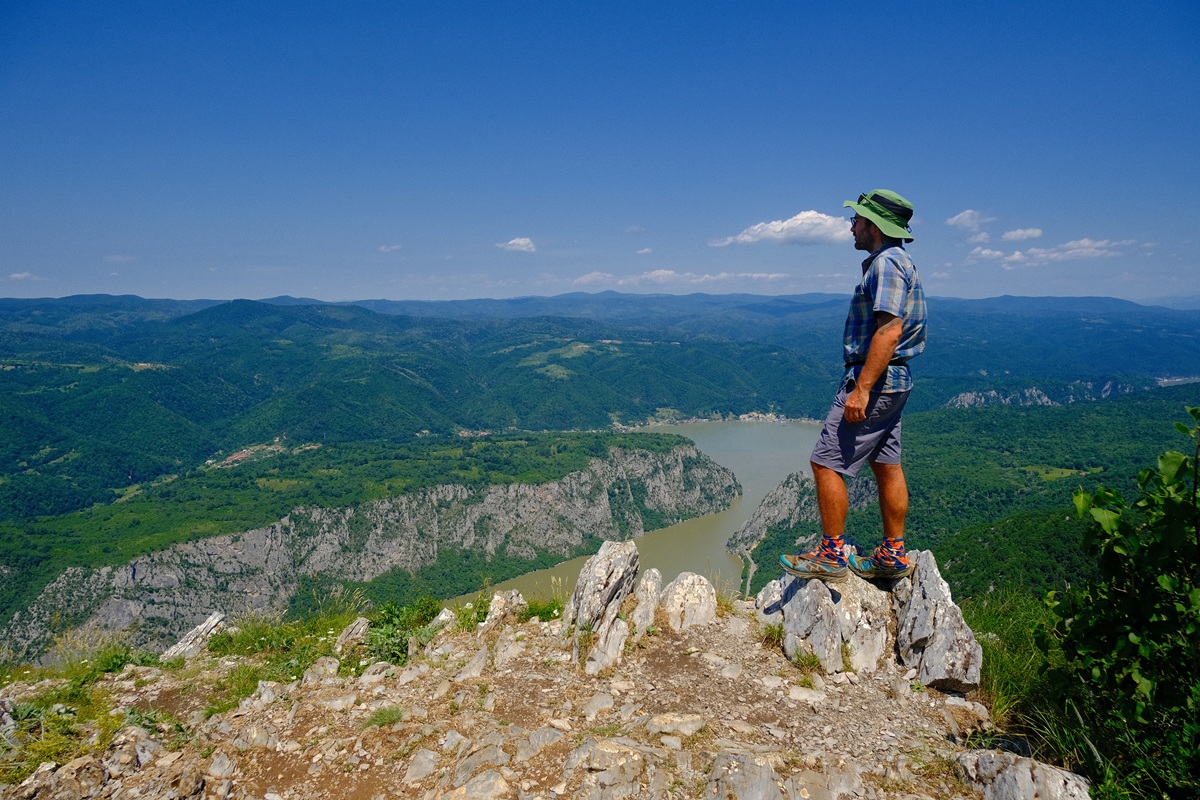
A view to let your thoughts wander…Petar Vanev at the Iron Gates, the famous gorge on the river Danube at the border between Serbia and Romania.
Petar Vanev is taking a well-deserved break with a stunning view. Petar has just reached the Veliki Shtrbac, a famous vantage point in the Serbian Đerdap National Park. On the final stretch to the summit, Petar Vanev has to battle his way through dense underbrush: The path on the Northern side of the mountain is almost completely overgrown. The sweltering heat makes Petar break a sweat. Finally, he reaches the summit and catches sight of the Iron Gates, the famous gorge on the river Danube in Eastern Serbia. The breathtaking view on the river’s panorama inevitably reminds Petar of the Battle of Thermopylae in Ancient Greece, in which 300 Spartans, led by King Leonidas, faced the superior Persian Empire. Petar Vanev, however, has no military goals on Veliki Shtrbac, and is only taking a quick break here. His hike along the Balkan Green Belt Trail signals peace and reconciliation. The Hot and Cold Wars of the 20th century have deeply marred the minds and souls of the people of the Balkan Green Belt – and now refugee treks and recent pursuits of major powers provide new fuel for old resentment.
Don’t just follow well-trodden paths. Clear the way for new ideas…
1) Thirst
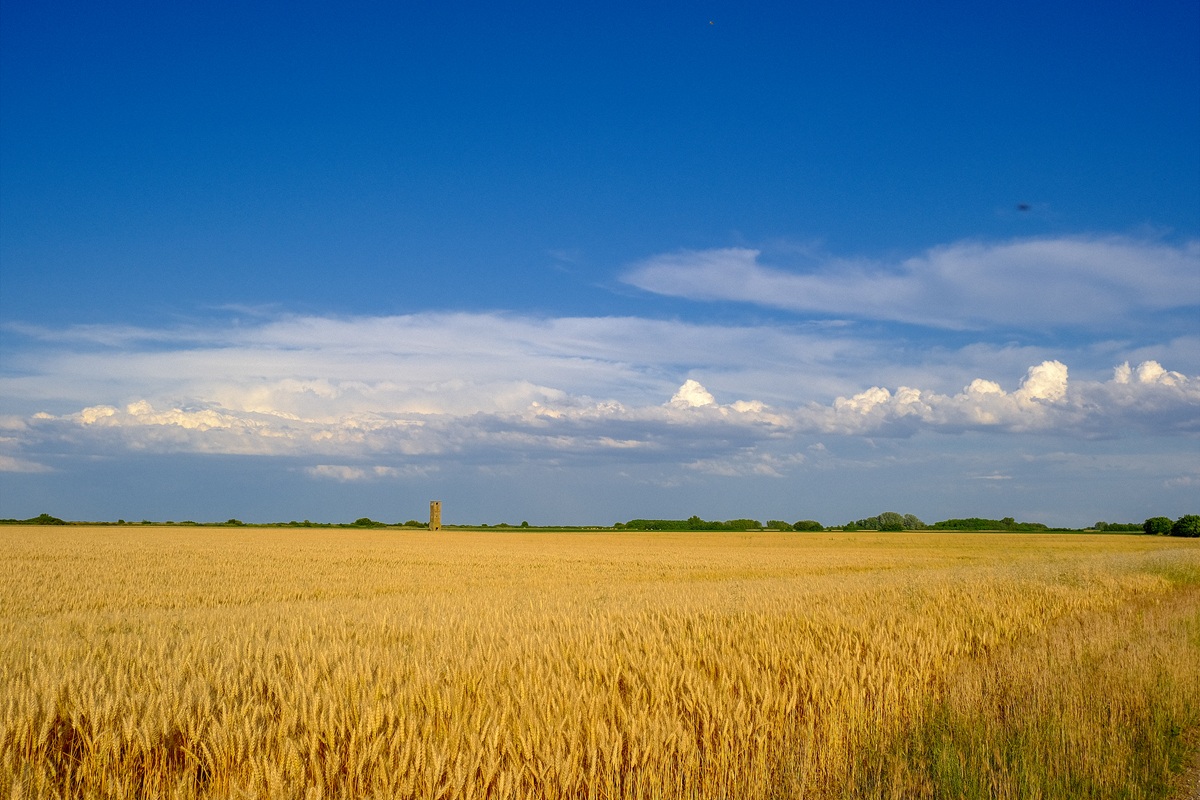
The Serbian region Vojvodina is comprised mostly of agricultural lands along the border between Serbia and Romania. Trees that provide shadow are scarce.
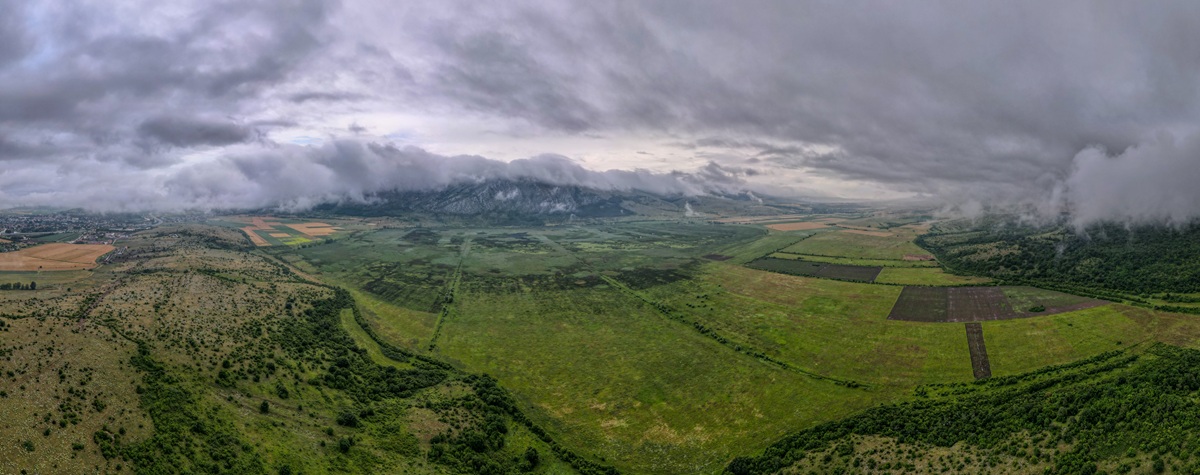
Petar Vanev’s journey began at the border between Hungary and Serba, the northernmost point of the Balkan Green Belt Trail. The countryside of Vojvodina is shaped by extensive agriculture. During the Cold War, the North of Serbia was still a forested area. Now, in Summer 2024, Petars path crosses endless fields of maize and tobacco. “Not the prettiest view of the Trail”, he comments. In addition, the hiker is hopelessly exposed to the searing sun. “The heat in that section was brutal, there were almost no trees to provide shade”, Petar recalls. “Ich usually trek with light luggage and prefer topping up my water on the way over carrying several bottles. But there were scarcely any opportunities for this in this section because fresh drinkable water was in short supply. To make matters worse, not all villages I passed had a supermarket. Next time, I will make sure to avoid the midday heat”, Petar decides with a grin.
2) Border experience
If you hike along the Balkan Green Belt Trail, you must cross several borders, including external borders of the EU – some Balkan countries are not yet part of the European Union. In 2015, many refugees travelled across the Balkan to seek asylum in the EU. As a result, those borders have gained renewed significance, both in the form of increasing patrols and in the heads of many people. Petar has noticed this, too. Just before he reached his home country, the Bulgarian was stopped by Serbian border guards. “I feel like many people in the border regions have become more watchful and mistrustful towards strangers since the influx of refugees in 2015/16”, he says. “Such a sad development.” Another experience further north on the Trail reconfirms Petar’s hunch. “I was just passing some fields, but a farmer was eyeing me with open suspicion. He was about to phone the police when I tried to explain to him what I was doing. It wasn’t easy – I speak broken Serbian at best. He finally told me that he thought I was an illegal immigrant but told me to have a good trip after we cleared up the misunderstanding”, Petar recounts.
Both of these events show the importance of the work of both EuroNatur and our partners, along the entire European Green Belt. This project is not merely about protecting nature but about the understanding among nations.
Jessica Bitsch, EuroNatur’s Projekt Manager European Green Belt
3) Ghost villages
The farther Petar ventured South, the more rugged the scenery became. He passed several nearly deserted ghost villages in the northwest of Bulgaria. “Many villages had more abandoned buildings than occupied ones. Those places felt pretty creepy sometimes”, Petar recalls. “Some paths on the Trail were overgrown, just like in those fairy tales where the prince must first clear the way to the castle. Romantic as they sound, the overgrown paths not only have a downside for society, but possibly an ecological one as well. “The emigration of young people especially is quite the challenge along the Balkan Green Belt”, Jessica Bitsch explains. The environmental scientist adds: “The Belt still has precious, biodiverse cultural landscapes. Sustainable agriculture and pastoral farming would help us protect and preserve these landscapes, thus creating a green network along what used to be the Iron Curtain. But in order to achieve this, the traditional methods of cultivation would have to be continued by the next generation.”
Petar Vanev’s route leads down from the Stara Planina and through a valley towards Mount Chepan. The path crosses villages, a few of them abandoned, historical monasteries and old rails. Near Mount Chepan, it passes the Dragoman Marsh, a wetland in the Northwest of Bulgaria that is ecologically significant and a biodiversity hotspot.
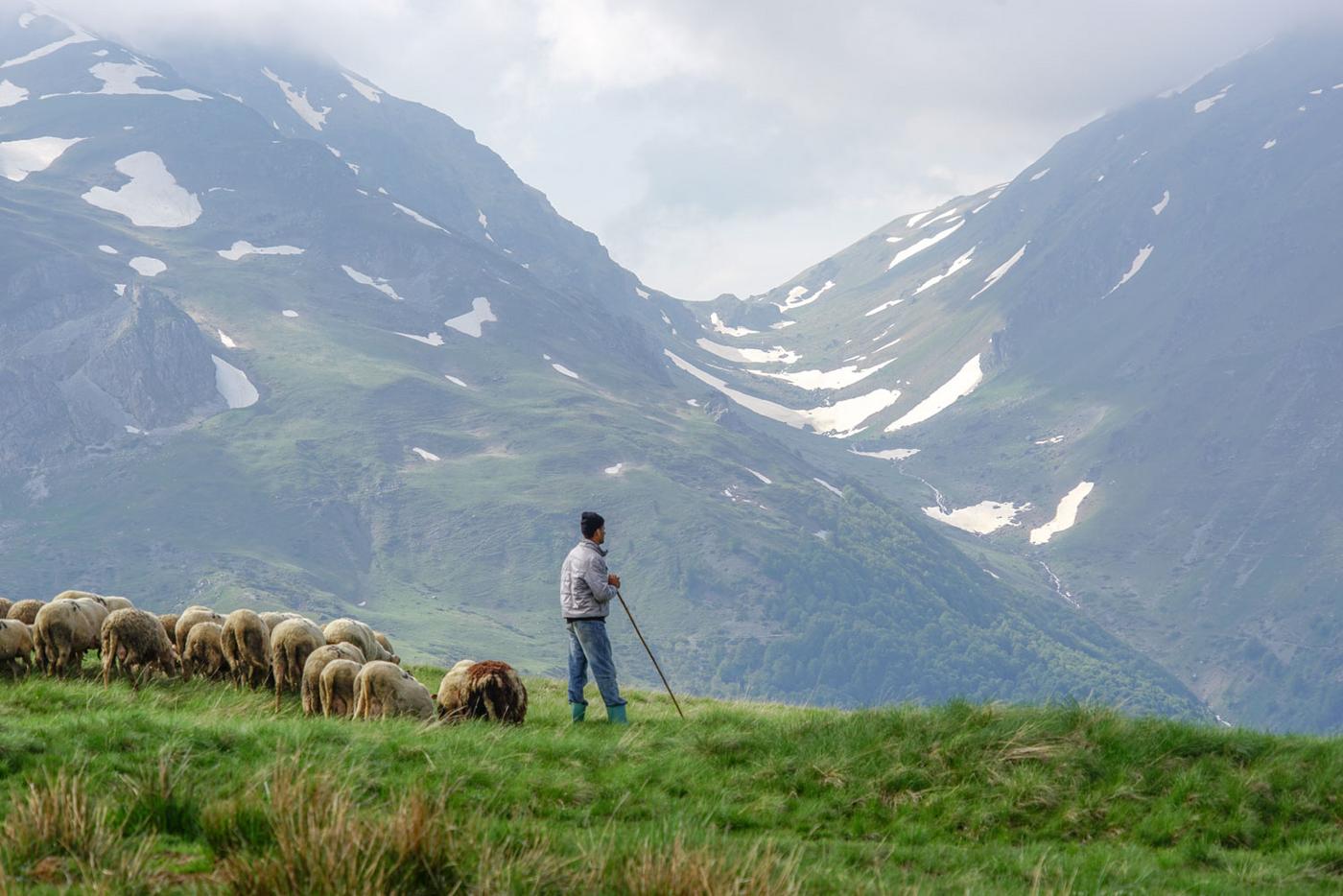
Transhumance is still common in the higher altitudes of the Balkans, and nature benefits from this. Shepherds traditionally tend to their flocks with the help of livestock guardian dogs. On the Trail, Petar once almost found out if these dogs are all bark, no bite. “I was approaching a flock of sheep when all of a sudden, several large dogs started barking and running towards me. They looked truly intimidating – of course they did. After all, part of their job is to protect sheep and goats from wolves and bears. Luckily, the shepherd was nearby, a very kind young man. When he saw me, he immediately called off his dogs.” Petar has two pieces of advice for anyone approaching a flock of sheep: “First, keep your distance from the livestock. Second, make yourself known to the shepherd and establish contact with them as early as possible.”
On the Trail, I often was the only human the eye could see. I loved that loneliness. In particular, I enjoyed the beautiful nature of the craggy highlands of the Shar Mountains.
Petar Vanev, BBF
5) Fire
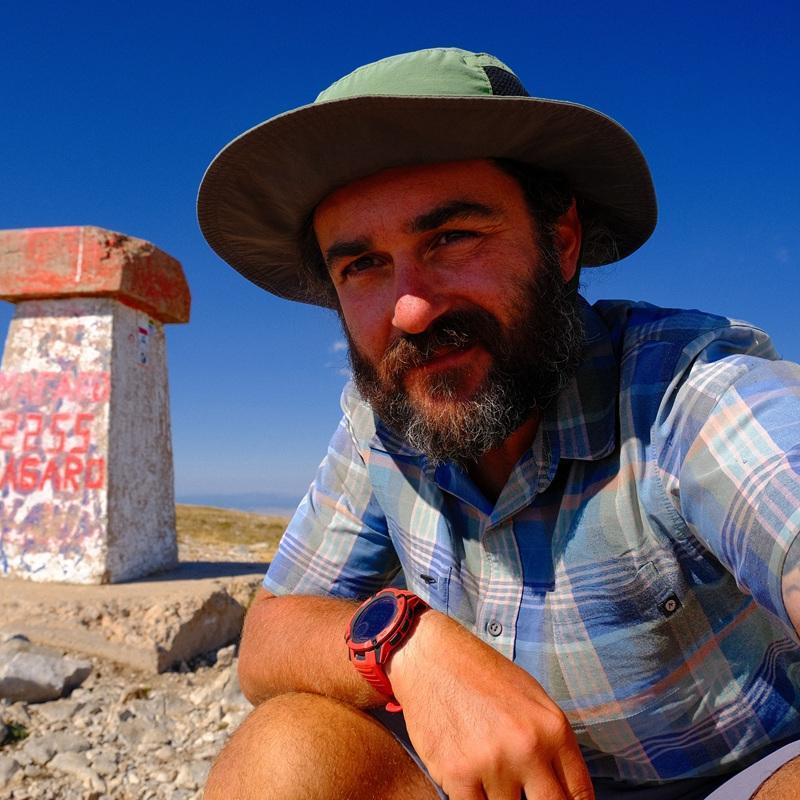
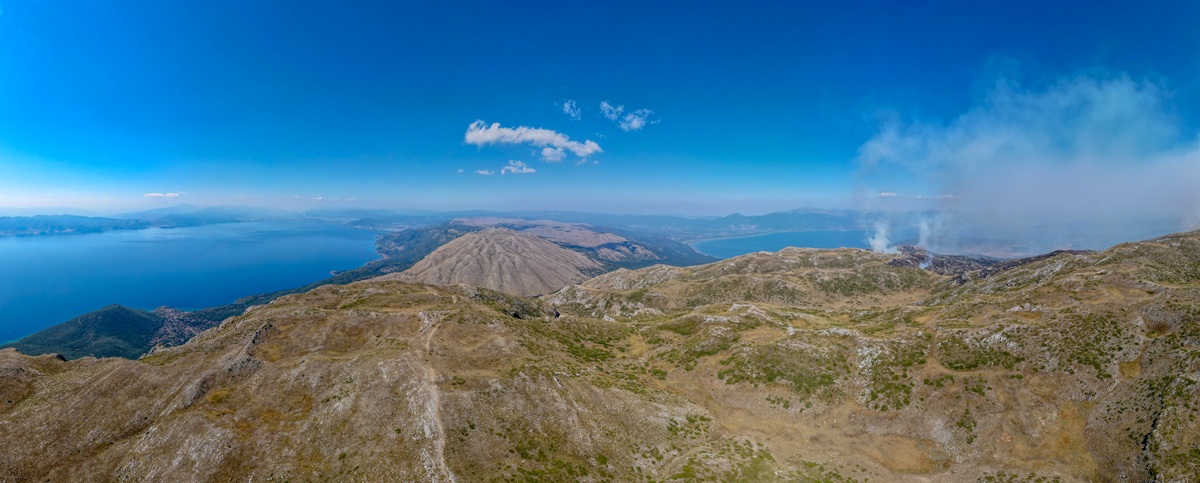
The photos Petar took with his phone on 26 August in the Galičica National Park, situated between Lake Ohrid and Lake Prespa, seem to depict a normal cloudy day. But it wasn’t clouds but smoke filling the air. “There was the sharp smell of smoke, yes, but I wasn’t worried at first. I thought the fire was on the other side of the border, and that I was moving away from it”, Petar recounts. But as soon as the hiker reached the summit of Magaro – the highest peak of Galičica Mountain – he understood the gravity of the situation. “Now I could see that the fire wasn’t only in Albania but in North Macedonia, too, very close-by! Luckily, the wind didn’t spread the fire in my direction, and overnight, several firefighting planes dropped water over the fires.” It didn’t help much, however, and Petar eventually had to reroute because the fire kept spreading in this section of the Trail. “Climate change has resulted to increased droughts in this region. It is easy for fires – usually human-made ones – to spread and destroy vast and precious areas on the mountain. It’s a big problem, and it will likely become worse in the next years”, Petar estimates.
It’s supposed to be a beautiful view: Lake Ohrid to the left, Lake Prespa to the right. Both are among the oldest lakes in the world. But fires are spreading and consuming large parts of the area. The smoke is clearly visible on the right edge of the image.
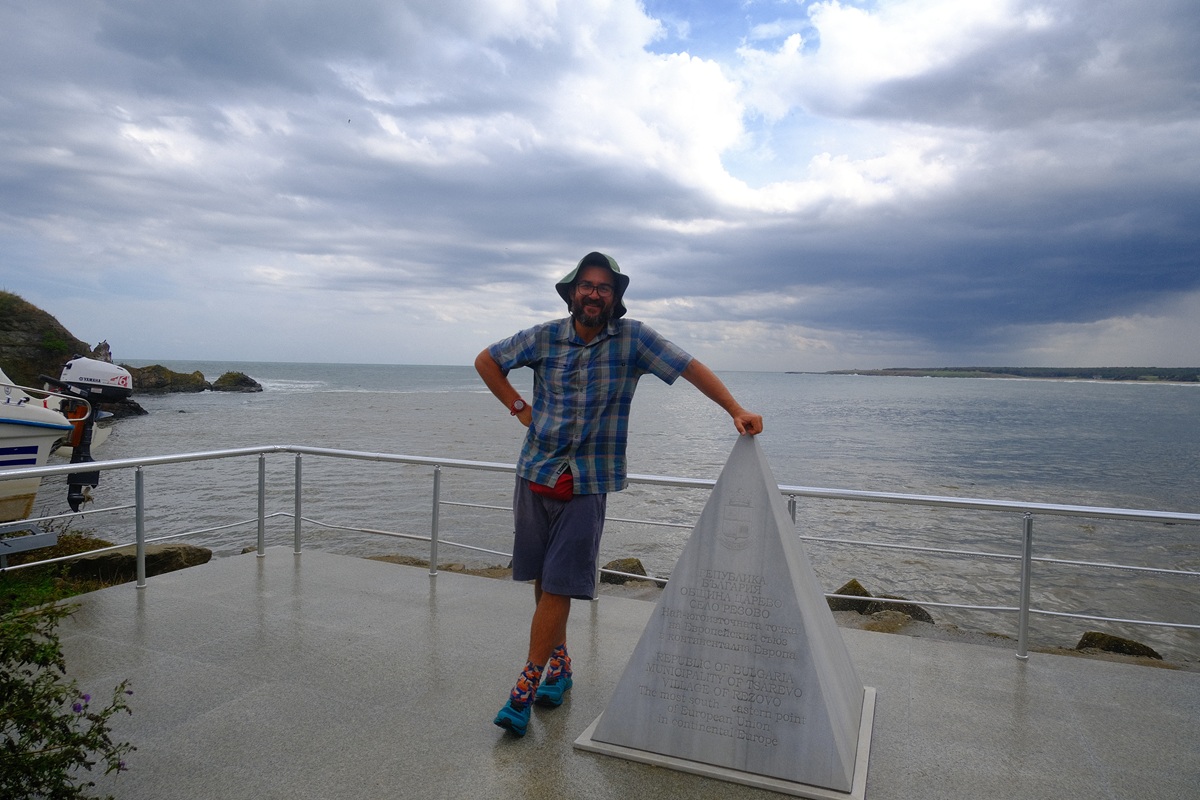
Petar Vanev has reached his destination: Here, at the southernmost point of the European continent, at the border between Bulgaria and Turkey, the Balkan Green Belt Trail ends. Petar is exhausted, but very happy and rich on new experiences.
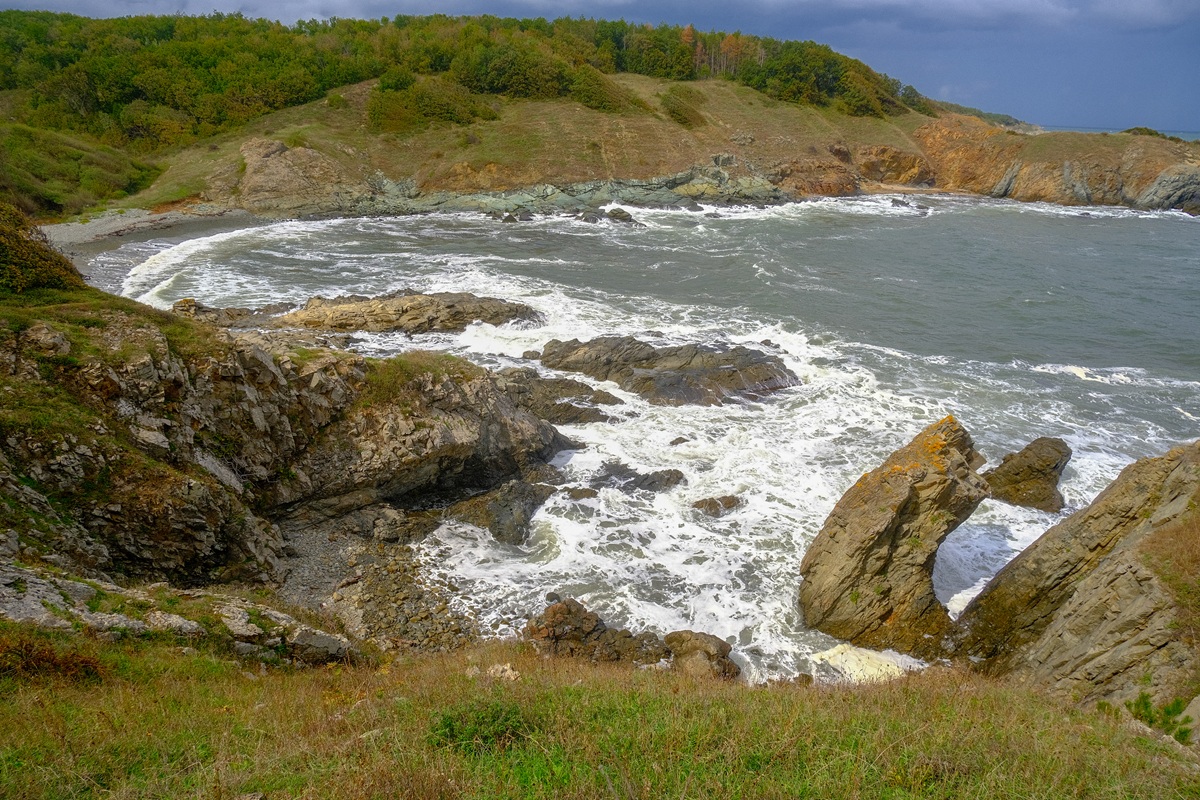
For the last twenty kilometres of the Balkan Green Belt Trail, Petar Vanev hikes along the Bulgarian coast. “The final stretch was beautiful”, Petar recalls. “Almost all of it was along the coastline: the sea, the sun, the breeze – gorgeous. Unfortunately, I couldn’t hike across the lovely beach of Silistar: The river Veleka had carried too much water in the previous days because of violent storms. I didn’t mind too much, though. After such a long and adventurous trip, you adopt a certain stoicism”, he laughs. “I have seen so many diverse landscapes on this hike: the plains of Vojvodina, various streams, thick forests, high summits and species-rich wet meadows and marshes. I was impressed with this diversity. It has taught me the beauty of the Balkan Green Belt. It is absolutely worth protecting”, he concludes.
At the end, the sea beckons … A lonely beach at the Black Sea shore in Bulgaria.
Petar Vanev has kept a video diary of his hike. In 19 chapters, he takes us with him for his journey from the border between Hungary and Serbia to the border between Bulgaria and Turkey. Accompany him to breathtaking sceneries and emotional moments, and get your own impression of Petars travels.
Put on your own hiking boots!
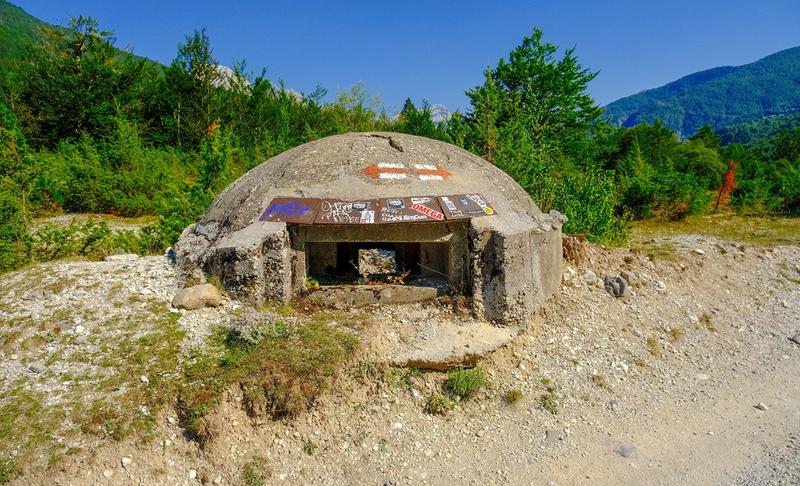
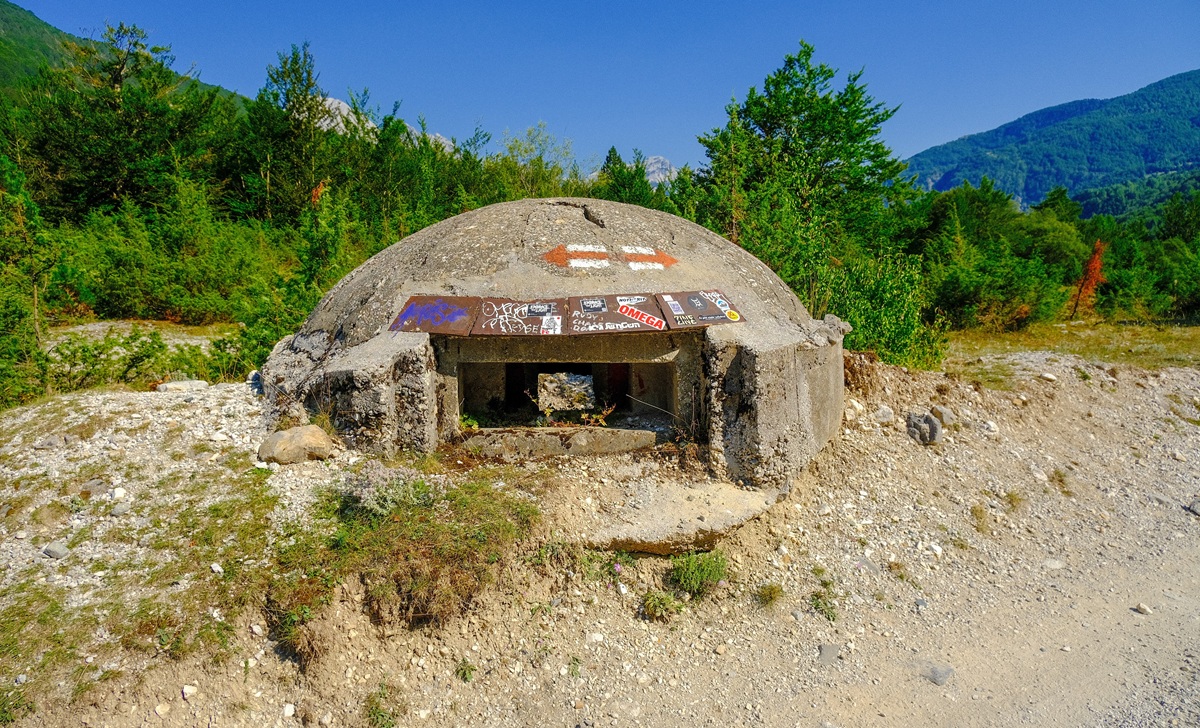
Quite a few of the many bunkers in Albania serve as guiding marks for the Balkan Green Belt Trail.
Despite Petar Vanev’s fantastic groundwork, the Balkan Green Belt Trail is, for now, more a theory than a fully marked, let alone maintained, hiking trail. While some sections have good and visible signposts, others aren’t marked at all and require good navigational skills, local knowledge or GPS for assistance. Hikers are advised to read up on the sections they want to do ahead of time. Good planning, safety measures and knowledge of local regulations is a must. The hiking trail (GPX file) is available to download for free on the BBF’s website and on Outdooractive.
The author: Christian Stielow has undertaken many hikes through nature in the past. Nevertheless, Petar Vanev’s tour commands his utmost respect.
A breath of fresh air at the European Green Belt
The EU-funded BESTbelt project is part of the European Green Belt Initiative and aims to improve the protection of biodiversity in 24 countries. Launched in 2021, it supports civil society organisations with small grants to help them protect biodiversity, restore nature, improve environmental awareness and communities and create green work positions. 49 projects, 21 countries, 80 participating organisations: BESTbelt fosters cooperation across borders in order to make the conservation of the longest green network of Europe a reality. The BESTbelt project ends in 2026.