


A toast to the diversity!
Highlights from our “European Treasures of Nature” photo competition
33 years of “Europe’s Natural Treasures”: this lucky number is certainly worth raising a glass – not least to this year’s twelve winning photographs, which stood out from nearly 2,850 entries. Admittedly, the photos don’t show tipsy elephants or drunken Bohemian waxwings, but ‘sober’ would be the wrong word to describe the beauty of these images. See for yourself…
Note: As two pictures were awarded the same score by the jury, there are two 8th places.
Tip: Click on pictures for a larger view.
Caught in the act!
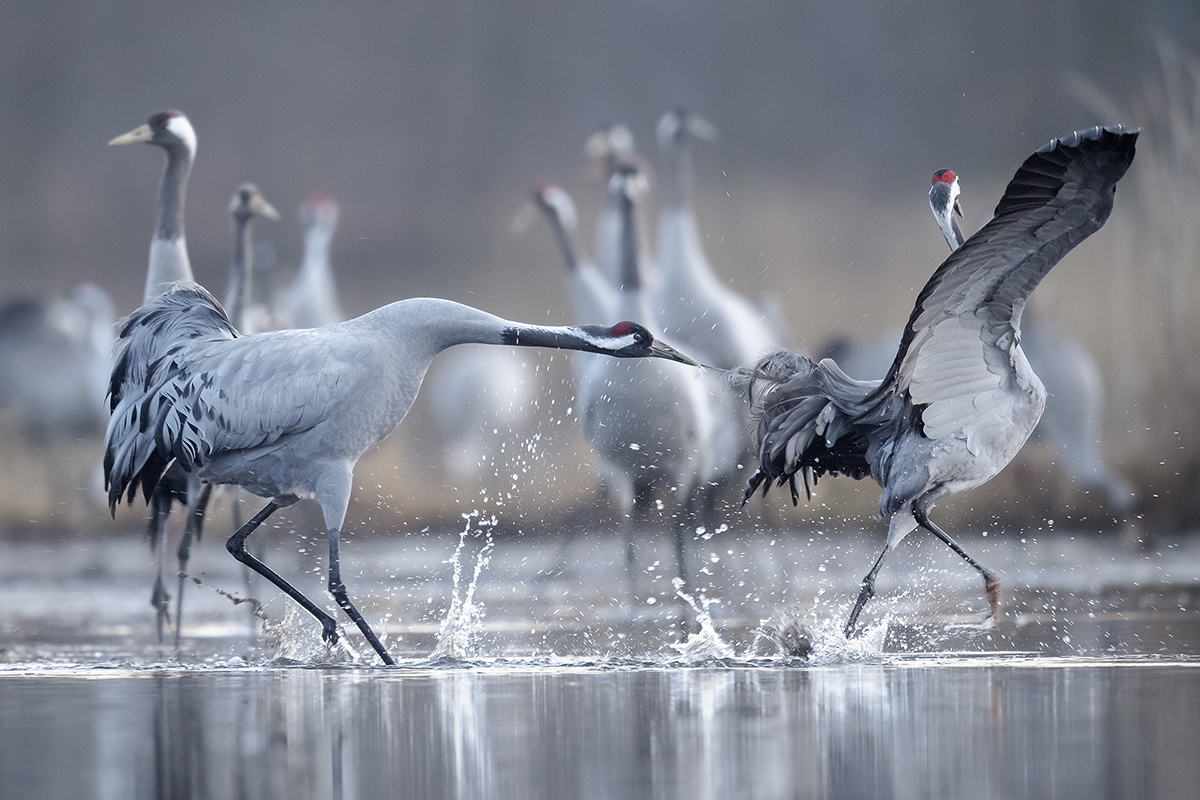
1st place: Agnieszka Florczyk
Cranes are some of the birds particularly badly affected by the outbreak of bird flu over the past few years. These birds, known as a symbol of good fortune in many cultures, have met their end in their thousands in their resting places and overwintering grounds. Nonetheless, the members of this flock in Poland were in tiptop condition at the end of January 2025, and some of them were already feeling spring was in the air. Any male looking like a rival and coming too close to a beloved had to pay for it with a tail feather.
Eyes wide open
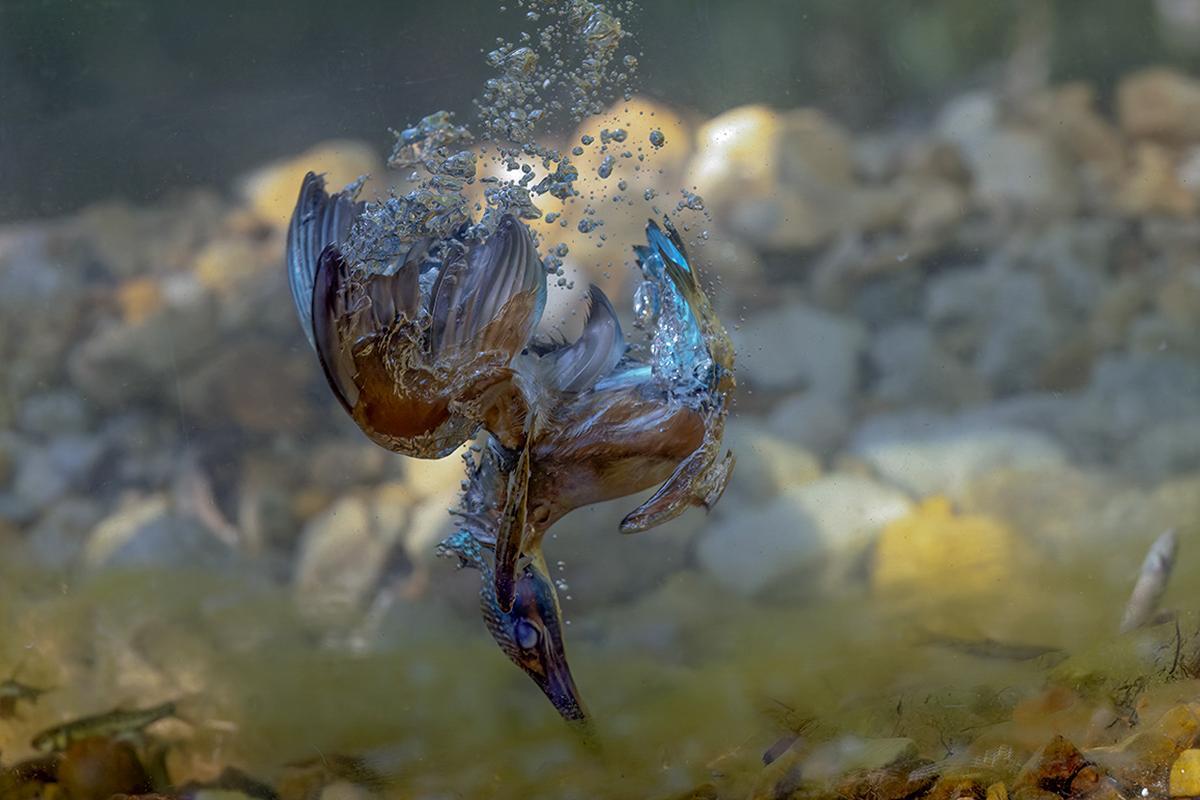
2nd place: Luciano Casagranda
The kingfisher uses the force of impact to catch its prey. They perch in wait above the surface of the water or hover in flight to then dive down headfirst to strike. The kingfisher’s eyes are perfectly adapted to diving; it can protect its pupils with a special skin enabling it to keep its eyes open and still see its prey under water. This is why kingfishers prefer clear water; in cloudy water they will have no success fishing.
Death in gold dust
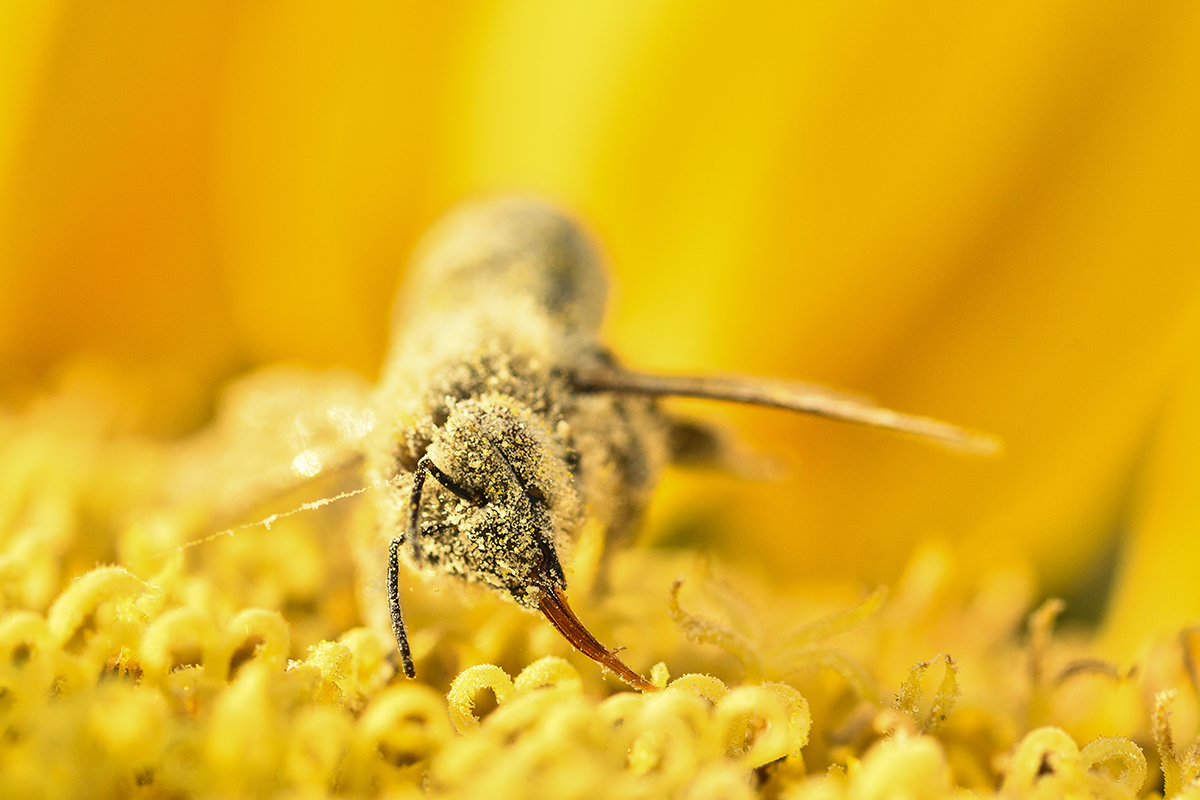
3rd place: Vladislav Mitkov Tasev
This photo is a little reminiscent of the graves of highborn nobles of the past, such as the pharaohs and their golden sarcophagi. This honeybee met its end in a sunflower while it was still collecting pollen with its long tongue. The cause of death of this small insect is not known, but the photographer has created an artistic legacy for her with this picture.
Town, jellyfish, sea
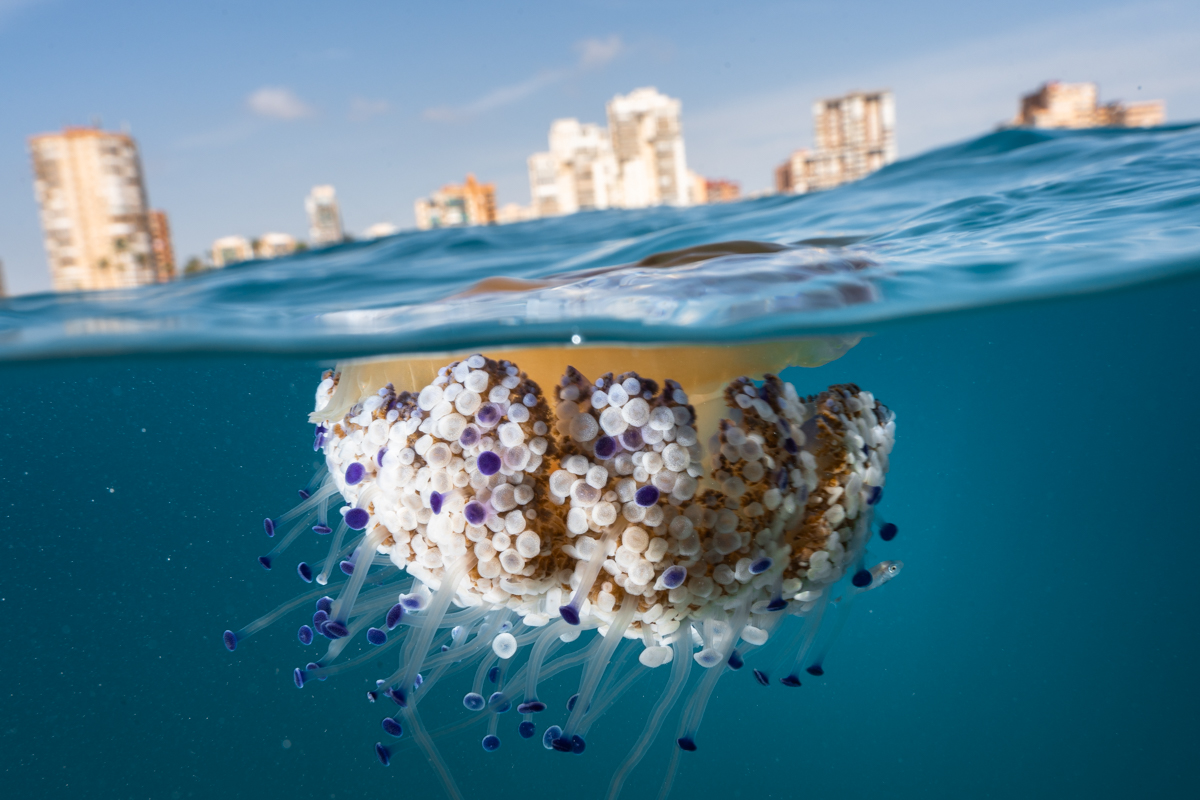
4th place: Alex Basha
In the background, you can see the silhouette of the Spanish coastline, unfortunately so typical with its high-rise developments. Many of the tourists and holidaymakers staying in those massive hotels probably have no idea of the wonders tumbling around in the sea below their hotels. This photo shows a Mediterranean jellyfish, also known as the fried egg jellyfish, swaying in the waves. This species is totally harmless to bathers, and unlike most of its relations, it is able to actively propel itself forward.
Reflections of a brown bear
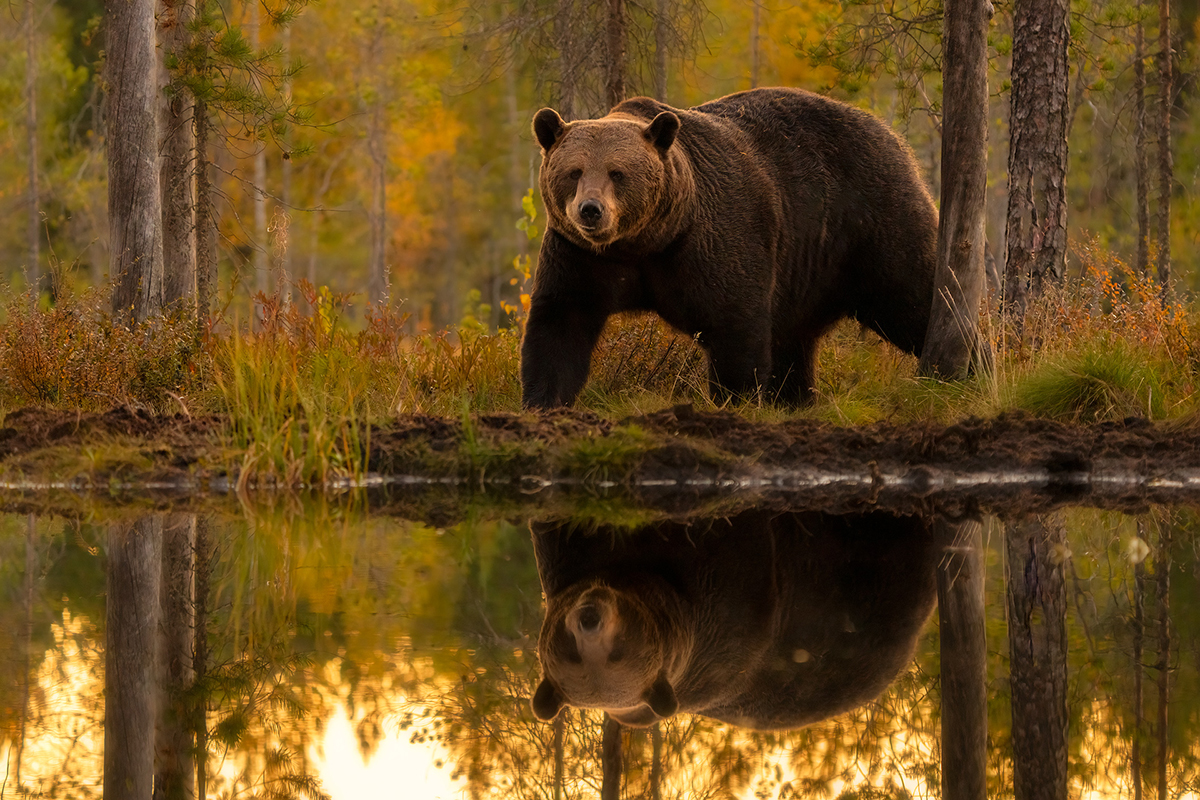
5th place: Danijel Turnšek
The moment when everything comes together to make the perfect photo: the warm light of autumn, the mirrorlike surface of the lake, the bear gazing directly at his own reflection. Was he perhaps reflecting on himself and his life in that moment? Whether true or not, it is the contrast between the bear’s powerful presence and the peaceful, almost serene-seeming scenery that gives this picture its charm.
Present for the wife
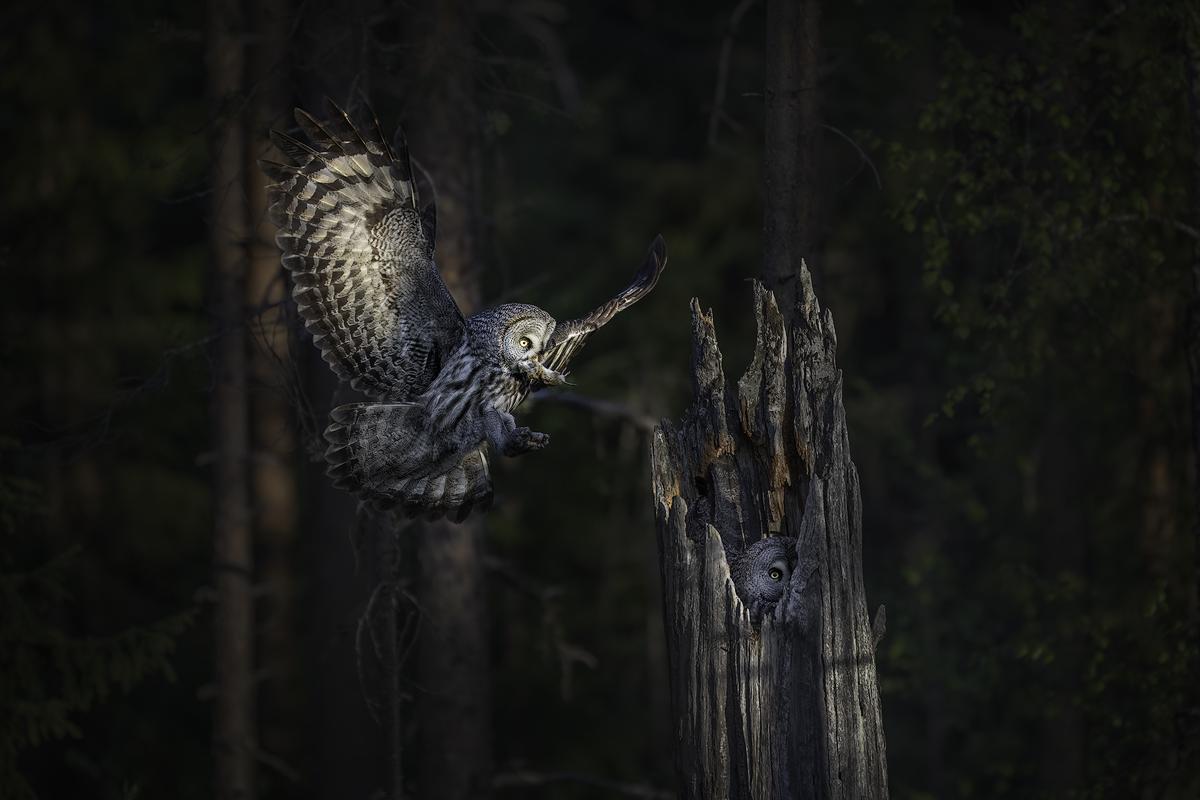
6th place: Krzysztof Baranowski
We are back in the Northern forests, where, far from civilisation, often only the voices of animals can be heard. In this instance, it was the call of a great grey owl that drew the attention of the photographer in his camouflage tent. Seconds later, the owl flew off with a mouse he’d preyed on in his beak to return to his partner sitting on her eggs in a breeding tree. It won’t be long before this father will need to get hold of more food…
I can see you!
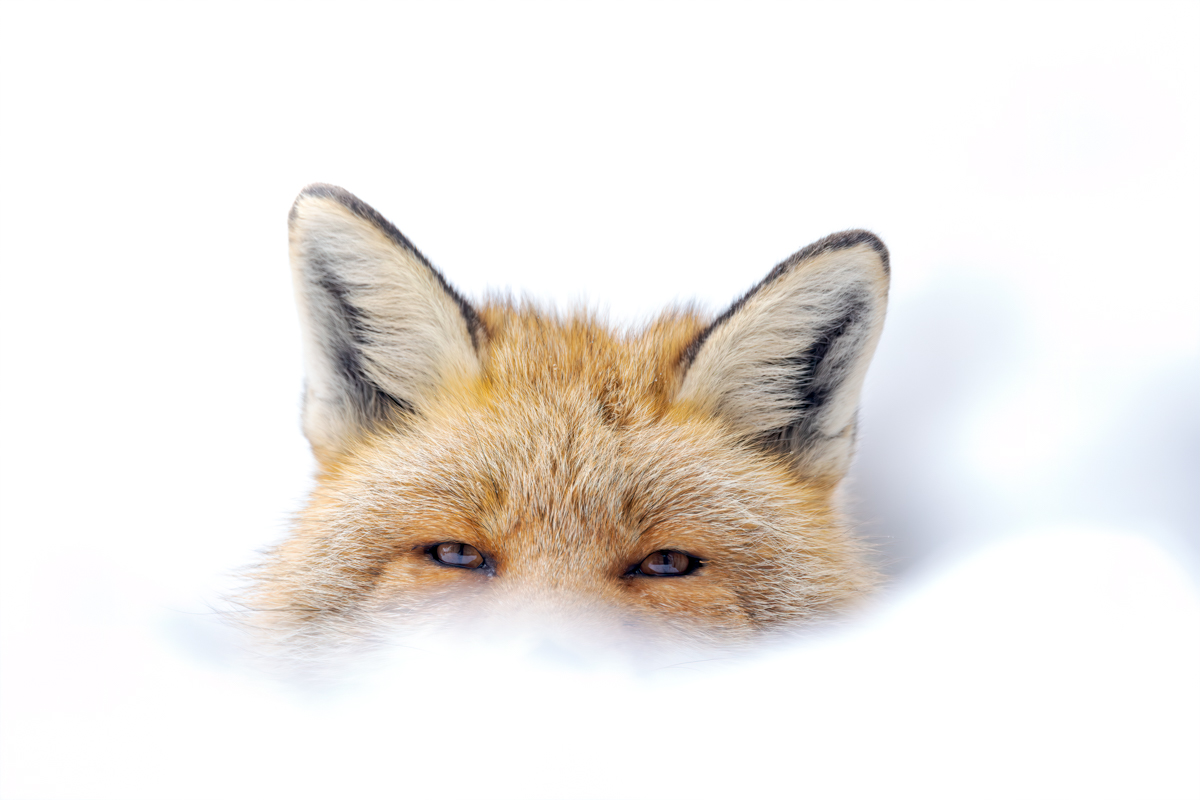
7th place: Fabrizio Stefani
Another fox? These days you can even come across a fox on Berlin’s Potsdamer Platz! Nonetheless, this image of the little predator enjoying the gentle rays of the winter sun in a snow-covered field won over the jury. Perhaps it was a response to the photographer’s intention. It was important to him to catch the animal’s gaze, “so as to reveal the depth of the personality behind it.” And there is no doubt that he succeeded in that.
Found out!
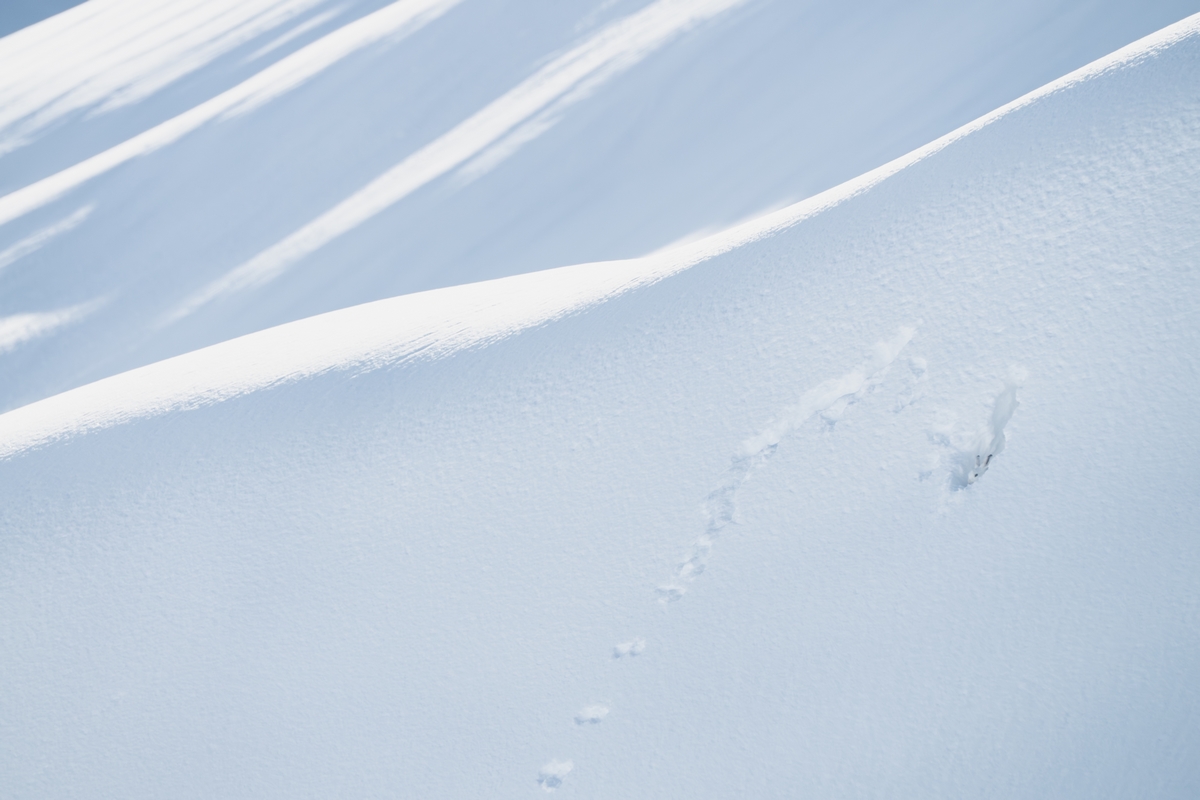
8th place: Bertrand Muffat Joly
This mountain hare in the French Alps really is perfectly camouflaged in his snow hollow; only his paw prints betray him. Over the course of evolution, mountain hares have become perfectly adapted to the harsh conditions of the mountains in winter, but now global warming is making it difficult for these alpine populations to survive, partly as a result of their hybridisation with brown European hares, which are moving to higher and higher areas.
Under observation
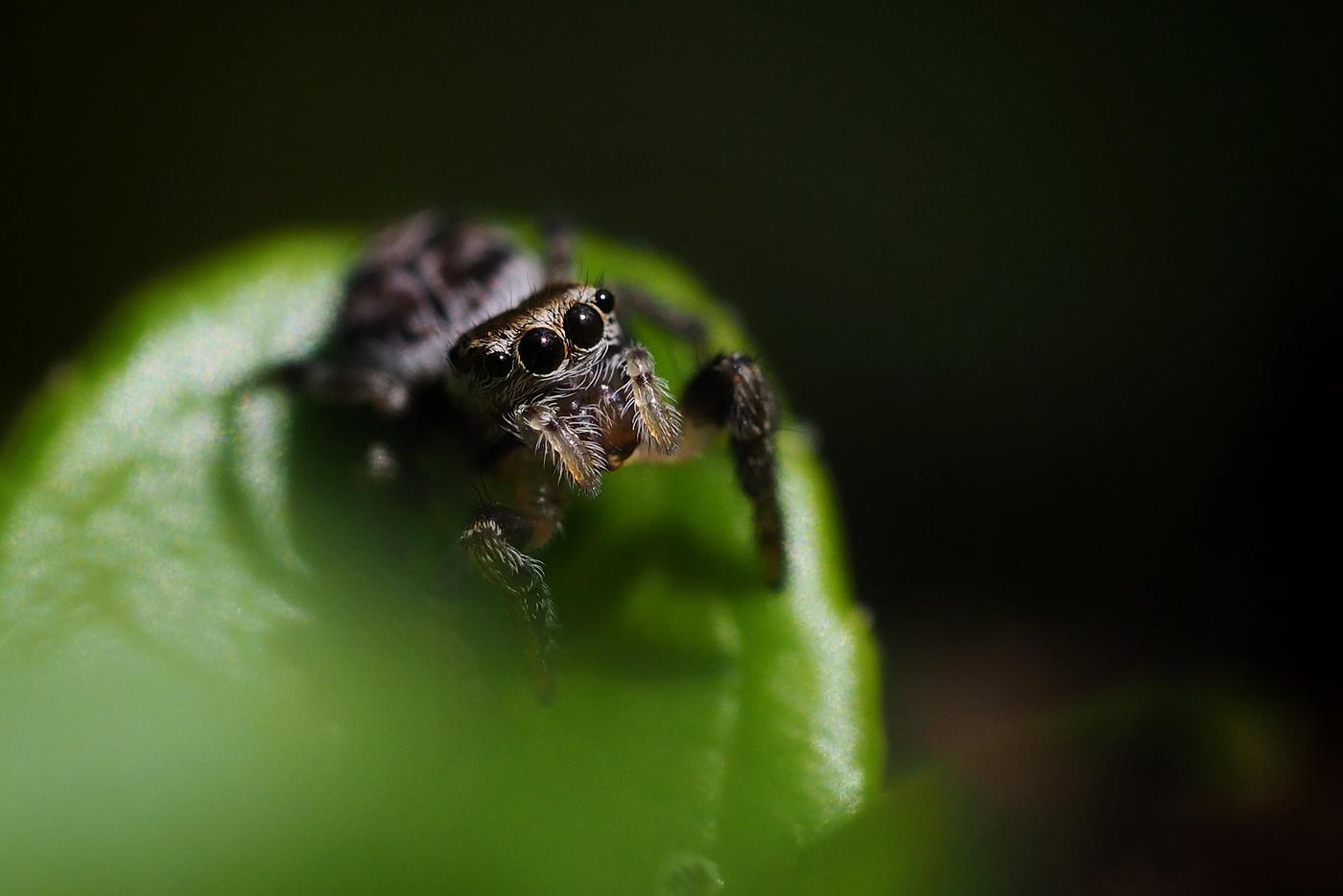
8th place: Kotryna Burokevičiūtė
Do you have the feeling you’re being watched? You’re not alone… while we make do with one pair of eyes, jumping spiders have 4 pairs. These arachnoids have highly developed eyesight, particularly in their strikingly large forward-facing main eyes. And these agile little hunters need it too; the jump that gives this spider its name requires a high degree of spatial detail in their vision.
Hanging around
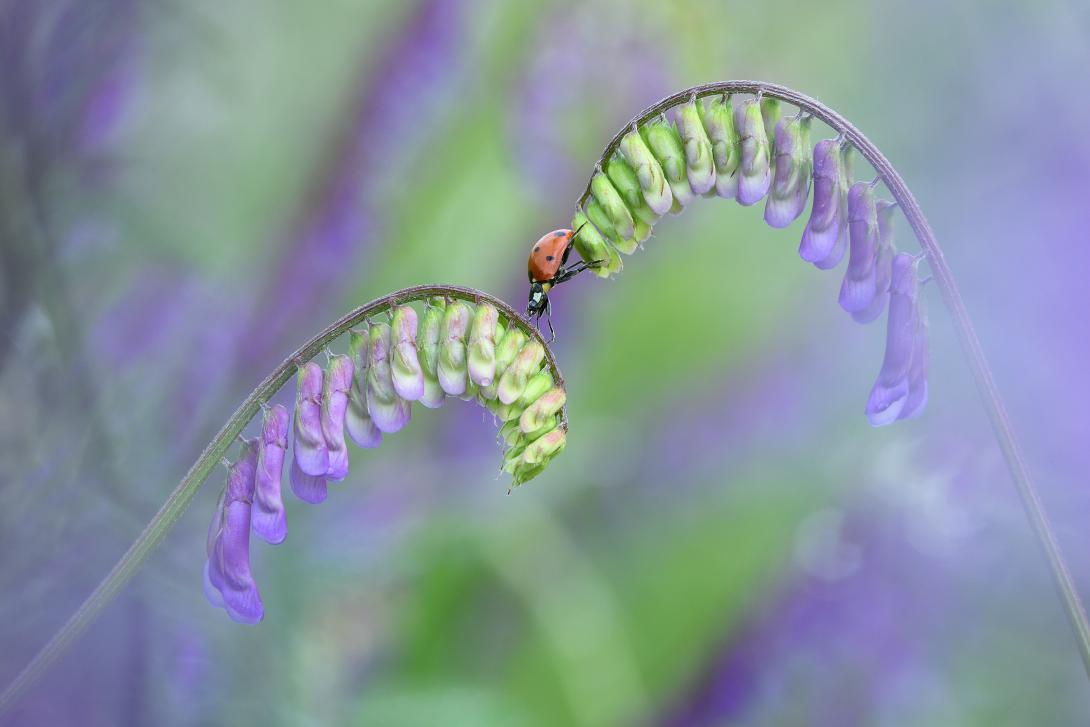
10th place: Pepe Badia
In most cases, the right moment for the ideal picture lasts just a few milliseconds, and it’s often the result of a combination of the photographer’s expertise and experience and sheer chance. In this case, the photographer actually planned to photograph the flower stems, but a seven-spotted ladybird on its travels through this flower landscape in purple arrived at exactly the right moment. The photographer managed to capture the precise moment when the ladybird scrabbled across from one stem to the other – and he really had to stretch to do it.
Sweet tooth
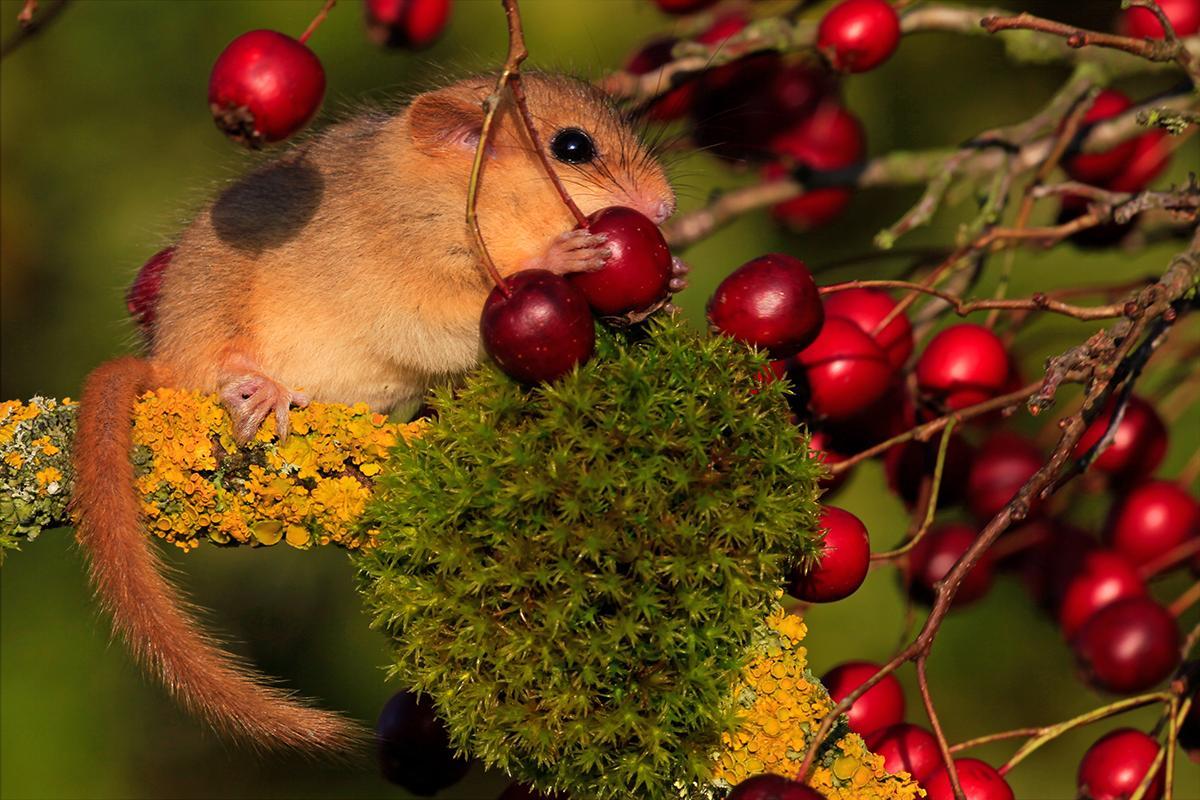
11th place: Konrad Funk
Many of you will be thinking how sweet that mouse is when you look at this picture. Yet although it looks a bit like a mouse, scientifically speaking, the hazel dormouse is not a mouse. Nor are its closest very cute relations the garden dormouse or the edible dormouse. Dormice are a separate family from mice. As well loving berries, the hazel dormouse eats seeds, buds, insects and, of course, hazelnuts.
Umbrellas up!
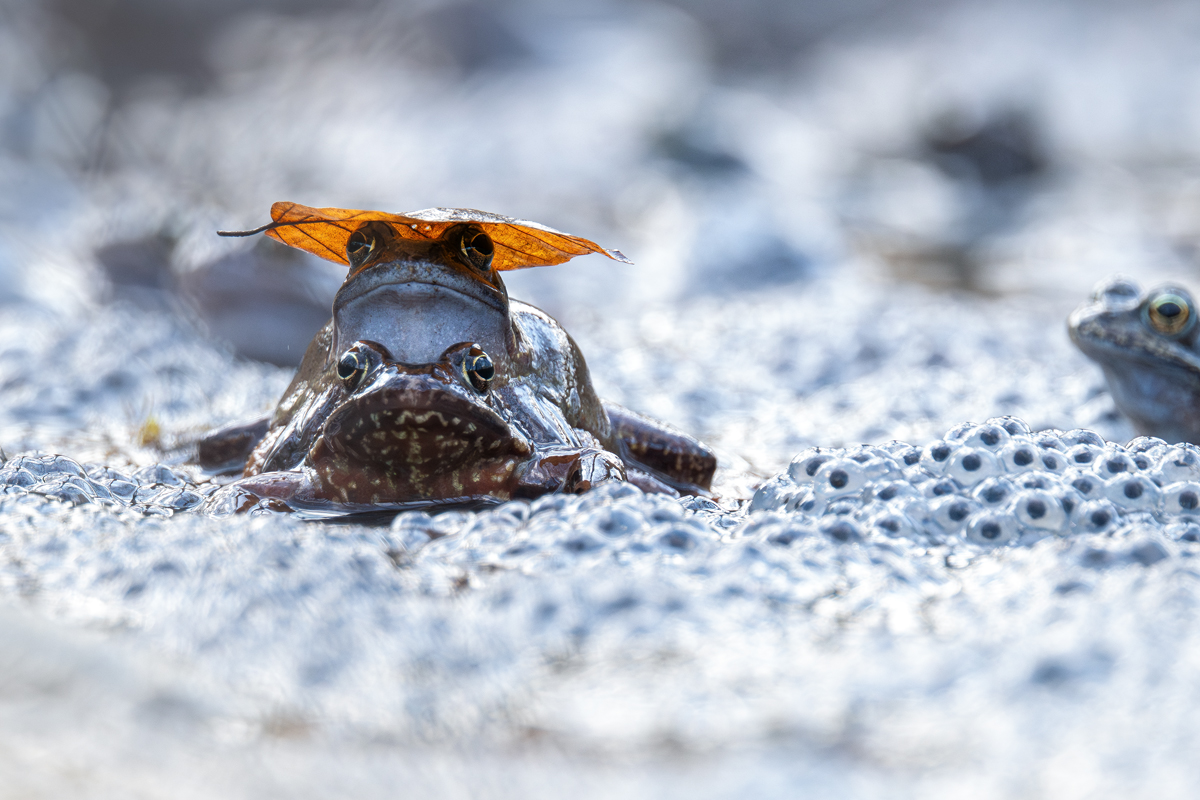
12th place: Kerstin Pankratz
There is hardly a class of animals that has suffered as much from the impact of the climate emergency as amphibians: their environment is drying up under their webbed feet. But on this March morning, the world of amphibians in this nature reserve in the north of Dortmund was in perfect order. A number of grass frogs have gathered together to mate here, and there was an almighty croaking, hopping and bustling around. The photographer lay patiently in wait by the water’s edge until the perfect moment presented itself.
Erneut mitmachen!
Auch im kommenden Jahr findet der Fotowettbewerb wieder statt (Einsendeschluss: 31. März 2027). Mehr Informationen zur Ausschreibung finden Sie in der nächsten Ausgabe des EuroNatur-Magazins und ab Mitte Dezember 2026 unter euronatur.org/foto
Weitere Informationen zur Ausschreibung finden Sie auch in unserem Newsletter. Bleiben Sie außerdem über Facebook, LinkedIn und Instagram immer auf dem neuesten Stand.