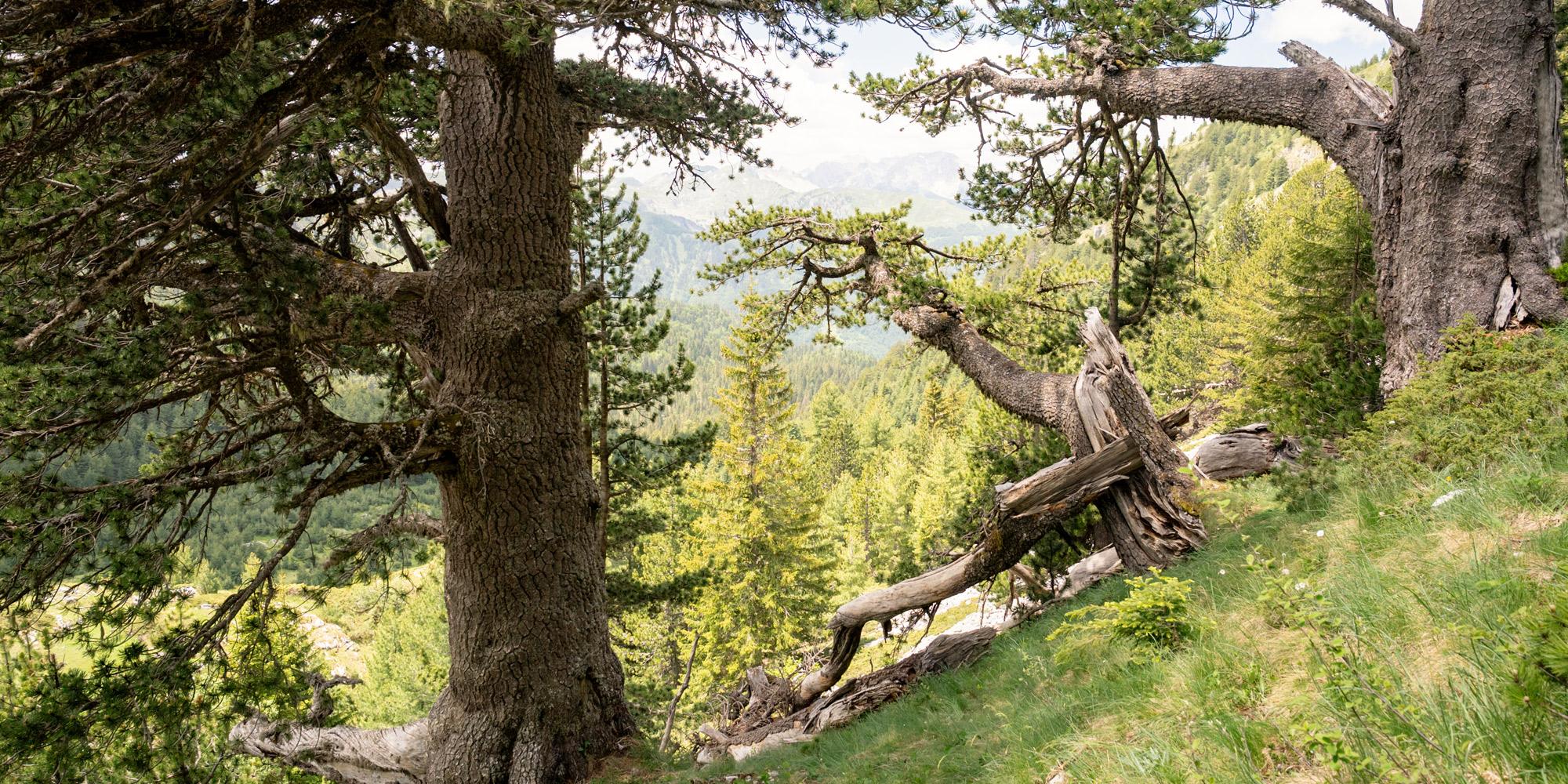
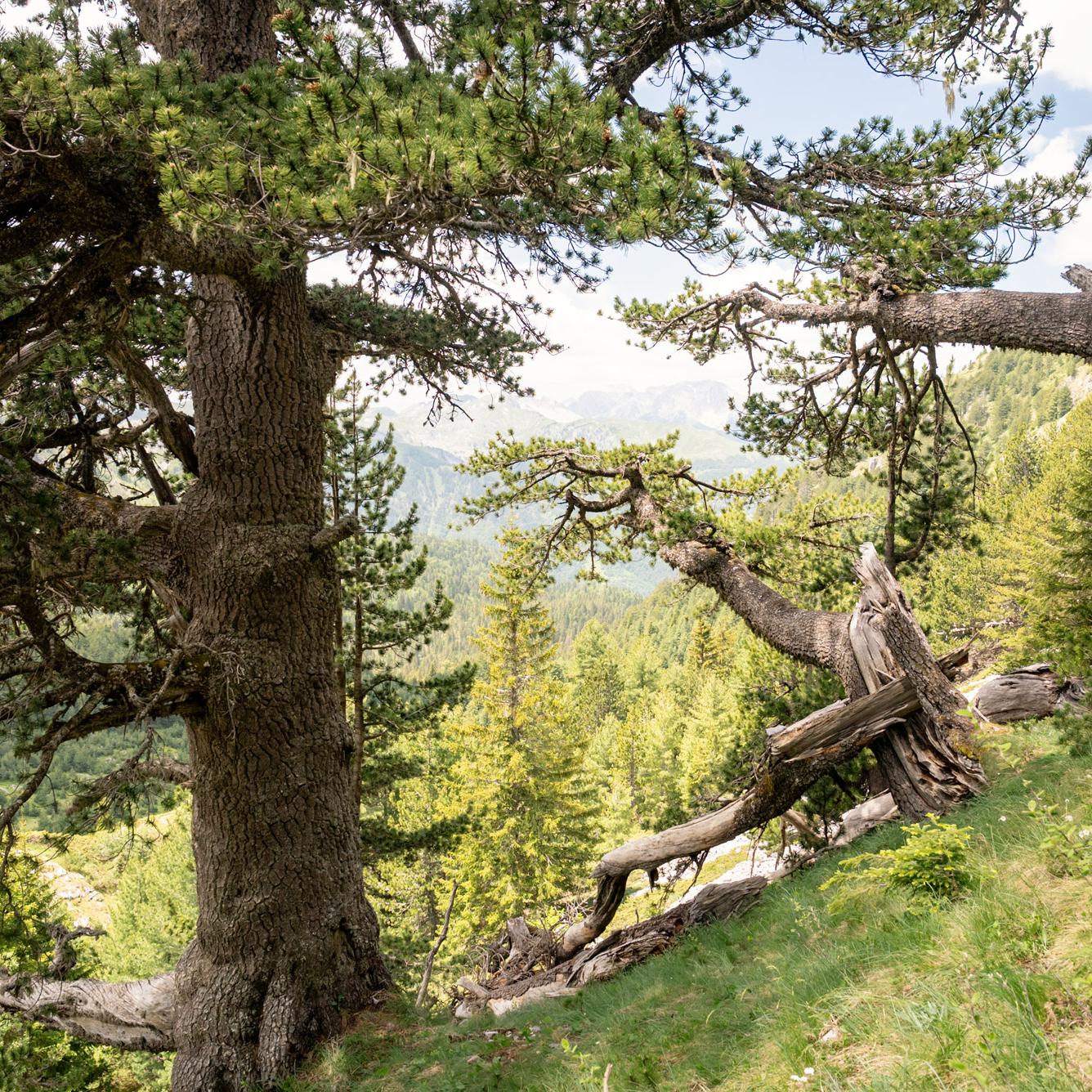
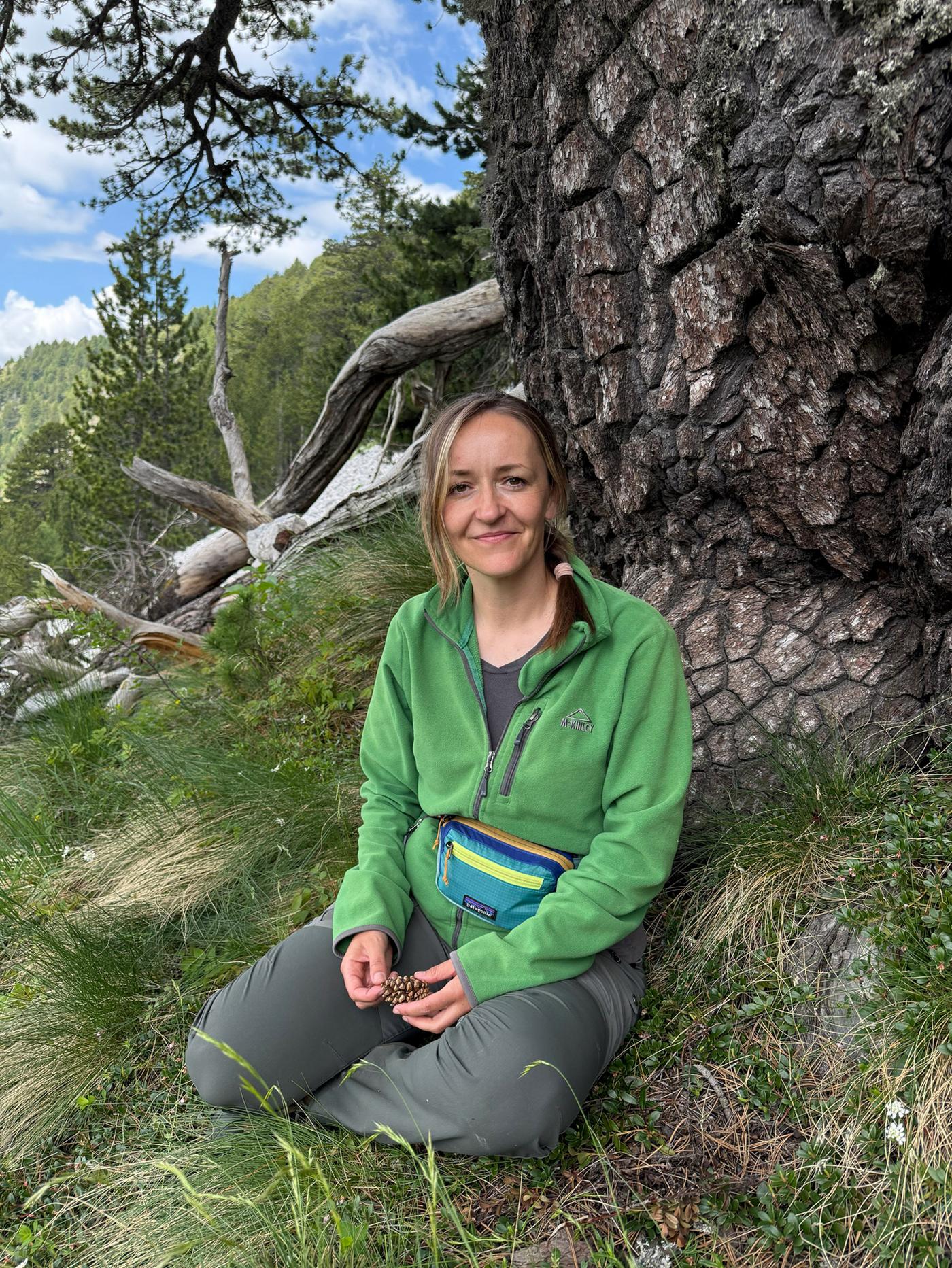
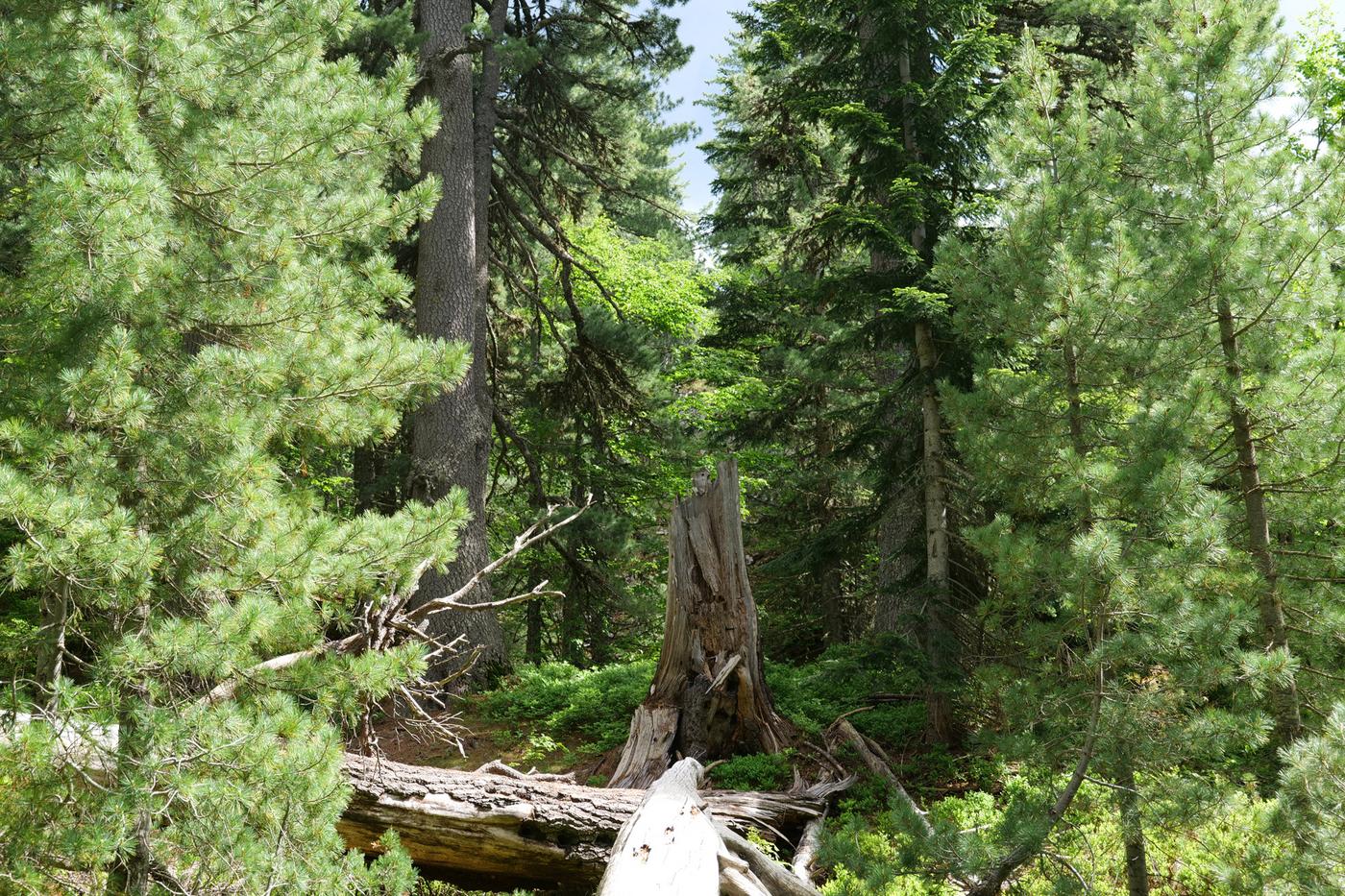
Marija Šoškić Popović was eight years old when she accompanied her father, Radmilo, into the Zeletin mountains for the first time, in the mountainous east of Montenegro. A thunderstorm was brewing. They sought shelter of a Bosnian pine under a branch which was itself as thick as the trunk of a normal tree. It smelled of resin as the wind swept through its ancient crowns. That moment under the has stayed with her to this day.
Marija is now a conservationist with the Montenegrin organisation CZIP. This summer, she once more stands beneath the very same tree. During core sampling, a broken branch is found to be 400 years old. The tree itself is likely to be considerably older and yet its resin still smells fresh. This living witness has withstood ice storms, centuries, and the coming and going of so many generations of people. Yet it is still not safe. No protected area can keep the chainsaw away from it. Whether it survives the coming years will be decided now – and with your help too.
By clicking on the preview image, a video from an external source is integrated. This will transfer your IP address to the external server. Further details can be found in our privacy policy.
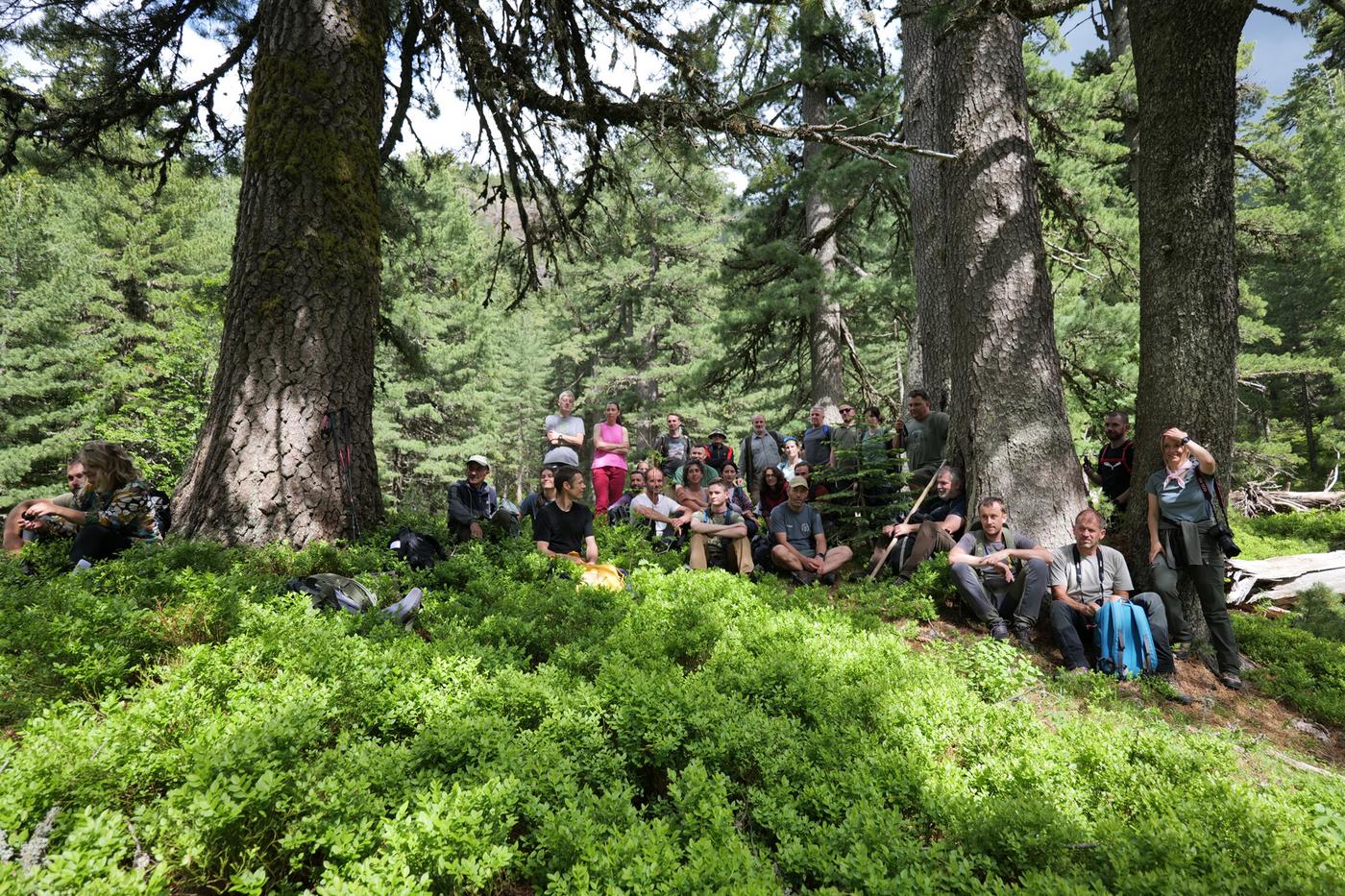
It was Marija herself who drew the attention of her colleagues at CZIP to the forests of Zeletin. Their systematic mapping was also made possible by Bojan Zeković of CZIP, who has been campaigning tirelessly for years to secure protected status for them. The fact that 30 international experts are now trekking through the forests with him is, for him, a belated but important recognition. The mapping is part of a collaboration involving five countries in the Western Balkans. Marija’s father, Radmilo, is also taking part; this year, he is celebrating his 70th birthday not with his family, but with the group of scientists in those very same forests. EuroNatur initiated the project and is working alongside local partner organisations and international scientists to systematically survey these forests and advance their protection.
We now have a unique situation in Montenegro: with its impending accession to the EU, Montenegro will have to designate Natura 2000 sites in accordance with European law. As part of this process, we want to propose that as many surviving primeval and natural forests as possible be placed under strict protection, which is why we are currently mapping them as quickly as we can. The reports from our partners in the field, when they’ve found yet another several hundred hectares, are incredibly inspiring to me.
Siegmund Missall, Head of Programme Forest Conservation
Rhiannon Gloor from the Czech University of Life Sciences in Prague (CZU) sums up the situation: “We must map these forests so that they are not destroyed.” Her colleague Martin Mikoláš, who played a key role in developing the mapping method, adds: “If you look at European maps, there are huge gaps in the data for this region. Perhaps local people know where these forests are, but they aren’t recorded in the databases. And what isn’t recorded cannot be protected.”
Extensive, unspoilt forests still remain in the Western Balkans. Montenegro has nominated the region’s ancient forests for inclusion in the European Natura 2000 network – but that is by no means a guarantee of their protection: logging remains legal there. And that is why time is running out. On the forest tracks, which were built only a few years ago, the team comes across a timber lorry. Empty, but already on its way. Bojan Zeković laughs briefly: “He’s stronger. But there are more of us.”
Learning to look closely
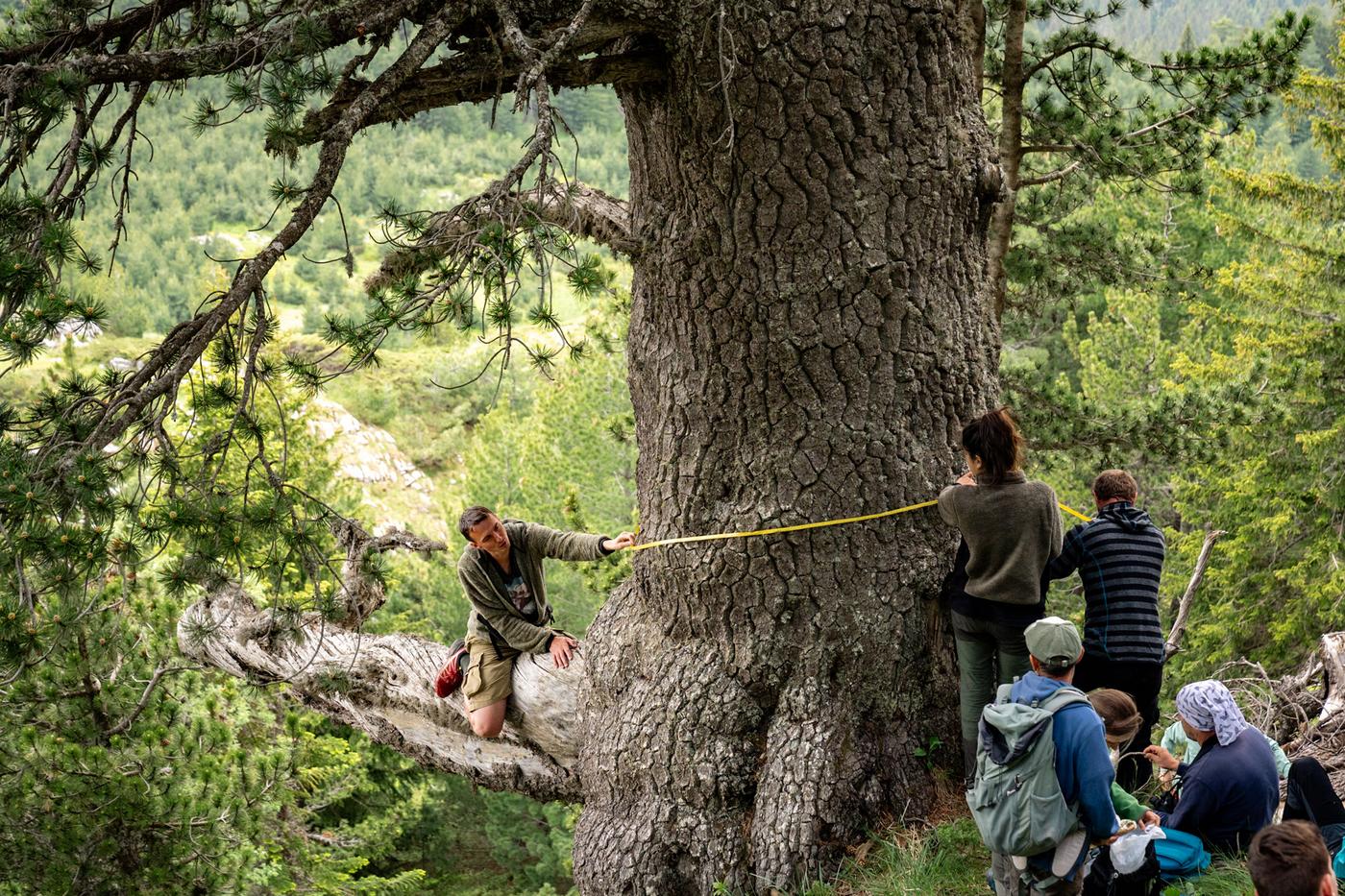
Precise measurements high up: the tape measure has a special scale which shows the diameter of a trunk.
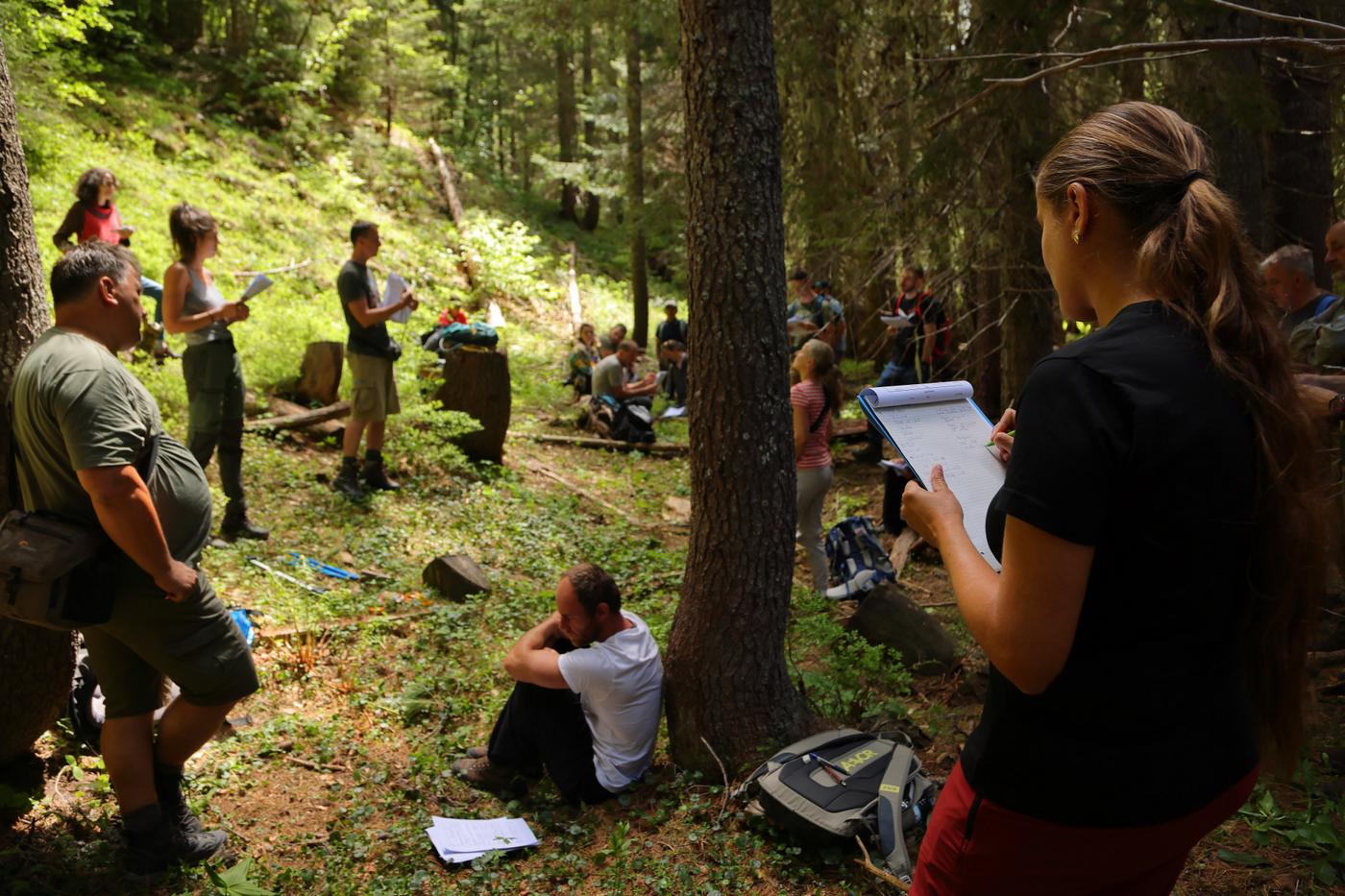
Over the course of three days on this field trip, the team of experts learns to interpret a forest and to draw the fine line between degraded forests on the one hand and primeval and natural forests on the other. Using core samplers, tape measures and their ecological expertise, the teams record tree species, quantities of deadwood, human intervention and other natural features on a standardised form and in a specialised mapping app. The scientific methodology for this was developed by the Czech University of Life Sciences, Prague (CZU), in collaboration with an advisory board from the Western Balkans. Each measurement is subsequently used to assess whether a forest meets the scientific criteria for primeval and natural forests and therefore requires protection.
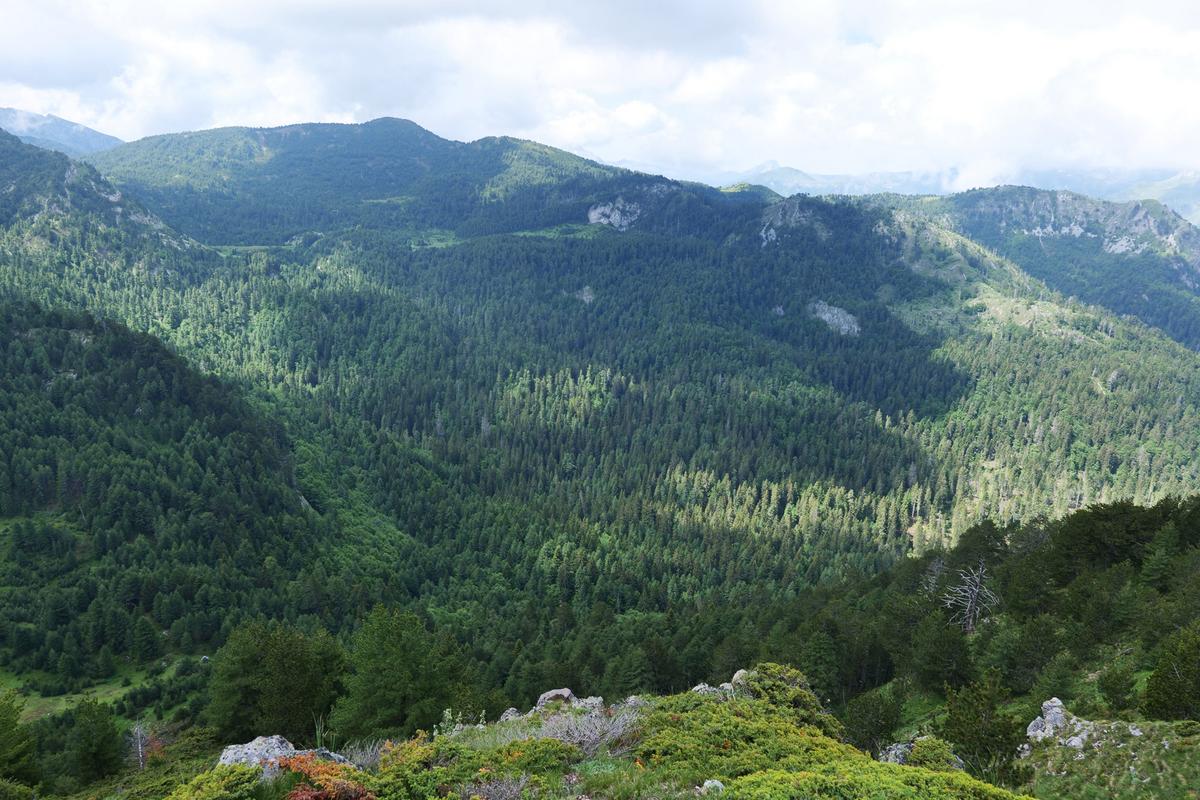
The teams are working their way through promising forests, hectare by hectare, assessing their primeval forest quality and mapping them. There is still no comprehensive map showing the location of the last remaining primeval forests in the Western Balkans. As a result, they remain undiscovered and continue to be felled and destroyed. Whilst carrying out their work on the ground, the teams experience this first-hand – what they encounter resembles a mosaic: mountain meadows slowly becoming overgrown, abandoned alpine pastures where semi-wild horses roam. Capercaillie tracks in the moss. Numerous species of lichen hang from the branches – a bioindicator of clean air and intact ecosystems. But unfortunately, there are also repeated signs of planned logging operations, sometimes alarmingly close to the oldest trees the team of experts has seen here.
Primary forests and old-growth forests – what’s the difference?
Primary forests show no visible signs of human intervention. Old-growth forests may show minor traces of human use, but must fulfil the same ecological functions as primary forests – such as having many very old trees, large quantities of standing and lying deadwood, and a natural cycle of growth and decay. These criteria are based on the ‘Commission Guidelines for Defining, Mapping, Monitoring and Strictly Protecting EU Primary and Old-Growth Forests’, published by the European Commission in March 2023.
Both types of forest are extremely rare in Europe – only 2 per cent of the original forests remain. In the Western Balkans, there are still extensive primeval forests, particularly in remote mountainous regions. However, many lie outside protected areas and remain unprotected without mapping. EuroNatur’s ‘Forests Beyond Borders’ project is systematically mapping these forests in five countries of the Western Balkans and campaigning for them to be placed under protection.
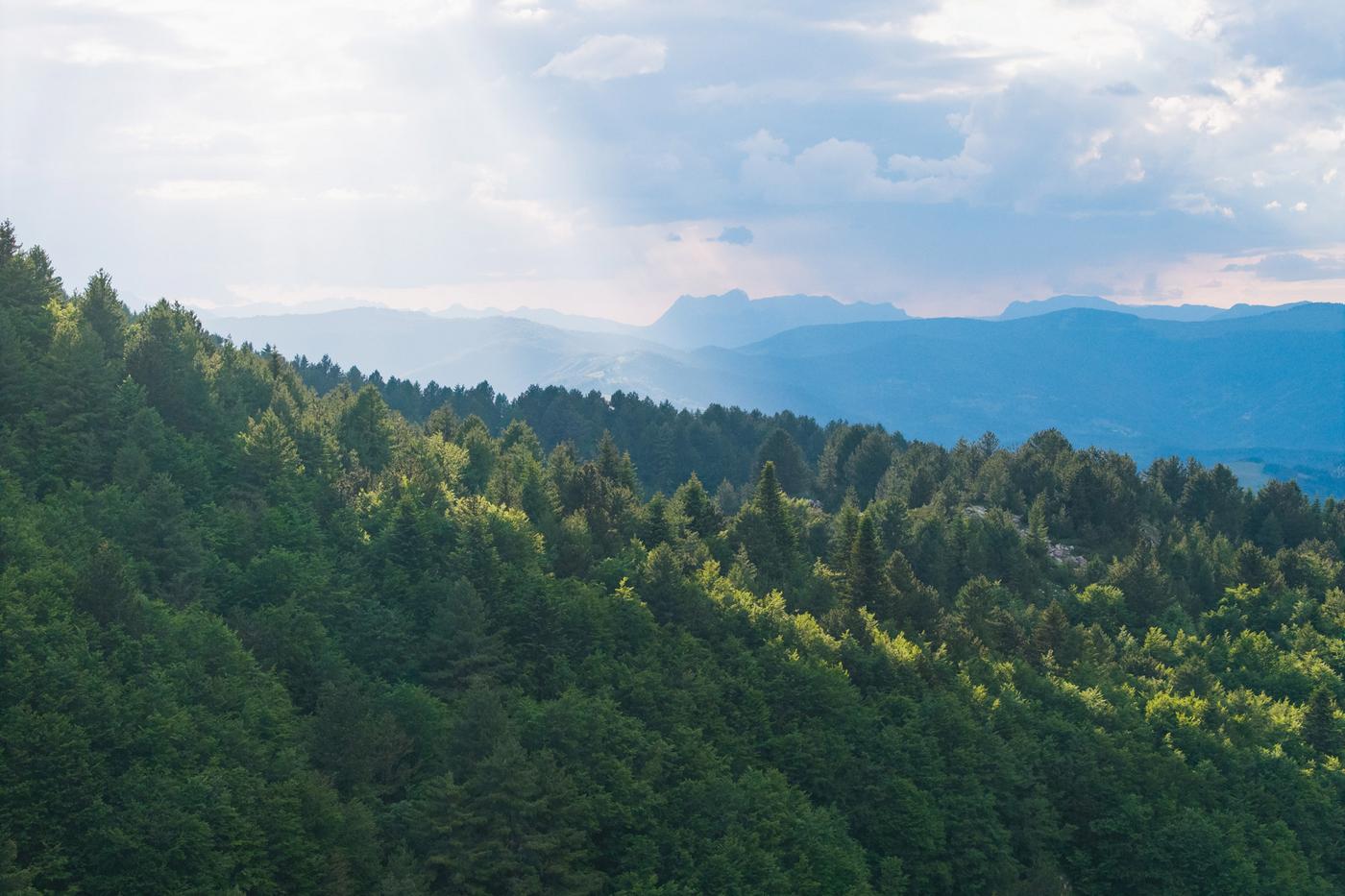
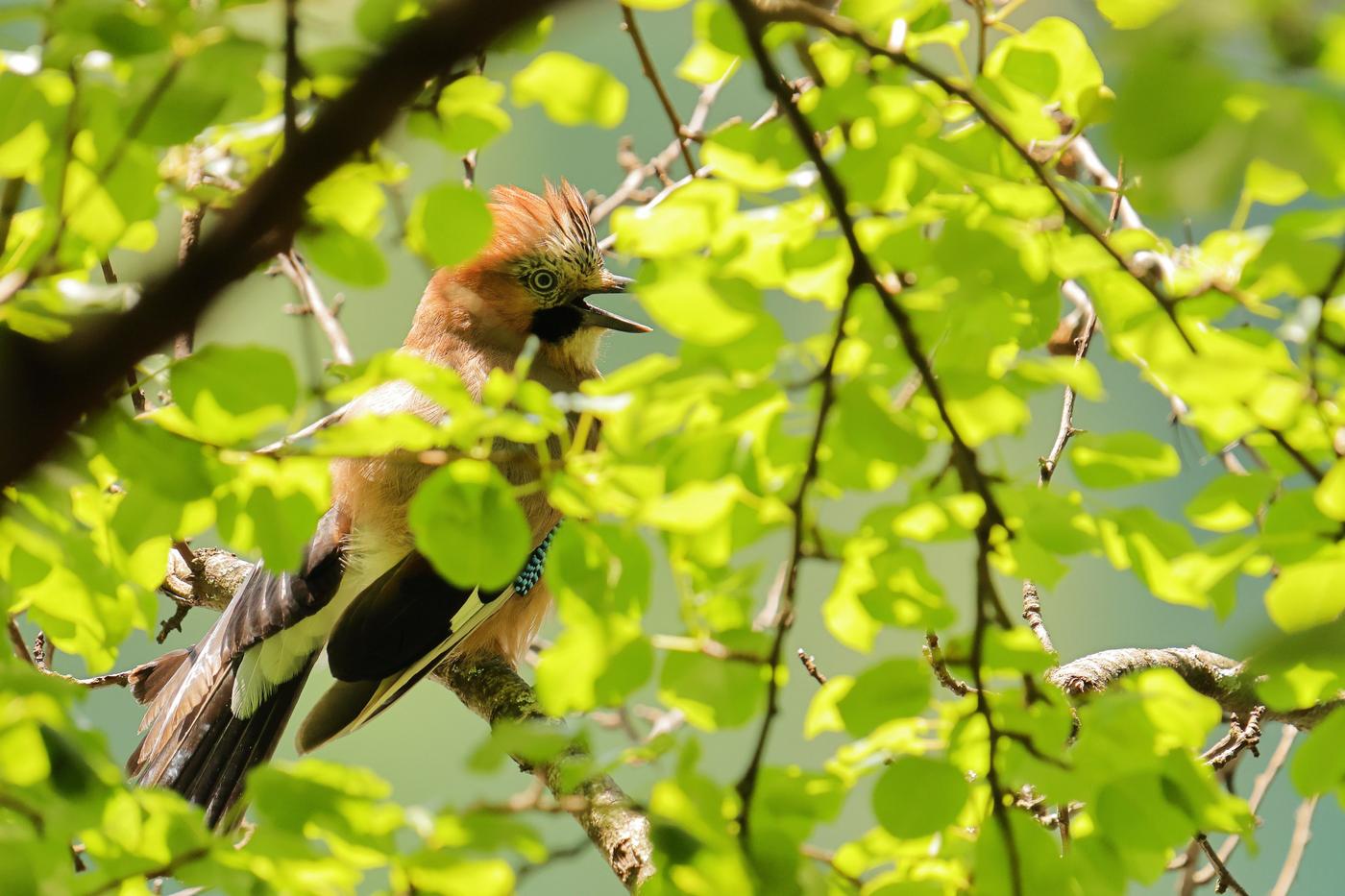
Impressions from the forests of Montenegro
Mapped hectare by hectare
Their feet ache, their clothes are soaked through with sweat. But at the end of the three days’ training in Zeletin, there is more than just exhaustion: five teams from five countries in the Western Balkans have learnt how to scientifically record and map primeval and natural forests – and are ready to begin the work in their respective countries.
“Team Montenegro” – CZIP, with the support of CZU – began the actual mapping work in Zeletin immediately after the training session. In the very first month, 750 hectares of natural forest were identified across the 2,000 hectares surveyed. Mapping is taking place simultaneously in Croatia, Albania and Bosnia and Herzegovina.
In doing so, we are laying the groundwork for these forests to be placed under protection. Our approach combines scientific standards with the expertise of local nature conservation organisations and can also be applied in other regions of Europe. Martin Mikoláš has already achieved precisely this success once before: in Slovakia, following years of mapping work, he ensured that 76 previously unprotected primeval forest areas were placed under strict protection in 2021. This method is now set to ensure the survival of the primeval forests of the Western Balkans.
For Marija Šoškić Popović, this is more than just science. “I want to share this beauty with other people,” she says. “And, of course, we want to show the world what we have here. Because this is a truly unique forest.”
We in Europe should also show other continents that it is possible to preserve our ancient natural forests. The real work is only just beginning.
Martin Mikoláš, primeval forest researcher, Czech University of Life Sciences Prague (CZU)
Your donation for Europe’s last remaining primeval forests
The researchers have developed the method. The partner NGOs are putting it into practice. What is needed now is your support.
We search for and map primeval and natural forests, document them scientifically and campaign for their protection. With your donation, we will be able to:
scientifically verify the existence of primeval and natural forests in Croatia, Bosnia and Herzegovina, Montenegro, Albania and Serbia in accordance with EU standards. This is the only way we can ensure they are placed under strict protection. With 100 euros, we can survey ten hectares of forest.
use the data collected to call for protected areas for primeval and natural forests at national level.
use the EU accession process as a lever. The strict protection of primeval forests must become an accession criterion! We will fight for this.
In total, we still need at least 50,000 euros for these activities. Please also consider making a regular donation. It gives us the planning security we need to continue working tirelessly to protect Europe’s last remaining primeval forests.
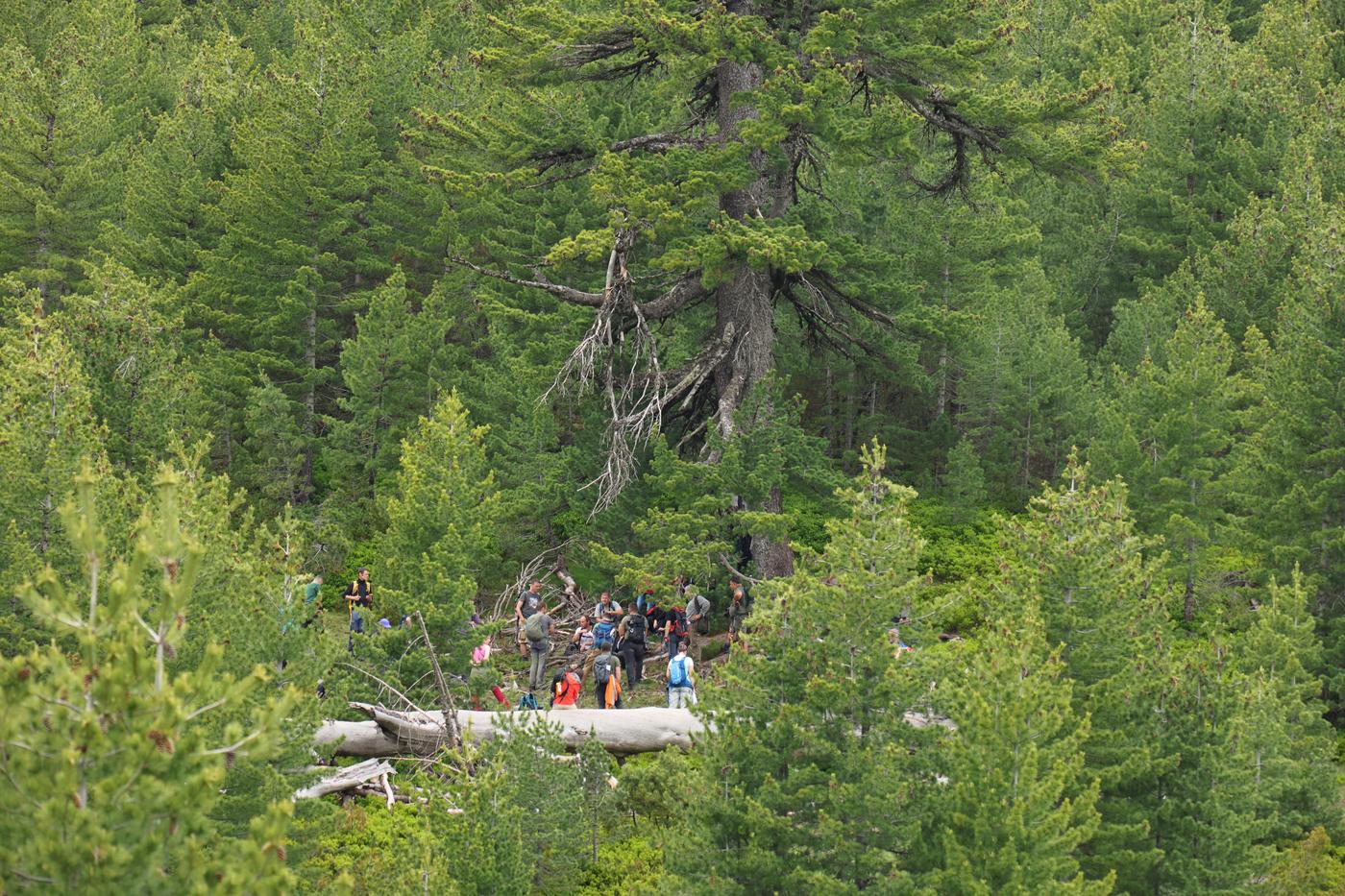
As a child, Marija sought shelter under this tree. Today, she is campaigning to ensure that the forest around it is protected. Your donation will help her in this endeavour.