


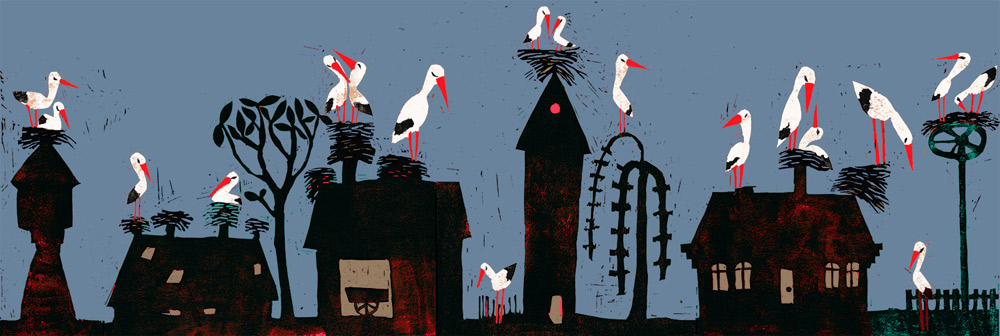
From England to Turkey – a network for diversity
With the “European Stork Villages” initiative EuroNatur has set up a movement to help counterbalance the habitat loss for storks in Europe. Since 1994 the EuroNatur foundation has honoured 16 villages in 16 European countries for their engagement in white stork and nature conservation with the title “European Stork Village”. Candidates for the title are villages or parishes with resident stork colonies. The local people have put much time and energy into the protection of storks, for example by adopting extensive farming practices and conserving large areas of wetland. With the title, the communities are internationally recognized as special cultural and natural heritage sites. In this way we are working to encourage successful approaches to the protection of nature in general and white storks in particular.
From wet meadows to steppes – habitat diversity in Europe
In their full range the European Stork Villages embody the diversity of meadow and pasture land in Europe - from the wet meadows in the villages Čigoć or Rühstädt, which are located in the floodplains of the rivers Sava and Elbe, respectively, to the steppes around Malpartida de Cáceres in the Extremadura. Since 2004 the pan-European network meets annually in one of the Stork Villages to develop solutions for a ground breaking protection of white storks.
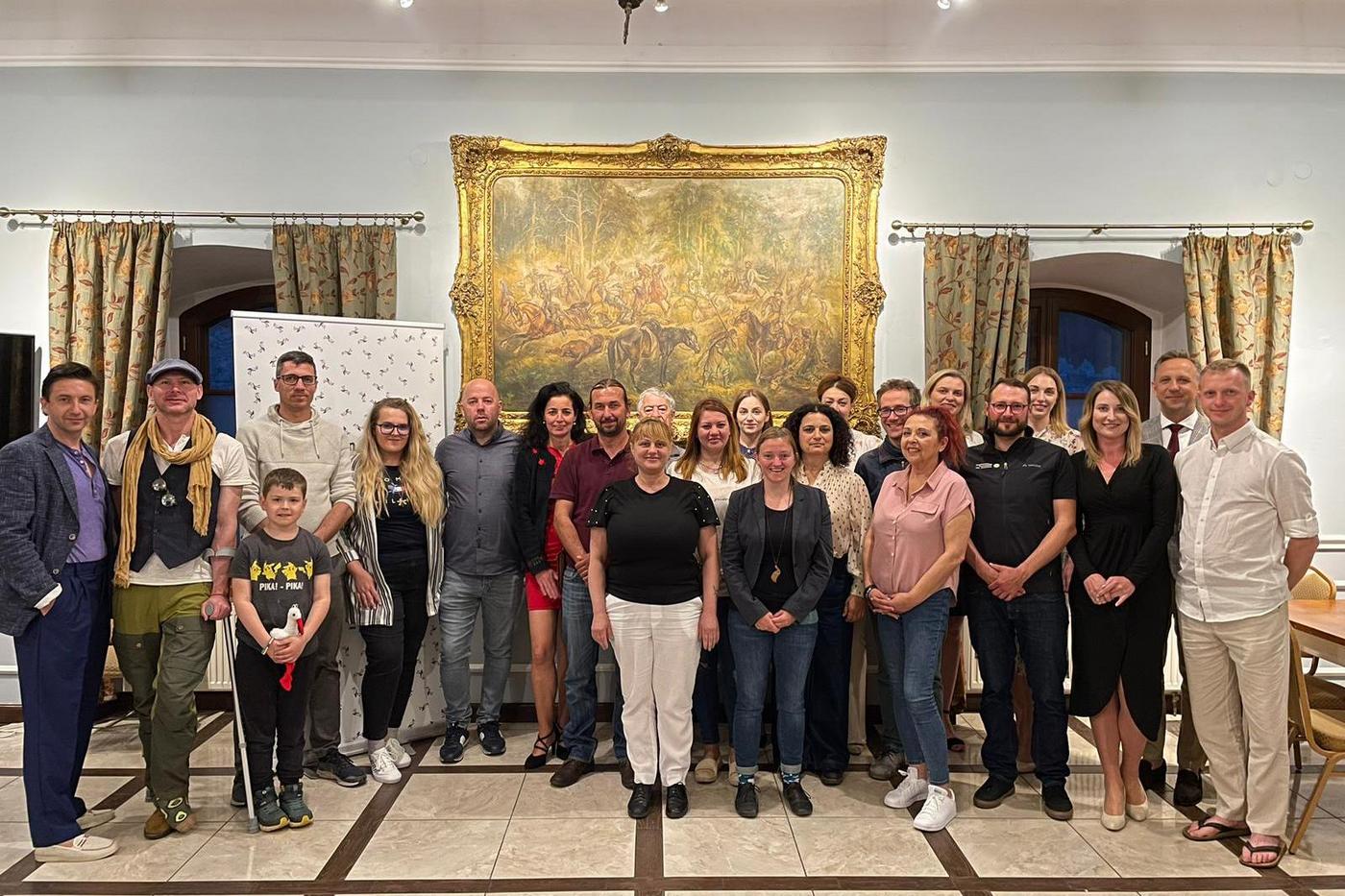
Stork conservationists at a meeting in the Polish stork village of Pentowo
© EuroNaturWhat makes a village a European Stork Village?
The “European Stork Villages” have been designated for their exemplary dedication to the protection of the White Stork. But what makes them deserve this title? Many criteria are relevant for the designation as „European Stork Village” and some of them are listed below. However, the following list is by no means exclusive and while an individual village may not necessarily meet all of them, all European Stork Villages strive to improve their performance in the following fields:
-
Large stork colony
-
Protected area
-
"White stork event"
-
Cooperation
-
Conservation measures
-
Environmental education
-
Public relation
-
Further activities
Measures of the network
EuroNatur, its partners and the European Stork Villages jointly work for the conservation of the white stork and its habitats, especially wet meadows and pastures. We do this in many ways, amongst others by:
- advancing the extension of the European Stork Village Network by finding and designating communities that support the idea and by counselling all members of the network.
- organizing regular meetings of the European Stork Village representatives to exchange ideas, experiences and approaches to stork protection.
- stimulating and supporting projects on various topics, including for instance environmental education, promotion of sustainable tourism and habitat restoration.
- working for the conservation of species-rich meadows and pastures in Europe by implementing specific projects on the ground and by lobbying at EU level.
- creating perspectives for a sustainable development of the various stork-supportive communities in order to improve the situation for storks in the long term.
Responsibilities of and opportunities for the European Stork Villages
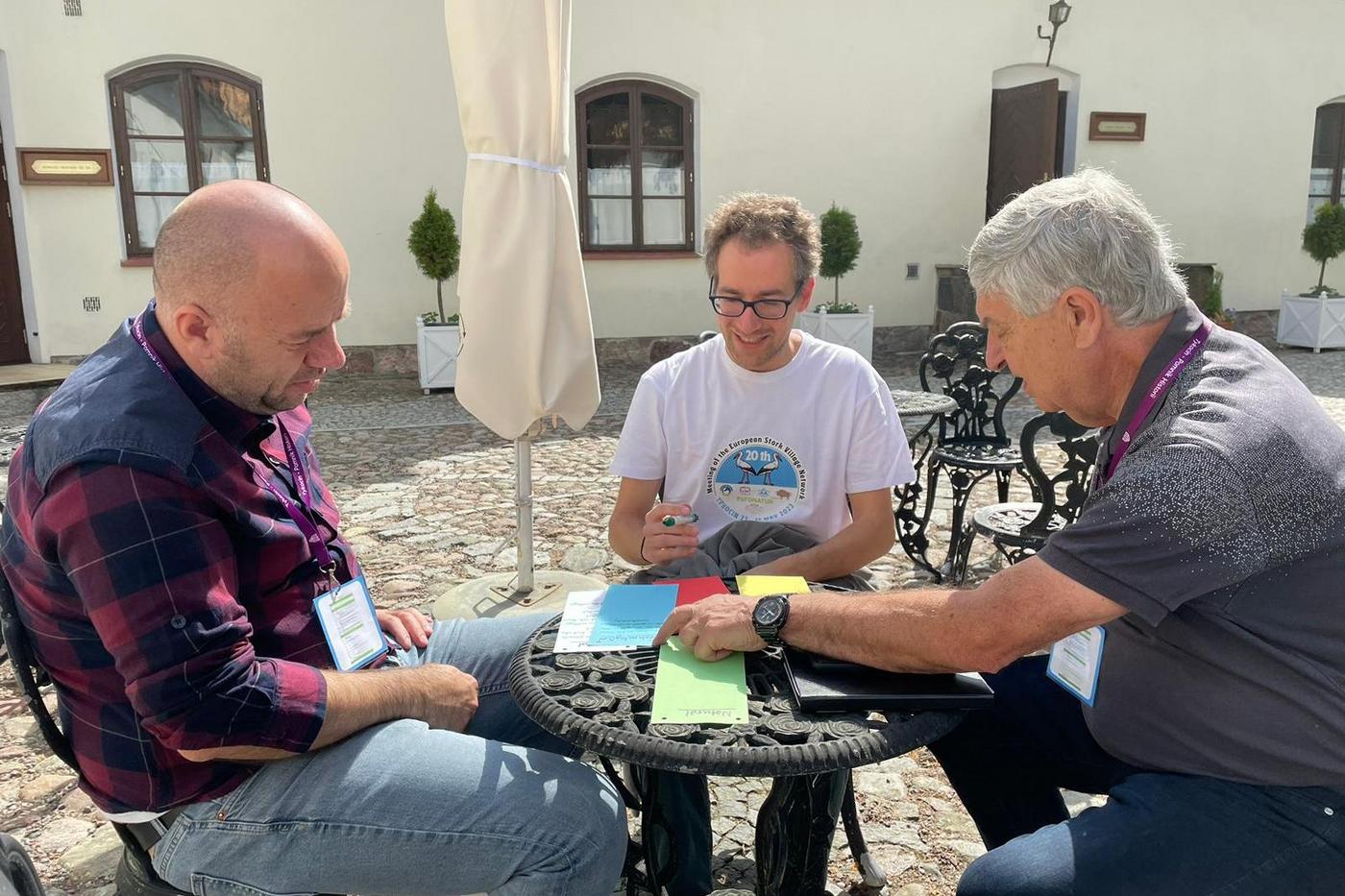
At the annual stork villages meetings, the focus is on sharing ideas and working to protect white storks.
© Ilka Beermann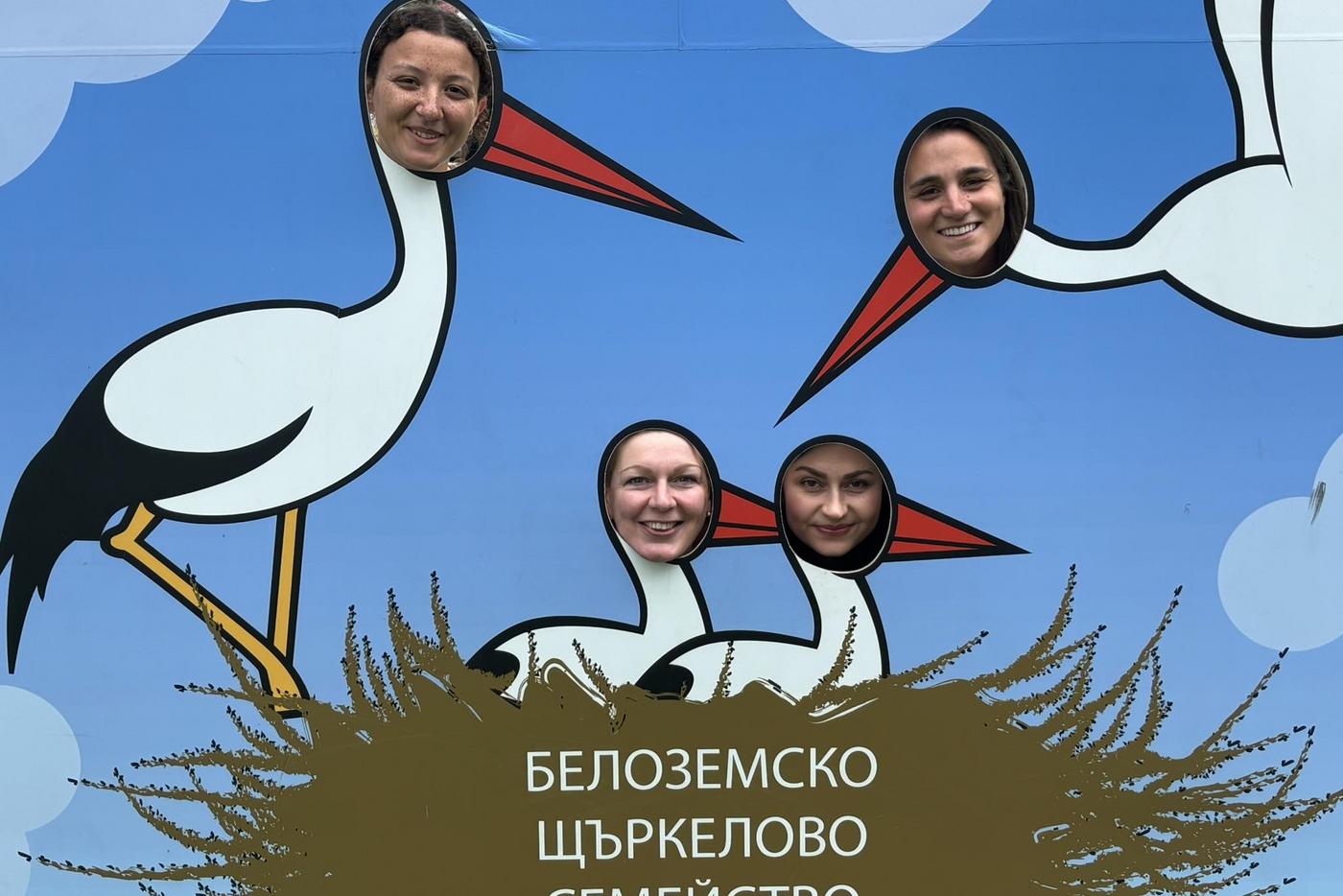
But there’s no shortage of fun at these get-togethers either, as here in Belozem.
© Justine Vansynghel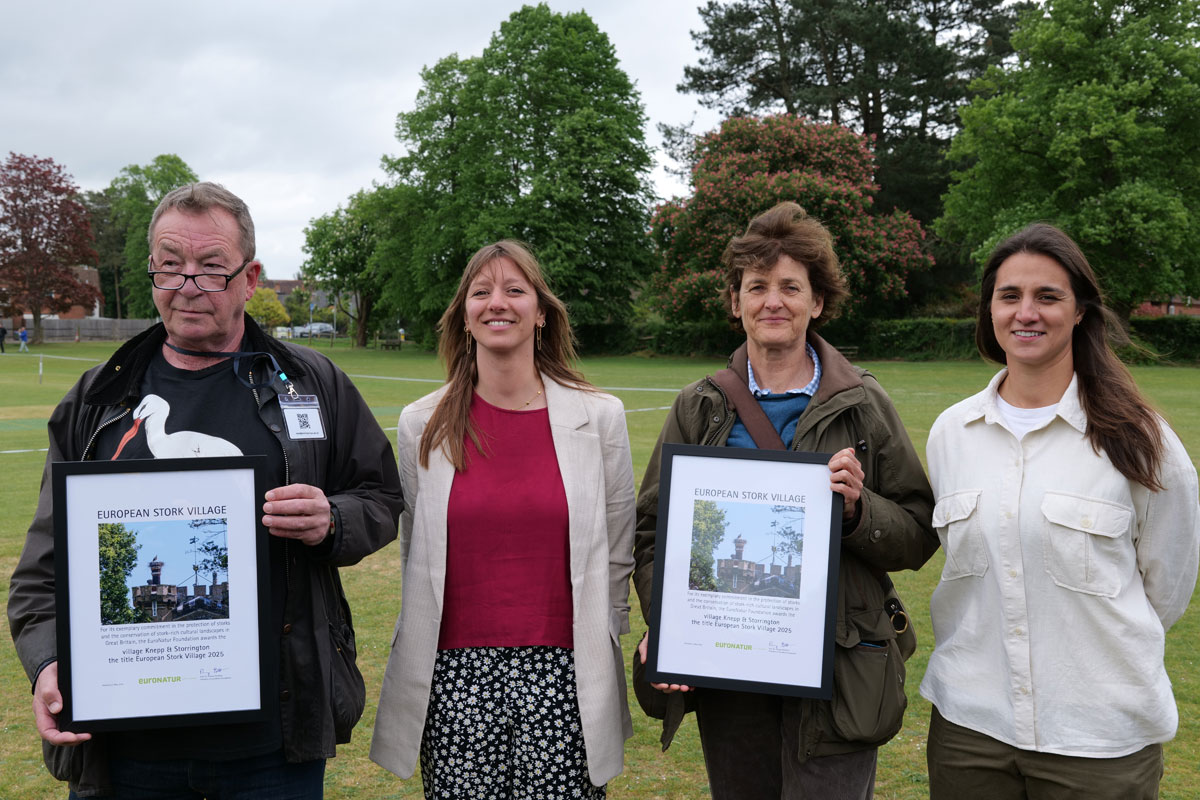
After a longer period of pause, the last village to be designated a European Stork Village was the Knepp Estate/Storrington in England in 2025. The initiative is still going strong and is open to applications from other villages...
© Anja ArningThe European Stork Villages Network meets on an annual basis in one of its member villages in order to enhance the exchange among the villages across Europe. Each village sends at least one English-speaking delegate to these annual meetings and at some point organizes such a meeting on its own (but with support by EuroNatur and other partners and villages, if necessary), as the network can only be kept alive by the contribution and exchange of dedicated people. The European Stork Villages do not rest on their title, but strive to become (or remain) best-practice examples and ambassadors for the conservation of White Storks and nature on a national level. To do so, the villages take pro-active efforts for the implementation of nature conservation measures (together with their partners) and also initiate and contribute to the fund-raising for such measures.
A membership in the “European Stork Village Network” is a great chance for the sustainable development of a village, especially if it is located in a rural area. The villages get a lot of attention in the local and national media, which can be used to promote a nature-based tourism. EuroNatur and its partners support the villages and their respective NGO partners in a variety of conservation measures related to nature in general and to the White Stork in particular – both technically, and wherever necessary and possible, also financially. Each village profits from the experience of all other villages in the European Stork Village Network across various topics, like for instance nature conservation, sustainable tourism or environmental education. The annual meetings, as well as regular contacts via phone, email, social media and joint initiatives and projects ensure that the European Stork Villages are not just a collection of loosely connected stork-fans, but an enthusiastic and vivid network of stork-enthusiasts and nature conservationists across Europe!
Information for applicants on the title „European Stork Village“
(413 KB)