


++ Conference of the European Green Belt initiative in Gorizia ++ Concept for the European Green Belt long-distance walking route presented ++
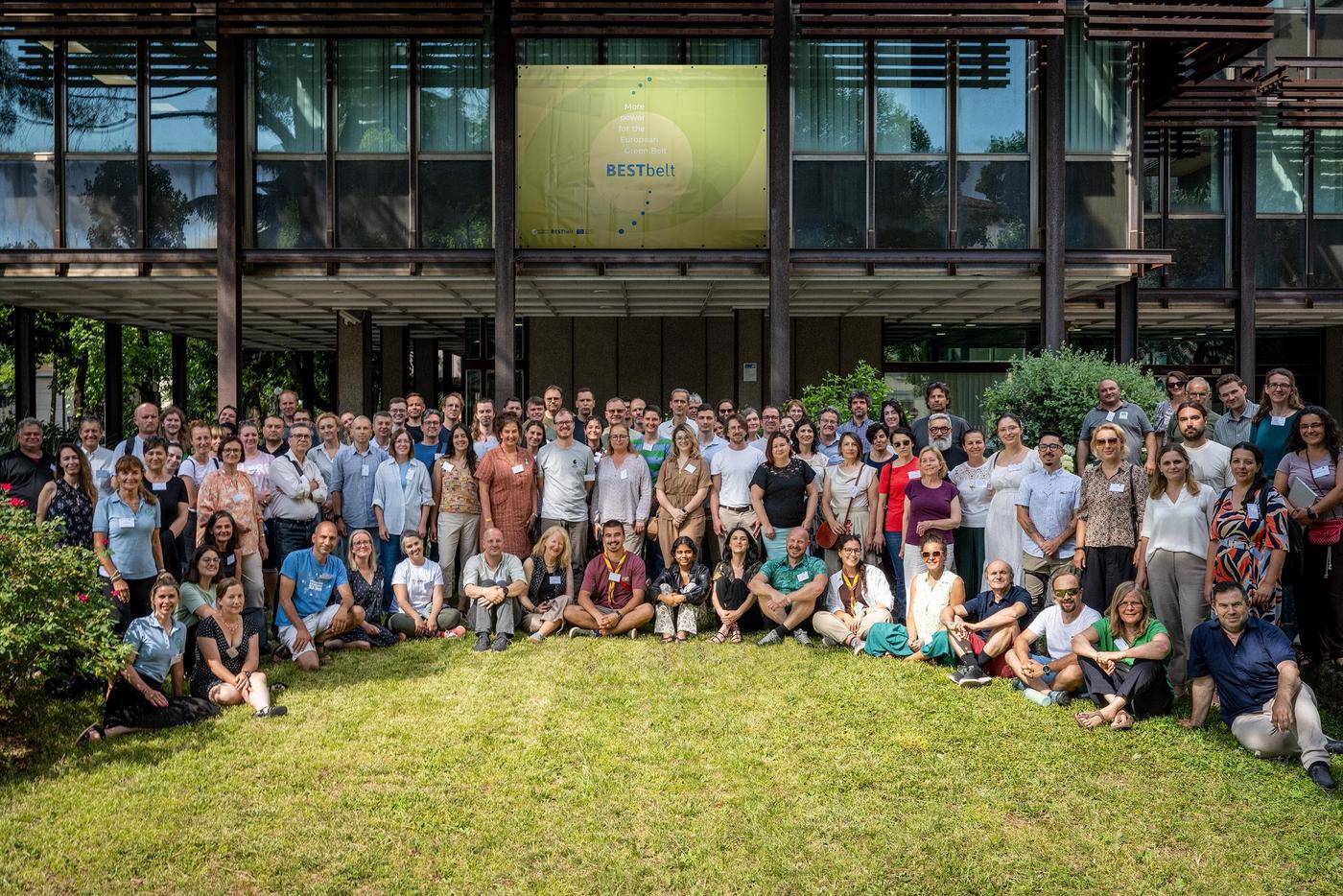
Conservationists from 21 countries met in Gorizia, Italy, at the end of June.
© Thom Gallie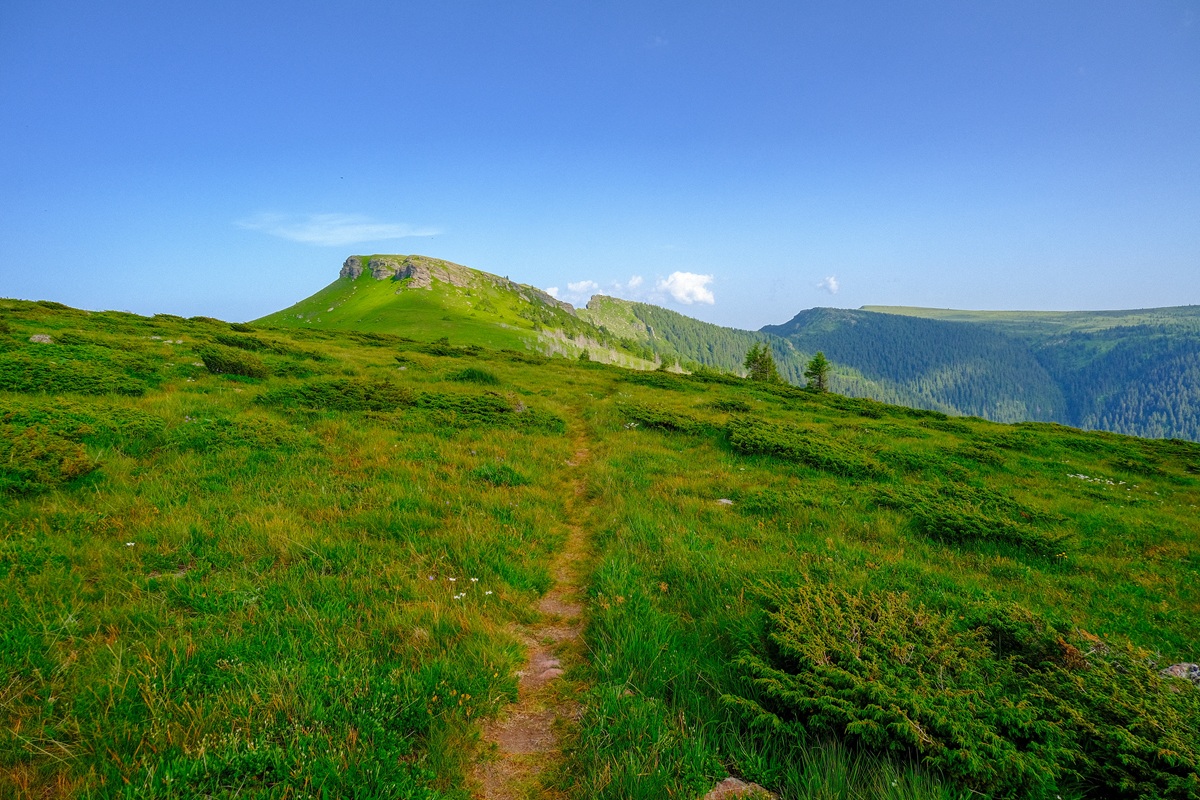
A European long-distance hiking trail along the Green Belt of Europe is one of the initiative’s most ambitious projects; this is a section along the Balkan Green Belt.
© Petar VanevRadolfzell, Gorizia. The European Green Belt is a hotspot for biodiversity, but offers few socio-economic prospects. As part of the EU-funded BESTbelt project, over the past four and a half years more than 80 organisations in 21 countries have implemented 49 projects aimed at protecting biodiversity and promoting sustainable economic management. The results of these small-scale projects were presented and discussed at a pan-European Green Belt conference held from 23 to 25 June in Gorizia, Italy – near the border with Slovenia and thus on the site of the former Iron Curtain – with more than 100 participants in attendance.
The restoration of valuable wildlife habitats is a key focus of numerous projects. As part of ten projects, a total of 30 hectares of grey dunes, 70 hectares of meadows and pastures, 4 hectares of wetlands and 6 hectares of Black Grouse habitat have been restored. In addition, five new bat roosts have been created by converting military bunkers.
One of the most ambitious projects is the creation of a European long-distance hiking trail along the European Green Belt. As part of the BESTbelt project, EuroNatur, BUND, the European Hiking Federation (ERA) and the European Mountaineering Associations (EUMA) have laid the groundwork for this hiking trail, which is around 10,000 kilometres long. Some sections already exist, particularly along the Baltic Sea, the Green Belt within Germany and in the Balkans, but now need to be linked together. The long-distance hiking trail brings the European Green Belt to life and provides a significant boost to the local economy.
"Through BESTbelt, we have succeeded in supporting many small organisations that previously operated only locally," says Gabriel Schwaderer, Executive Director of EuroNatur. “This has enabled us to significantly boost the potential of local communities in the areas of nature conservation and biodiversity restoration, whilst also promoting cross-border cooperation. What was once divided by borders, nature is now bringing together again," says Gabriel Schwaderer, summarising the results of the projects.
Background information:
- The European Green Belt runs along the former border between NATO and the Warsaw Pact – the former Iron Curtain. In its shadow, a unique system of habitats with an astonishing diversity of species has developed. It provides a habitat not only for Europe’s large mammals but also for countless endangered invertebrates and plant species. However, pressure on the Green Belt is mounting: habitat destruction, poaching and unsustainable tourism are on the rise.
- BESTbelt’s official contractual partner is EuroNatur, which works very closely within the project team with the National BUND Competence Center Green Belt and BUND Mecklenburg-Western Pomerania. EuroNatur, an internationally active nature conservation foundation, holds the chair of the “European Green Belt Association” (EGBA) and leads the project in this capacity. EuroNatur is also the regional coordinator for the Balkan section of the Green Belt.
Press contact:
Christian Stielow, christian.stielow(at)euronatur.org, +49/7732 9272 15