


Citizen science provides important data for the protection of the Aquatic Warbler and its endangered habitats along its European migration route.

A rare sight: an Aquatic Warbler in the reeds. Together with its partners, EuroNatur strives to prevent this endangered species’ extinction.
© Žymantas Morkvėnas, Baltic Environmental Forum Lithuania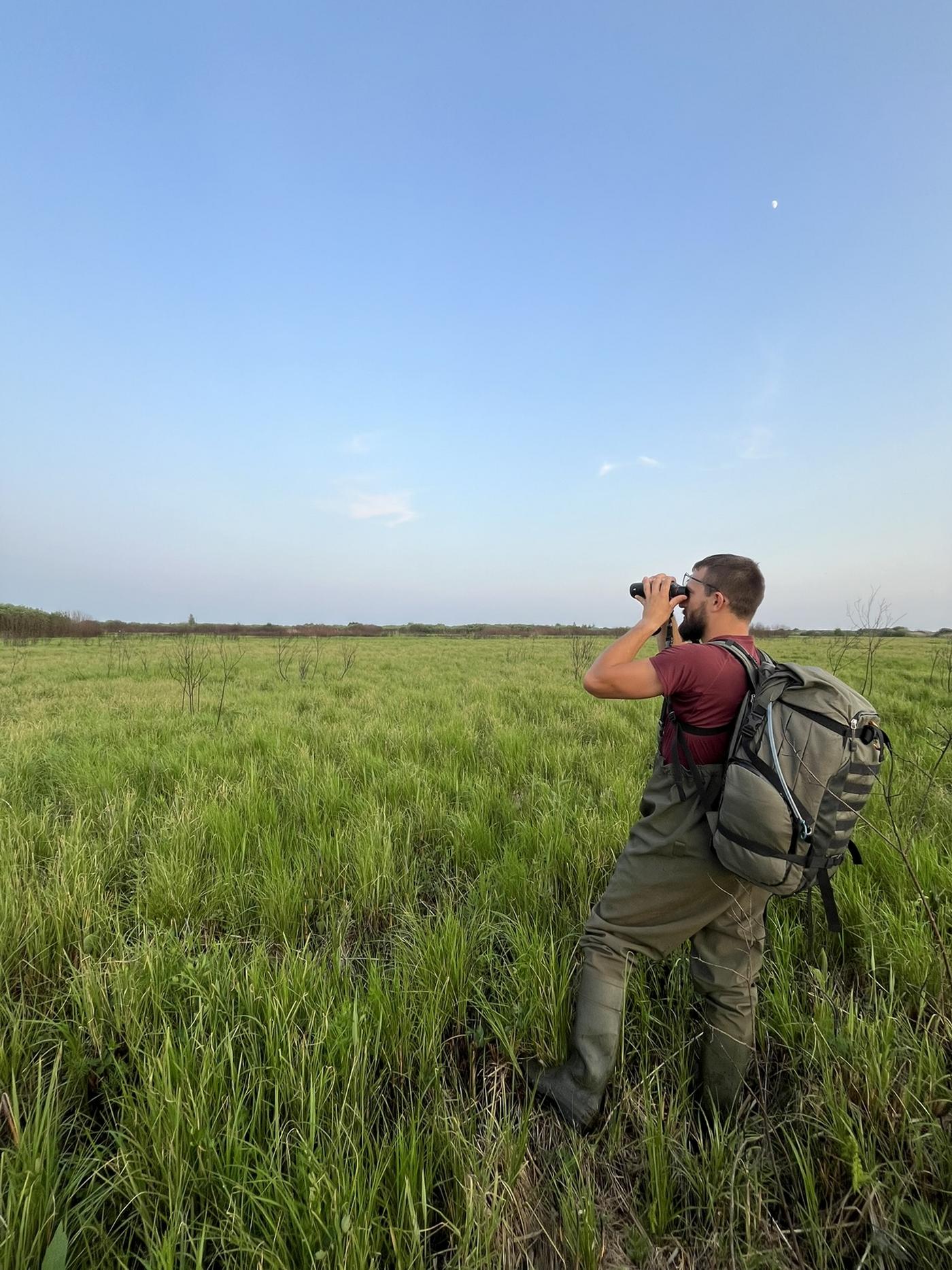
Bird censuses are one of the most popular forms of citizen science; the Aquatic Warbler project is no exception in relying on the expertise of volunteers. Here is a volunteer from France who is counting singing males of the species in the Ukraine.
© Justine Vansynghel

With this year’s theme “Every bird counts – your observations matter”, World Migratory Bird Day draws attention to the central meaning of citizen science for the protection of migratory birds. All over the world, lovers of nature provide invaluable data by reporting their observations on populations, migration routes and habitats of birds. This data forms an important foundation for effective measures in nature conservation.
Hardly any species demonstrates the significance of such observations as convincingly as the Aquatic Warbler. The rarest songbird of Europe is dependent on intact wetlands along its migratory route, but fewer and fewer of these still exist. And so it is all the more important to recognise breeding and resting grounds early on and employ protective measures purposefully.
As part of the international LIFE project “LIFE4AquaticWarbler”, EuroNatur works with partner organisations to secure Aquatic Warbler’s populations in East Central Europe and to establish new breeding grounds. Regular bird censuses play a crucial role in this. With their reportings, ornithologists, volunteers and local communities contribute to bettering our understanding of this species and to continually adapt our protective measures.
“The Aquatic Warbler does not know national borders. Its protection can only work if people along its entire migratory route work together”, says Gabriel Schwaderer, EuroNatur Executive Director. “The World Migratory Day slogan of this year hits the nail on the head: Each observation counts. It helps us identify tendencies, as well as risks and dangers early on, and to develop effective measure for endangered migratory birds.”
The slogan also reminds us that nature conservation is not only an endeavour of science and politics. Whether you participate in bird censuses, report observations on citizen science platforms or support projects for bird protection: anyone can help ensure that migratory birds will continue to find safe breeding and resting grounds. This is exactly what the Aquatic Warbler needs.
Background information:
- Aquatic Warbler: Once a common inhabitant of marshes, this species has experienced an unprecedented decline in population in recent decades; today, the Aquatic Warbler is considered the rarest songbird in Europe. In its entire geographic range, only 4,000 to 5,000 singing males are left. Together with our partners, we are fighting for its survival in Eastern Central Europe – this may be the last chance for the species. The Aquatic Warbler is inconspicuous at first glance, but it is an umbrella species standing for many positive nature and climate protection effects.
- The project “Conservation of Europe's rarest continental songbird: A cross-border initiative for the recovery of the Aquatic Warbler population” (acronym: “Life4AquaticWarbler”) is funded by the EU’s LIFE programme, the Ministry of the Environment of the Republic of Lithuania, the Michael Otto Foundation, the Kurt Lange Foundation, the Brandenburg Nature Conservation Fund, the Giving Back to Nature Foundation, the Bird Conservation Fund and the project partners. It officially started on 1 October 2024 and is scheduled to run for nine years.
- Citizen science describes the participation of interested citizens in research projects. By collecting, documenting and analysing data, volunteers make an important contribution to research. The collected data helps researchers and scientists to better understand areas of distribution, population changes or changes in ecosystems.
Press contact: Christian Stielow, christian.stielow(at)euronatur.org, Tel.: 07732/927215