


A young brown bear called Bora (Albanian for “snow”) has been giving our Albanian partners at PPNEA valuable insights into the life of large carnivores in the region.
Saved from a snare trap
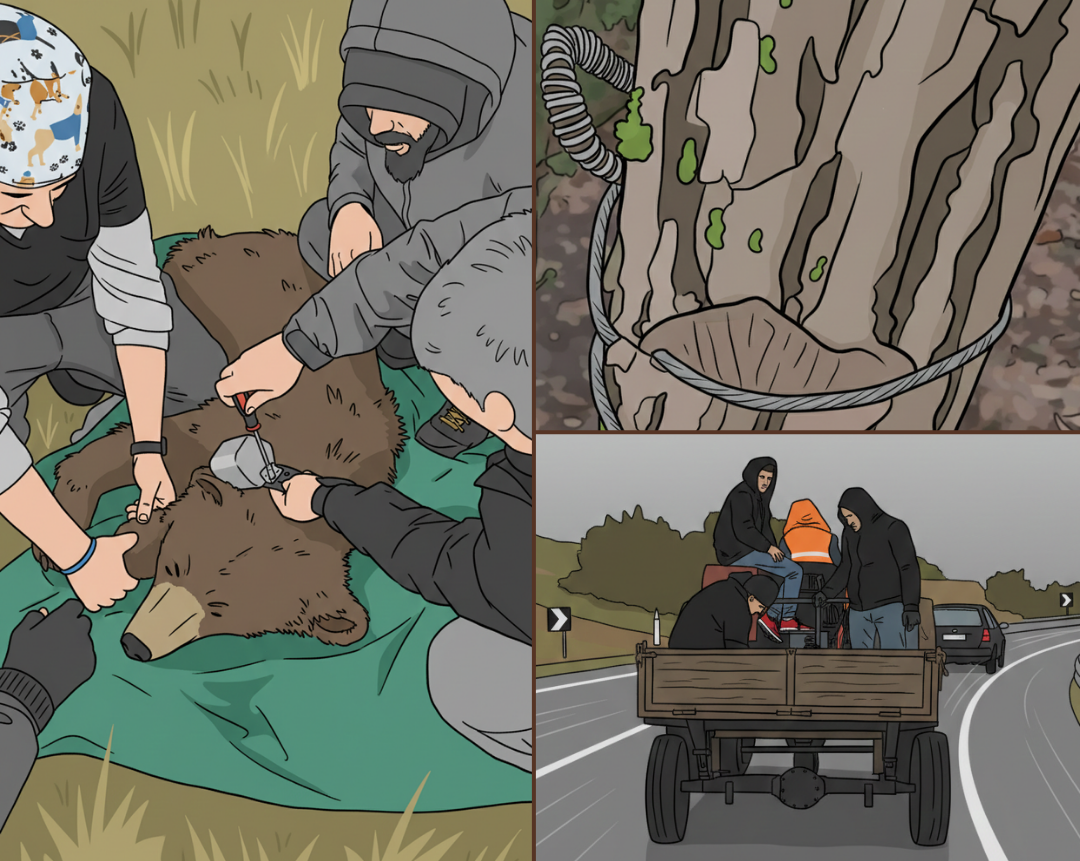
Ever since a dramatic rescue mission last autumn, Bora the bear has been supplying scientists and bear researchers with difficult to obtain and significant GPS data. Each day, our partners learn more about natural connecting spaces in the Balkans and the challenges brown bears in the region are facing at the moment.
In November last year, our partners at PPNEA encountered the she-bear Bora for the first time, caught in a sling trap near the village Trebinjë in southeast Albania. Just the day before, another bear had been killed by one of these illegal devices. Traps are a constant threat for large carnivores in this region, and especially for bears. Even though they are put up primarily for boars, these traps kill other animals as well.
Bora’s rescue was undertaken by PPNEA and helpers. The logistics were challenging: in situations like these, the lack of an official bear task force in Albania makes itself noticeable. Albania’s neighbour, Greece, does have such a team, and there is an urgent need to form one here as well.
-
“Special units” for bear protection
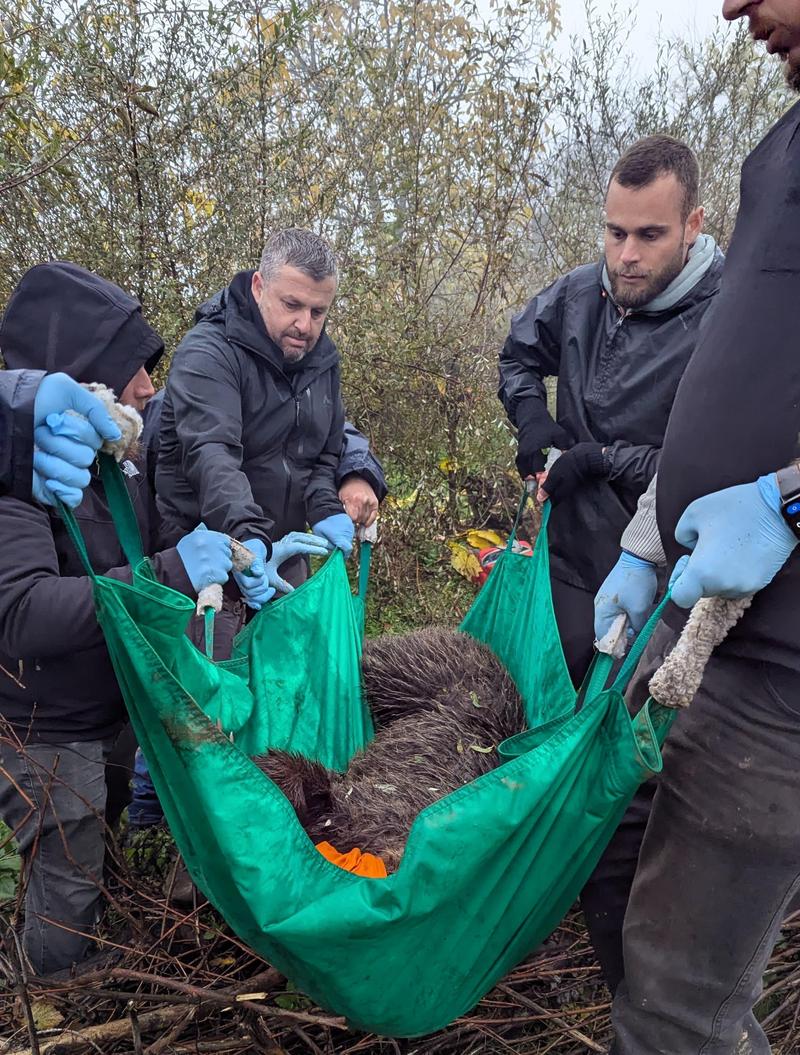
© PPNEA These so-called Bear Intervention Teams (BIT) are specialised task forces in the Balkans who mitigate conflicts between humans and brown bears. Their main duty is to supervise and react to problematic behaviours of bears, for example if they enter settlements looking for food or if they are unusually trusting in humans. The measures they take range from deterrence (for example loud noise or rubber bullets) to the capture and resettlement of individual bears to sharing information with the population. But the bear protectors also jump into action when an animal is injured (for example in a sling trap) or killed (for example in traffic). Another important part of their work is prevention, for example by consulting on safe waste storage or the protection of livestock. As such, BITs are a crucial factor for the acceptance of bears in the Balkans. Several countries in Southeastern Europe already have these “special units”; Albania, too, is preparing to form a team of its own.
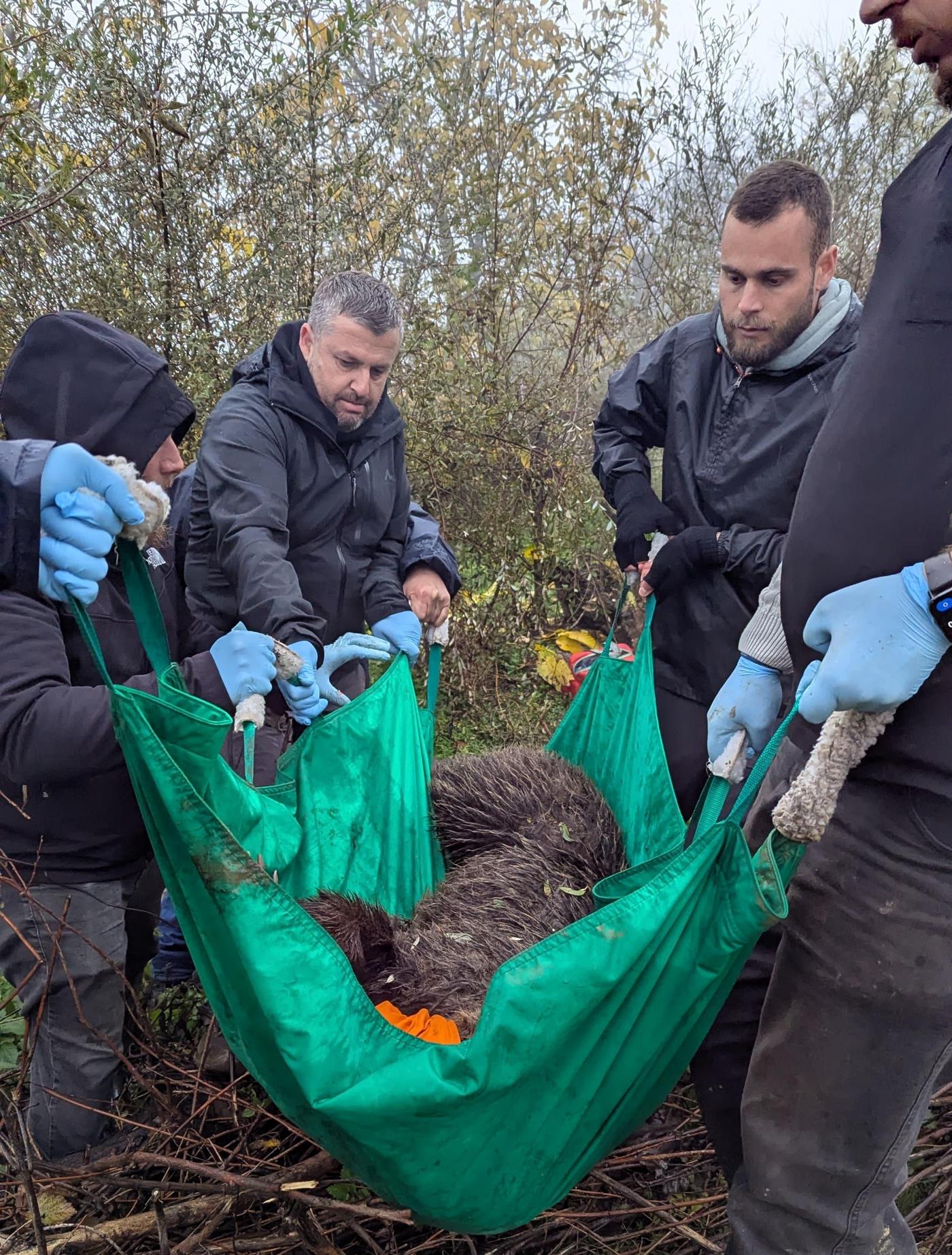
After Bora was freed from the trap, our partners at PPNEA brought her to a remote area a few kilometres away from the village. Before releasing her, the bear protectors put a tracking collar on her so that our partners can follow her movements in real time. Bora is only the second bear in Albania that has been equipped with a transmitter. The bear Maja went through a similar experience – does that sound familiar to you?
A small Christmas miracle
In the final weeks of 2023, Maja, another young she-bear in Albania, ended up in a sling trap. Our partners at PPNEA learned of this only a few days later and immediately organised a rescue mission. The BIT from Greece rushes to help and lend their experience, and together they managed to save Maja and put a tracker on her on Christmas Eve. For ten months, the tracker provided valuable data before it was detached remotely. Our partners continued to follow Maja even without the tracker and installed a wildlife camera in front of her den. Last winter, it filmed a group of bears that was very likely Maja and her cubs.
A restless winter

Brown bears usually hibernate during the winter. Bora, however, had other plans: Her telemetry data shows that she stayed active throughout the snow season, having only brief “naps” here and there. Rather than retreat into a winter den, Bora embarked on a long journey. Over the course of several weeks, she travelled about 100 kilometres – an impressive distance, especially in winter, considering that female bears tend to be philopatric where male bears tend to disperse.
Bora caught up on her seemingly badly needed hibernation much later in March and April. Experts believe that climate change leads to milder winters, less fruit in autumn and a lack of adequate hibernation sites, which in turn disturbs the natural rhythm of brown bears.
Dangerous obstacles
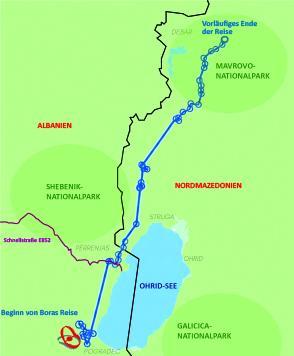
From Lake Ohrid all the way to Mavrovo National Park: Bora’s cross-border journey is truly remarkable.
© PPNEA/ENBora’s movements can be tracked very closely thanks to the transmitter collar and they call attention to a crucial problem: infrastructural barriers. At one point, Bora tried and failed to cross a newly built national road. Busy roads are often massive obstacles that dissect habitats and restrict the free movement of wildlife. In the worst case, this leads to genetic isolation. Bora overcame the obstacle by changing her route, eventually crossing the border to North Macedonia and reaching Mavrovo National Park.
Bora’s journey is more than just an unusual wildlife story: it is a case study that can teach us a lot. It is crucial to connect habitats. Large carnivores rely on connected landscapes to find enough food and suitable mates. Human infrastructure dissects ecosystems; streets can isolate populations and inhibit their natural behaviour.
International collaborations are indispensable when it comes to this. Bora’s route from Albania to North Macedonia highlights the necessity of working together across national or institutional borders when it comes to protecting nature.
Bora’s journey is not over yet …
Bora is still on the move, conquering mountains, borders and manmade obstacles. Her movements provide important results for science and nature protection in the Balkans.
Authors: Lorena Pyze Xhafaj (PPNEA) & Christian Stielow (EuroNatur)