


++ Aquatic Warblers struggle because of drought ++ Climate emergency as another cause of endangerment for Europe’s rarest songbird ++
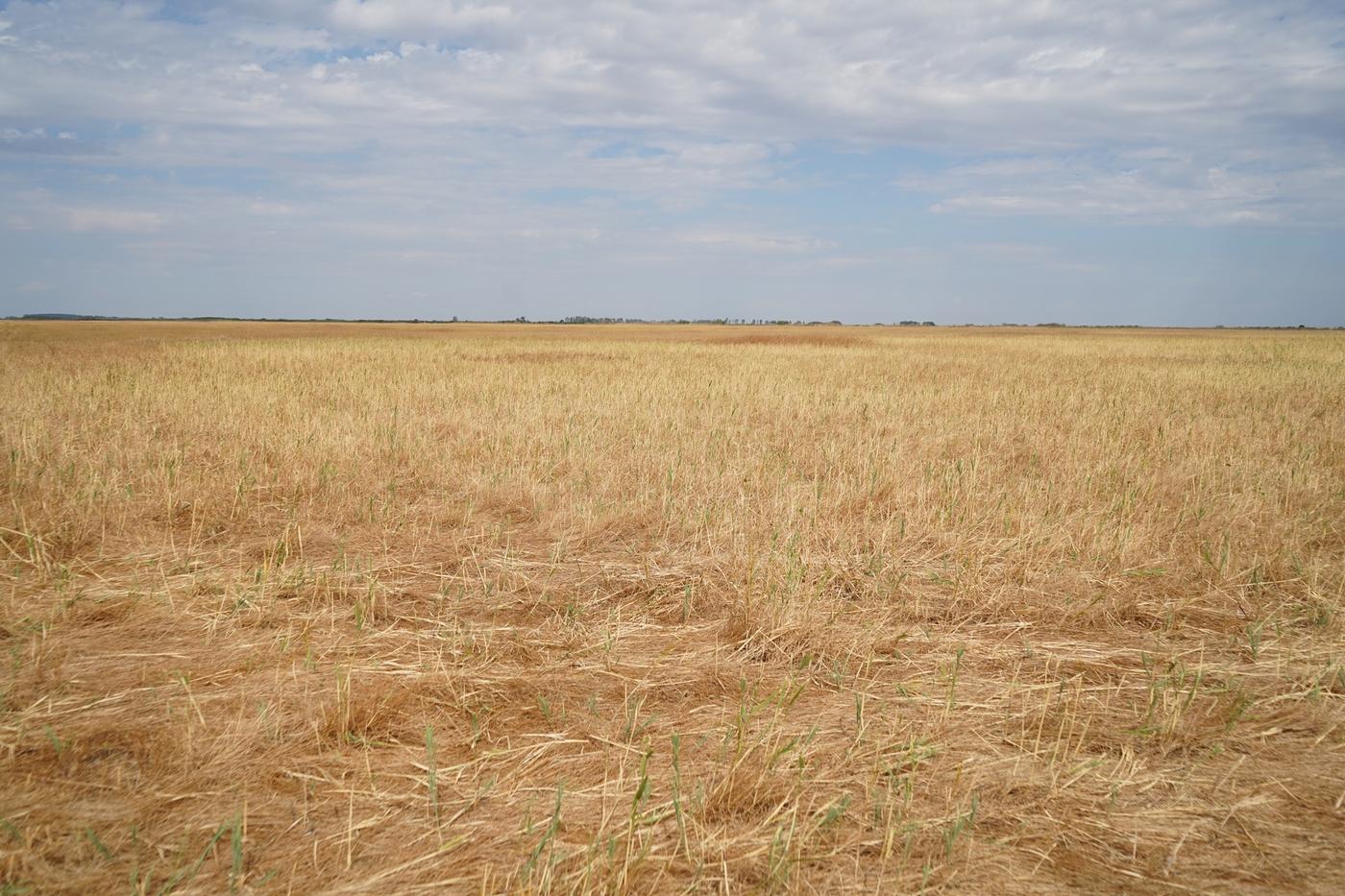
Steppe instead of fen: a completely dried-up wetland in Hungary within the project area near Nagyiván. It is hard to imagine the translocation of young Aquatic Warblers to this location.
© Sándor Borza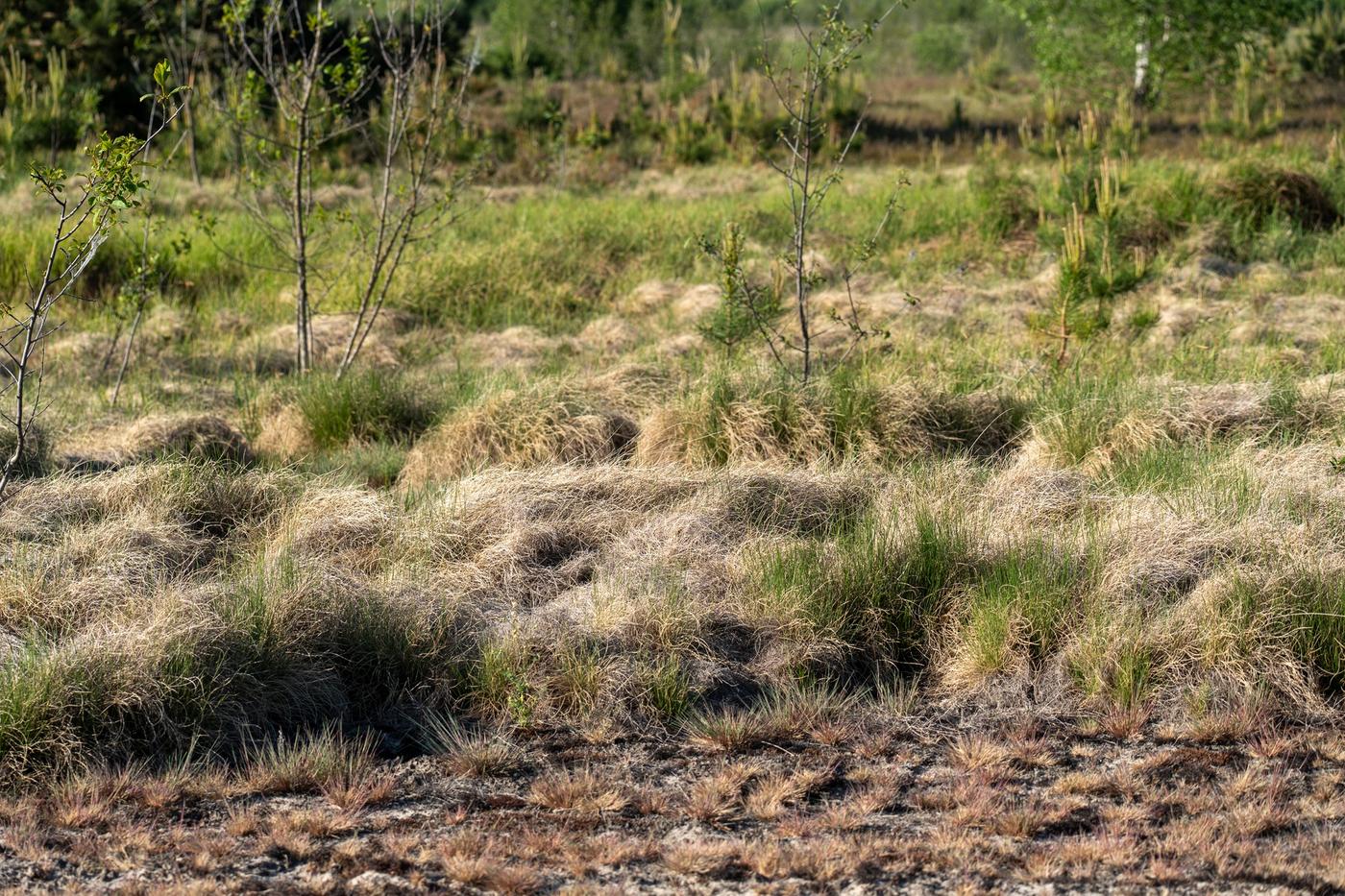
The situation in Ukraine is not much better. Here is a photo from one of the breeding grounds of the Aquatic Warbler in the Volyn Oblast.
© Katerina Kashpurenko, USPB
Aquatic Warblers depend on water in their breeding grounds. The right water level determines the success or failure of the breeding season.
© Žymantas Morkvėna
Radolfzell. The summer of drought that is affecting large parts of Europe is endangering the survival of the Aquatic Warbler. In Ukraine, for instance, the unusually low amount of precipitation caused a severe drought in almost all project areas of our partners, including the Birky fen in the Prypiat-Stokhid National Nature Park. In the few areas that still have water, only few Aquatic Warblers have been observed this year. This summer, only 24 males’ songs were counted – compared to 42 last year. Given that the previous years were already unusually dry, the rainfalls during this year’s spring season were not enough, both to restore the groundwater level back to normal and to maintain the current level. The situation in Belarus is similar.
Overall, the water situation varied across the areas intended for the Aquatic Warbler’s resettlement. The conditions in the breeding grounds in Poland and Latvia were better than in Ukraine and in Belarus. In Brandenburg in Germany, the situation for the potential breeding grounds was not that bad; in Hungary, by contrast, it was disastrous. Since the beginning of the year, the country has had unusually low precipitation, as a result of which many wetlands have dried out in spite of sometimes considerable efforts to irrigate the areas. It is uncertain at this point whether the planned translocation of young birds to Brandenburg and Hungary can take place in the next year.
For the Aquatic Warbler, water is not merely a part of the landscape – it is the foundation for its life and survival. This species, which is critically endangered across the globe, has wet meadows and fens as its habitat. In these areas, numerous factors are influenced by water level, including the composition of vegetation, the density of insects and available spots for nesting. If the water level subsides too much too early in the year, the entire ecosystem is fundamentally affected: Bogs degrade, the population of insects decreases while the risk of fire increases, and the conditions for breeding change for the worse.
“In order to ensure the continued survival of the Aquatic Warbler even in times of heat summers and droughts, the rehydration of fens is essential”, Gabriel Schwaderer, EuroNatur’s Executive Director, states. “This way, large amounts of carbon dioxide would be stored in the ground. Climate protection and protection of biodiversity thus go hand in hand.”
Background Information:
- Aquatic Warbler: One of the most common fen inhabitants, the Aquatic Warbler’s population has taken an unprecedented nosedive in the past few decades. Today, it is considered Europe’s rarest songbird. In its entire geographic range, only 4.000 to 5.000 singing males are left. Together with our partners, we are fighting for its survival in East Central Europe – it might be the last chance this species gets.
- The project “Conservation of Europe's rarest continental songbird: A cross-border initiative for the recovery of the Aquatic Warbler population” (acronym[CB5.1]: “Life4AquaticWarbler”) is funded by the EU's LIFE programme, the Ministry of the Environment of the Republic of Lithuania, the Michael Otto Foundation, the Kurt Lange Foundation, the Brandenburg Nature Conservation Fund, the Giving Back to Nature Foundation, the Bird Conservation Fund and the project partners. It officially started on 1 October 2024 and is scheduled to run for nine years.
Rückfragen: Anja Arning, anja.arning(at)euronatur.org, Tel.: 07732/9272-13